Sunday, May 16, 2010

Children of the De-Evolution

It seemed inevitable that with the growing education of middle America in all things food, that it would eventually trickle down to our kids.  One of the most recent stories to reach the news (and in the form of a debate, no surprise) is whether kids "belong" in fine dining establishments.

There was a time when people believed that children should be seen and not heard.  They were fed hot dogs, peanut butter and jelly and buttered noodles, and then their parents went out for their anniversary or birthday to eat chateaubriand, even though they couldn't pronounce it. 

Indeed, there was also a time when there were many true fine dining restaurants, too.  The kind that made careful choices of their linens, Bordeaux selection and staffing based on one thing, the discerning tastes of their diners. Those restaurants still exist in part, mostly in metropolitan areas.  But, the days of white table cloth restaurants competing for the title of "best restaurant" have passed.  These days it's not fashionable or economical to eat in a fine dining restaurant.  Or own one, either. 

Even our definition of fine dining has changed significantly.  The term could almost be interchanged with formal dining.  Those linens I mentioned had a high thread count, with nary a poly-cotton blend among them (it showed bad taste).  To offer Bordeaux or any old world wine wasn't enough; to show you were a serious contender, there had to be multiple chateaux and vintages that showed the depth and breadth of your cellar.  And the guest knew it.  The staffing?  Well, let's just say chain dining has properly killed fine dining and the formal, career waiter.  

There are still a few establishments left today that breed their servers as if they were in boarding school.  What the hell am I talking about?  Most older operators know that you can teach someone to serve a cocktail, take an order, ring it in and properly open a bottle of wine.  But, what you can't teach is good manners.  You can't teach your staff to innately know there is a line you don't cross with a guest.  You were either raised a certain way, or you weren't. 
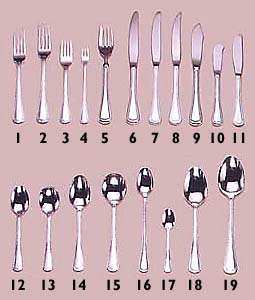
Treating the guest with respect, patience and an all around good nature was the number one unspoken prerequisite for getting a job in a fine dining restaurant.  Having the thick skin to deal with persnickety requests, over-served codgers, diva mistresses and self-important dowagers was held in higher regard than owning six pens that match (and light up!).  It may be referred to as "old school" today, but those who know are nodding their heads right now.  Lord, just knowing the difference between a soup spoon, a boullion spoon and a dessert spoon would be my test for an aspiring fine dining server today.  They might hemorrhage if I gave them a fish knife or fork!  There rarely is a butter knife these days, and they're not needed.  Between restaurants having to cut costs to be able to turn a profit, and the passing of old traditions like setting the table with all the proper flatware, stemware and show plates (a.k.a. chargers), it's no wonder the old guard are like the last of the jedi.


Not too long ago, young, inexperienced waiters started out as bus persons to learn from being in the environment of a formal restaurant and shadowing the lead server.  Even now, this American version of an apprentice is a position all but gone from restaurants. A bus person would earn partial tips and a sub-minimum wage.  So, if you take away all the ruffles and flourishes of fine dining, the server has more time to clear and reset their own tables.  Bye-bye bus boys.  A food-runner, on the other hand, is now in high demand.  They stand at the ready in the kitchen and shuttle food to the dining room and deposit at the guest's place setting.  Then it's back to the kitchen to run more.  They are worth their pay, because they speed up the dining pace. 

No, what we have today is a new breed of dining- fast casual. There's no need for all the fuss of decades past.  Today's style of dining and serving is chummy.  It's folksy and self-deprecating.  It's approachable in a way that says, "We wouldn't dare offend you as much to imply you weren't properly dressed or suited to dine with us."  In short- one size fits all- please deposit your money in any way you see fit.  And, from an operator's view point, can you really afford to turn anyone away?  

The national average of profit margin for a full service restaurant is 10 cents on every dollar.  Some do better, some do worse.  Above 20% is extraordinarily rare.  With the cost of energy, food and spirits rising, the only way to keep that margin is to raise prices or cut costs.  86 the butter knives. 

Yes, there are those out there still practicing their art.  There are those that are the last of the golden years of dining.  White gloved servers lifting silver cloches from bone china, all in unison as the guest hoists their sterling silverware to dig in.  And they're not all white elephants, either.  Even today, new restaurants open with $30 entrees, vertical selections of cult cabernets and floral budgets.  But, they usually don't intend on making a return on their investment.  An old restaurant joke goes, "How do you make a million dollars in the restaurant business?  Start with two."

The trip down memory lane was necessary, therefore, to answer the question, "Do kids and fine dining mix?"  Let's go back to the credo of the restaurant manager:  good manners start at home.  If parents take the time to teach their children what is proper behavior in a public place, they can expect good results.  If a child cultivates a taste for foods their parents eat, and as a result comes to appreciate that a trip out to a restaurant yields great rewards, and oh- ice cream!- they're going to get it.  Trust me.
  
On the other hand, if the parents decide they're going to use Lacroix at the Rittenhouse in Philadelphia or Per Se or La Bernadin in New York as a litmus test for their toddler's road test in etiquette, it's not only poor judgment, they're asking for the caustic stares and indigestion that comes from getting up and down 10 times during your meal.  But, practice common sense.  Just because you can afford to spend $45 on a steak for junior doesn't mean you should.

Now that I've eulogized fine dining, I'm not necessarily ready to bury it.  I never believed for once that it would go completely away.  It's just hiding and holding back until we fully understand what it is we've given up with informal dining and the chain mentality.  For every franchise owner out there, there is an operator who started in the business at the bottom and worked all the way up.  They, too, know the economic viability these days for formal restaurant start-up.  But, they, like myself and many others out there sit patiently waiting.  The day shall return when a new generation will learn about the ways of the past.  And there will be a place for the gentle sophistication of the formal, fine dining restaurant in this country again.  And a child shall lead them.


Friday, May 14, 2010

Just Like Honey

“Is the world fundamentally a better place because of science and technology? We shop at home, we surf the web, at the same time, we feel emptier, lonelier and more cut off from each other than at any other time in human history.” from the novel (and film) "Contact" by Carl Sagan

Late last night, when I deleted my Facebook account, the captcha (random confirmation) words were "truffles out".  I kid you not.  If ever there were a sign from the cosmos, this was it.  I had to stare at it for a few minutes, completely amused and somewhat mystified.

I suppose I was asking for it.  I so resisted joining the "collective", only because I truly didn't miss what I didn't have.  My friends told me it would be a great way to promote my blog.  It seemed like the right thing to do; for an egotist.  As a reader of Ayn Rand, I didn't mind the "ego" part.  I had a lot to say, and I wanted to share my passion and love for all things food, wine, beer and creative thoughts alike.

But, something crept in.  Not what I expected.  It wasn't an addiction, as I know it.  It wasn't a fad.  It wasn't even vanity.  Ok- maybe a little.  But, ultimately, it was a trap.  I began to think that the only way people would listen to me, appreciate me, notice me- was through Facebook.  It makes me feel a little ashamed, now.  Posting on FB is supposed to be like stepping into a virtual town square and screaming, "HEY! Check out what I'm thinking!  'Listen' to this!  'Watch' that, 'join' us!  But, in reality, it was more like doing stand-up at an open mic, unable to see if anyone is in front of you listening, yawning or sleeping.  You long for a "like" or emoticon of approval. 
It began with the naive thinking that sooner or later we were all destined to become a part of the hive.  But, when I began to search for the people I knew had consciously avoided joining and then failed in finding them, I was silently jealous. 

Since creating an account last September, I've read some of the most interesting viewpoints on FB, and been exposed to some of the most idiotic and ignorant rants at the same time.  I met some wonderful new people and introduced some people to each other.  I've laughed my ass off at some of the most ridiculous videos and comments.  And, when there was nothing interesting going on in my real life, I surfed other peoples comments, profiles, photos- but, that's the whole point, right?  So, why then did it feel so unsavory?  When did it go from being fun to feeling dirty?  It was like being stuck in the mall, but without the fountains and Cinnabon.

It was a tremendous platform for advocacy.  And lunacy.  There were 1.7 million people who "liked" the prayer for Obama to Die, yet only 800,000 (at my last check) to petition FB to remove the page for its blatant racist and hateful bent.  My most memorable experience was watching a particular page climb in membership from 750,000 fans to just over 1 million in less than a half hour!  Each time you hit refresh, it would climb exponentially.  The page was about as harmless and vacuous as you can imagine:  "If I can get 1 million fans, my sister said she will name her baby 'Megatron'".  The site now has 1.7 million "fans".  The baby, a boy, is due in August.   

People would cut and paste "status" updates that advocated awareness for anything from special education and autism, to spousal abuse, human rights and cancer.  It was the platform for me to create my very own page condemning the anti-immigration law recently passed in Arizona.  It raised awareness for approximately 70 people who joined.  I posted information and updates daily from articles and websites both conservative and liberal, mainstream and private, ethnic, domestic and foreign.  I learned a lot on the subject and still feel strongly about my views.  But, it was a bit like preaching to the choir.  I knew the people who joined the page were intelligent, compassionate people who had a firm grasp on morality and altruism.  So, who was I hoping to convert?  The person who would rather feed their virtual guppie than discover the US Constitution being flouted daily?  Not gonna happen.

To connect with others in my field, it was about as ideal as it could get.  Chefs work a lot.  To be able to share ideas, photos, specials, inside jokes, and gripes while at work or after a shift, was the ideal.  And in many cases, I found myself visiting their establishments to say "hello" in person and eat their marvelous creations, drink their spirits.  And I'll continue to do so.

I hated high school.  It was never a secret.  So when I found so many people coming out of the creases of the internet to be FB friends, I did so with caution. Why would these people want to know about my life after all these years?  Did I really want to know about theirs?  Let's just say that the most ironic part of friending former classmates was that of the 50 or 60 I reconnected with, I found that the same 7 or 8 people I regularly hung out with and genuinely enjoyed being with in school were the same 7 or 8 I shared regular conversations, jokes, stories and photos with on Facebook.  I will miss the sarcastic and subversive posts of my friend Steve.  Picking up with our friendship in the last six months was like we had never stopped.  Yet, we've already decided to get together (with a "new" chef friend, no less!) and reminisce over some good food and cold beer.  I'll miss occasional updates from my former art teacher, though it goes without saying that we'll stay in touch through emails and possibly even visits.  My buddy and pal, Penny, and I have already met up and shot the breeze, and I've no reason to doubt we will again, after so many years, some shit is still funny!

But, despite the boundless nature of FB, the ability to connect with people from all around the world felt the same as connecting with someone I just saw an hour ago at work.  It became soulless.  The fact that most recent comments, messages or posts of interest were electronically whisked right into my pocket made it even less interesting.  Normally, I'd be bowled over to see photos of food from the former sous chef I worked for in France; but, something got lost in translation (and it wasn't the French).  At times I would sit and stare at the screen the same way Bill Murray and Scarlett Johansson would look out their hotel window in the movie of the same name.  With millions of people zipping about in a city that never seems to come down from a neon buzz, it was about as exciting for them as watching a lava lamp.  Sober.

Keeping up on how the business of Facebook was evolving and how it was slowly, incrementally implementing their mission statement to make the business of information gathering profitable became a daily exercise for me.  I tried to believe that I had the right to my privacy, when at the same time there were approximately 270 people I was sharing my morning breakfast with and digital moods.  My sister sent me an email about a site called Spokeo.  She explained that just by typing in your name, email address or phone number, all the information that you thought was secure on websites like Amazon, Facebook, blogs, message boards that require sign-in or memberships- it's all available for anyone to view online.  For only $2.95 a month, you could get a membership for a year that gave you full access to the personal information of just about anyone who has ever used a computer.  And in some cases, there is information that is shared from sites that aren't even online (census).

The business model for Spokeo isn't so much to get people to buy access to other people's information.  Oh no- that's so 1990's.  When people see that someone is pimping their personal and private information online, the immediate response is not "who got it and how did they get it?", it's "how do I get it OFF this site??".  And lo and behold, what does Spokeo offer just below the memberships that legalize identity theft??  A product by Reputation Defender called MyPrivacy.
"Delete private information from Spokeo, Peoplefinders, People Search and other online databases using My Privacy."  
Talk about good cop, bad cop?!?  You can also go to the bottom of that same page and delete yourself from Spokeo for FREE.  Just carefully follow the directions.  If you still can't do it, Google "how to...".

I suppose I was really never pushed over the edge by something like Spokeo or that someone could get or would want my credit score.  I mean, really?  But, having considered deleting my account and even threatening to do so a few times on FB (an empty threat if ever there was one), it seemed the right time to end the Facebook Experiment.  It only required my FB password and typing the randomized phrase "truffles out". *delete*

And then, there was a virtual silence.  A great, glorious silence so golden, it was if all the engines of every car on the information super-highway had stalled, coming to a screeching halt and then- were silenced forever.  I stepped away from the computer in the most confident and contented way, toward the front door and walked out into the Spring night.  I stopped and took the deepest breath- and then exhaled.  And, then I smiled.

I was Bill Murray coming out of the elevator of the hotel and walking into the crowded streets of Tokyo.  Hitting "delete" was like chasing Scarlett in that last moment before he might never see her again, and in that instant- as if on cue- I could hear in my head the echoing snare drums and the impudent reverberating guitar from the opening bars of the Jesus and Mary Chain's "Just Like Honey" as the credits rolled:

"Listen to the girl
As she takes on half the world
Moving up and so alive
In her honey dripping beehive
Beehive
It's good, so good, it's so good
So good"

Wednesday, May 12, 2010

Feeling Crabby

If there is one item I could live without ever ordering, preparing or seeing on a menu again, it's the crab cake.  It's become the most egregiously made and bastardized dish throughout the mid-Atlantic, with variations so vast, it's no wonder locals are so visceral in their opinions on the subject. 

For me, it begins with what people come to expect in a crab cake.  If there is anything other than boulder-sized chunks of crab in front of them, they complain of "too much filler".  Ughgh.  I'll get back to that, but I think it must stem from what people don't know about making these local delicacies.  The crab cake should be primarily crab with seasonings that complement the sweetness of the meat.  It should be moist and tender, properly seasoned, and it should hold together as it slides off a spatula and onto your plate or bun.  

Smarter cooks know that the fewer ingredients you use in a dish, the more you must respect the ones you do use. All those lovely lumps of precious crabmeat are held in trapezoidal compartments within the crab, and they're delicately extracted and separated into and sold as the valuable categories of jumbo lump, backfin, lump and claw meat.  Experienced crab eaters would never discriminate and abandon all the briny goodness that comes from eating all the various types of meats from their crustacean cronies.  But, try using something other than jumbo lump, and the average Joe screams heresy.  They are unaware that the only way to keep a crab cake bound together is to use complementary ingredients that help hold them into the signature "cake" form.  The intense and sweet flavor is often given from using a combination of the jumbo AND claw meat.  The delicate nature of the claw/leg meat (like that of the Jonah crab) also helps to bind when mixed with the base.  So, my ill-informed filler-fanatics, crab claw meat that binds, is still crab.  It's a wise use of crab meat and if you are going to produce them in volume, it helps keep them at a reasonable price.

Typically a little big of egg, bread or mousse combination is used to help bind these two flavorful types of crab meat.  Egg alone will not do the trick, but adding fresh white, doughy bread crumbs, like from Wonderbread, help hold the crab together.  Taking the protein of shrimp or scallops and combining in a processor with egg white and heavy cream will give you a delicate mousse that is both flavorful and does the trick nicely of binding the crab.  Beyond that, what else you put in is a matter of taste.  Avoid putting in anything that will detract from the main flavor or cause too much moisture or dryness, and you've got your own personal version of the dish that made Maryland famous.  So, why then do so many of them suck?

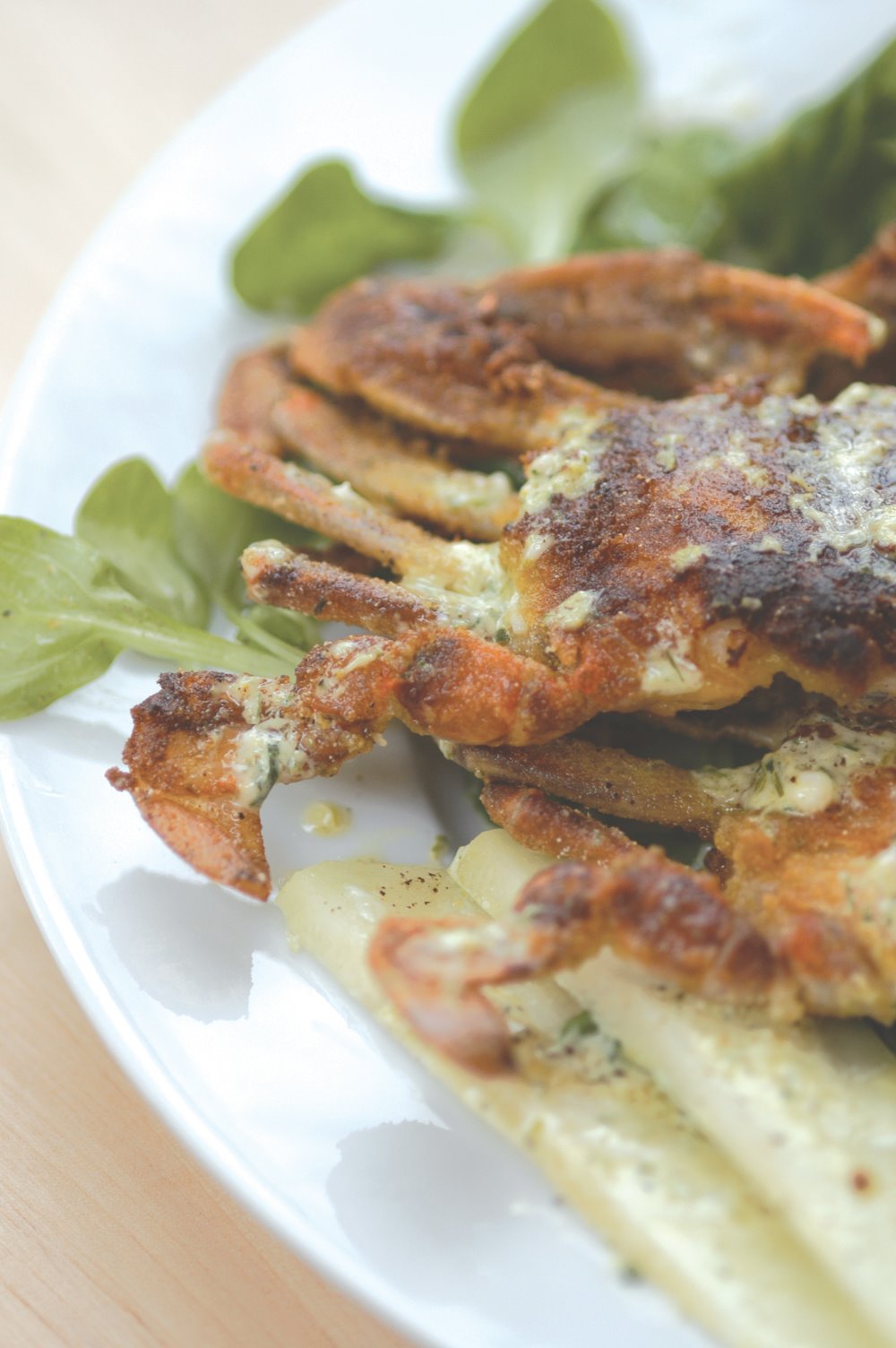
For all the crab cakes I loathe, it is mostly because they are mass produced for a homogenized appeal.  Each chef has their own idea of what a good crab cake is, and very often it's one that appeals to the masses.  Nothing wrong with selling a lot of crab cakes, I suppose.  Hey, Yugo sold a lot of cars, too.  But, I'm long since past ordering one in a restaurant, simply because I know I will be disappointed.  Give me a softshell crab, on the other hand, and it successfully captures all the things I love about a properly made crab cake:  crispy, toothsome texture, held together nicely in it's own natural sauce and it's as about as "pure" as it gets.  Slap on a little remoulade or equally gooey-tart sauce on a toasted, buttery bun, and my hankering for a sandwich of fresh crab is satisfactorily sated.

I don't hate the crab cake.  Really.  And I'm certainly not being snobby about it.  In fact, I love them so much, it's out of respect for their uniqueness that I sound off.  So, I guess you could say that I am being a bit purist about it all.  Hey, I'm allowed!  And, just to show you how much I care, I'm going to share my recipe as long as you promise to make them for only two people.  Four, at the most.  And not another crab cake more.

The main concept behind making this version of the crab cake for only a few people is that it forces you to concentrate on following the recipe and not cut corners.  Additionally, when you've mastered making these, you'll feel as though each time you make them again, it will be for people you really love and want to spoil.  You'll be giving them something they can't get anywhere for any price!  Now you know why some chefs don't give up recipes.  So, for you, my faithful Fork-N-Corkers, I am willing to make an exception, all in the name of respect for that little puck of tide-water goodness: the regal crab cake.
Robear's Secret Crab Cake Recipe
Makes four 5 oz. crab cakes
  • 8 oz. fresh jumbo lump crab meat
  • 8 oz. fresh crab claw meat
  • 1 small onion, small dice
  • 2 ribs celery, small dice
  • 4 oz. whole butter
  • 3 leaves fresh basil
  • Juice of 1 lemon
  • 1 teaspoon Old Bay seasoning
  • 1 dash or two of Tabasco
  • 1 dash of Worcestershire sauce
  • 1 egg
  • 1/4 cup mayonnaise 
  • 1 tablespoon dijon mustard
  • 2 pieces fresh white bread, broken into small pieces
  • Salt and White pepper


In 2 oz. of butter gently cook the celery and onions until soft.  Do not brown.  Add the Old Bay and basil.  Remove the mixture including the butter and set aside to cool.  


Combine the wet ingredients in a bowl and mix until just combined.  This is your base.  After you pick through your crab to remove shells, you will use it to bind the crab together along with the bread crumbs.  Season with salt and dashes of white pepper.  TASTE!  If you feel as though you could eat the whole thing right there, it's ready.  Fold the crab, fresh bread crumbs and some of the base together until it can hold it's own shape.  Resist using the entire mixture.  You are meant to have extra, but this is where people screw up:  when they add all the base, they try to compensate by adding more bread to dry it up, and this is where the perception of "too much filler" comes from.  You can always add more if you really need it, but the key concept here is to barely bind those ingredients together without turning it into a seafood meatball.


Form four cakes onto a plate, cover and refrigerate for at least an hour.  This is also a key step: don't skip it!


When it's time to cook, turn your oven to 355F.  In a non-stick pan, put a couple tablespoon of oil and heat the pan to medium hot (only lightly smoking).  Use a spatula to gently lift the crab cakes and place them in the pan.  Add the remaining 2 oz of butter now.  First, the pan will sizzle, then it will subside.  It will build back up to a hiss first (that's the steam) and then finally return to a sizzle.  When you see that the edges are beginning to brown, use your spatula and with both hands slowly turn the cakes.  Place the whole pan in the oven for 12-15 minutes.  Serve immediately from the pan.  


Open some pinot blanc, Macon chardonnay or other white to complement the sweetness of the crab.  Bon appetit! 


Thursday, April 29, 2010

Put Some Spring in Your Step!

Green.  For me these days, it's not a political position, environmental effort or trend.  It's spring, kiddies, and it's what I'm cooking.  Asparagus.  English Peas.  Fava beans.  Spring onions, ramps, fiddleheads, cimi di rabe, nettles, radish tops- oh, it's just the beginning!  The sun comes out, the soil loosens and in just a day, you can see the growth of something that could be on your plate three days later.  

The joy of cooking in season is that if you focus on what's fresh and in the market, the ingredients do the rest.  

So, how about from the sea?  The radiant striped bass is in season right now and couldn't be more vibrant or delicious.  Quite simply, the stuff available locally right now is superior quality, unequaled in the best sushi restaurants.  Soft-shell crabs just landed recently, pretty right-on schedule (Mother's day usually), though the market is still a little iffy with temperatures changing dramatically.  They scream for a lardon of smoky bacon or pancetta to set off their sweetness, or just a few stems of nutty arugula to punctuate their briny goodness.  

Brook trout, Nantucket Bay scallops, or tiny sweet Northern Shrimp, known as "pandalus borealis", become center-of-plate items.  Supporting ingredients that come to mind include ginger, tarragon, saffron, almonds or pine nuts, buttery potatoes and yeasty brioche.  Ahhhhhhh.

Traditionally, lamb and veal are "what's next", seasonally speaking.  Their delicate flavors and texture are an appropriate segue into the full-on, anything goes season of summer.  I speak, of course, as someone who isn't traveling!  Sure, I'd love to be in the Caribbean eating lobster right now; but, in this particular parallel, I'll cook and eat what sings the song of Spring, most.

When the weather breaks a little, I also change my taste for libations, as well.  Jeez, we just had a little hot-spell recently, and instinctively, I ran to the wine store for rose!  There were only a couple 2009s available, and they did the trick.  Rose wants to shine young.  Perky notes of strawberry, tart fruits and hints of just-born tomatoes rein, while bracing acidity wins out over lingering sugars.  In other words, close your eyes- it could be a beaujolais were it not for the color or temperature.  

Wheat beers, riesling, and a general proclivity for anything with Campari in it call my name when choosing a beverage to warm-up or settle-down with in Spring.

Strawberries also begin to take center stage, as they hold title to the most popular fruit in Spring, with the Ugly Betty cousin, RHUBARB, taking a close second, out of two.  Bitter, sweet- sweet, bitter- do you begin to see the connection both literally and metaphorically?  Spring is a season of transition, and the foods of the season remind us of both what has passed and what will come.  Today's lentil soup could be out of place when you smell the fresh clippings from the neighbors lawn.  Yet, herbed veal breast braised for hours on a Sunday's afternoon draws us back to the hearth, but doesn't fill our bellies enough to skip the berry shortcake for dessert.

It's funny, sometimes domestic food legends like Martha and Ina get all the props for showcasing seasonal ingredients and traditions that would make Norman Rockwell want to hand in his oils for a can of spray paint. But, if you  pick up the cookbooks of Craig Claiborne, James Beard, Deborah Madison and Sheila Lukins, you'll find that they were singing the praises of American seasonal and regional cuisine long before there was a market for self-promotion.  They showed us how to cook what was available to us.  And that, my friends, is what this is all about.

Put your trust in what looks good, smells good and sounds good.  Trust in your ingredients, your sense of what is enticing and your confidence to create a meal and memory that will last for seasons to come.


LinkWithin

Related Posts with Thumbnails