Showing posts with label Gourmet. Show all posts

Tuesday, February 8, 2011

And a Bald Man Shall Lead Them...


I frequently blog about dining trends.  I try never to talk about something I don't know, and I try to keep my opinions grounded in reason.  I have never hidden my disdain for chain restaurants, the Food Network and the decline of fine dining.  I read Michael Pollan, but I don't preach him.  I'm a purist, but a realist and above all, imperfect.  But, I am a man of convictions.  I hold integrity in the highest regard. 

At the end of last year, I started to wax prophetic, wondering what was coming down the pike for food-loving friends, family and the industry as a whole.  The most common predictions could easily be seen coming, like the proliferation of food trucks and a smack-down of the darling cupcake by the humble, er- pie. The question for me wasn't if there would be a return to fine dining, but when.  I was just waiting for things to bottom out.  I wanted to see how low it could go before it corrected itself.  So, when foie gras is being served on french fries with gravy or as a slider- it can't be far behind.

But, I felt it in my bones that 2011 would be the year the restaurant industry would finally turn the corner on its malaise and go straight for the jugular.   A full-fledged fight for the slow, but steady return of fine dining. Yesterday was, I believe, the tipping point for that premonition to come true. 


Philadelphia Chef Marc Vetri and partner Jeff Benjamin of VETRI announced they would abandon their a la carte menu at their 36 seat, flagship restaurant to serve only a 12-course chef's tasting experience at $135 per person while losing six seats in the process.  The decision didn't phase me.  Vetri has been awarded just about every accolade you can hope for (all well-earned) while maintaining the integrity of his restaurants, cuisine, and- as some people will point out- brand.  Much chatter is on about a "gamble" and "risk", while people who have never been to his restaurants poo-poo the news as wasteful and exorbitant.  There was a time when elite meant something positive: "the choice or best of anything considered collectively, as of a group or class of persons", so says Webster.  If Marc Vetri and his eponymous restaurant do not epitomize that definition, then I'm Martha Stewart.

The most elite chefs have always lead the world in finest cuisine and highest culinary standards.  If by "risk" and "gamble" people mean "balls"- then, yes- it takes courage, vision, commitment and balls to see your vision to fruition.  So called elite restaurants with similar formats have survived the pummeling the industry took since 2008.  And, it's certainly not an issue of Vetri not being in the same class as Per Se, Alinea, or Charlie Trotter's.  That's why this reads to me as more a savvy, calculated business move with potential for huge success based on a proven track record and a little moxie than a big gamble.

So how does that translate into a swinging of the culinary pendulum?  Well, you needn't be a restaurant insider to read between the lines of Philly Inquirer Craig LaBan's article to see there's a whole cadre of chefs young and old with "pent-up desire" who want to show their chops off, but are beholden to an owner with the jitters or banks with no confidence.  Imagine the restaurant progeny from Vetri alone.  Now imagine the confidence and encouragement a move like this provides them.  Don't think the entire Philly restaurant scene isn't watching and waiting to see what happens.  

Another example: Georges Perrier's Le Bec Fin.  Last fall he announced he would close and cited new projects with down-scaled concepts he would pursue instead.  Well, don't write off LBF just yet; Georges is not closing, and he's not selling the business.  In fact, the same article quotes, "I think I panicked too early and made changes I should never have done," as he reports his table d'hote menus ranging from $45 to $185 are now back up to 80% of his sales. 

The other part of this equation that is critical is the narrowing of seats and focus on filling them.  It becomes a more unique "experience", and for that, I believe people will pay.  Chef's all over America dream about customers walking into their place, sitting down and saying, "Feed me whatever you want.  I trust you."  They want people to let go and submit to their culinary artistry.  You can't do that in a 100-seat restaurant and you can't do it without a proven track record.

No, this revolution won't be with fanfare or fireworks, and it won't be on a Top 10 list in December.  Chef Vetri says, "We are allowing evolution to happen."  This evolution revolution will start by winning small battles in tiny, cozy storefronts like Vetri in food-centric cities, like Philly.  And, a bald man shall lead them...

Wednesday, July 7, 2010

My Dinner With Andre's Son

In the Fall of 1997, I went to live in Biarritz, France to complete my externship for CIA at the Hotel Cafe de Paris under Chef Didier Oudill and Edgar Duhr.  It was about that time that I started recording stories about my love for food and wine.  And so, upon returning to CIA, I documented a life-changing and extraordinary dinner for the school paper.  I just stumbled upon the manuscript, and thought I'd share one of the most extraordinary times in my life.

Extern Abroad~ part 3 of 3
It had been six weeks since I landed in France.  I was a stagiare, or apprentice, in the garde manger portion of the kitchen in the Hotel Cafe de Paris.  I found myself comfortable with the lifestyle in almost every way.  I even enjoyed my routine of going to the laundromat once a week to do my wash.  With a package of madeleines and a bottle of mineral water, I'd sit and catch up on the news, my journal and a mountain of mail.   I managed to get a decent haircut, though the thought of not being able to explain what you want is pretty nerve racking, in any language.  I emerged with a cool coif and in the next three days, all the cooks lined up to get the same coupe de cheveaux.  I had also gotten into the routine of working 14-hour days.  If you were employed by the Cafe de Paris, you were simply on the schedule- all the time.  We were closed on Tuesdays, and for lunch on Wednesday, but every other day the hotel served lunch and dinner.

The kitchen was located in the basement of the hotel, as many are in France.  Needless to say, there were no breath-taking views of the beach, as I had from my hotel room.  Hence, I developed an appreciation for the open and sometimes annoying "fishbowl" syndrome you felt in the kitchens at The Culinary.  I wanted to see people.

The kitchen was the most immaculate kitchen I'd ever been in or worked in.  There were days in October when business was waning when we cleaned to keep busy.  We cleaned so much that I began to think that was why they agreed to accept me as stagiare.  There's nothing worse in the restaurant business than when business is slow- even worse than the heat.  It mentally drains you.  I daydreamed of walking through beautiful Biarritz and stopping for some oysters at the local oyster bar.  So, when a delivery came up short of cepes, or we needed fresh fennel or Parmesan from the market, I was always the first to volunteer to make the trip.  I climbed the steep stairs to the alleyway exit on le Place Bellevue, anticipating the brisk wind that whipped off the ocean and made you glad to be outdoors.


It certainly wasn't uncommon to see cuisiniers, or cooks, walking the streets or at the market in their uniforms.  It was, however, very unusual for the French to see a cook with his named emblazoned in hunter green above his breast pocket.  This was something that I became very self-conscious about.  I frequently got stares from people I passed on the street or while purchasing produce for the restaurant.  Once or twice a cook would ask why we had our names on our jackets.  I'd pause, searching for an answer that would best represent not just The Culinary Institute of America, but American cooks in general.  "I believe it's important to instill a sense professionalism from a very early stage in a cook's career.  I also think it creates an important sense of pride in your work."  But, these young, wily French cooks didn't buy any of those answers.  They simply interpreted my embroidered jacket as flashy and arrogant.  The obvious answer would have been that with 2000-plus students roaming the campus of CIA, it helps instructors remember the names of students, who seemingly pass in and out of their classes as frequently as the trains in the Metro.  I was aware, however, from day one that Chef Oudill didn't even have his name on his coat; and so, wanting nothing more than to be accepted, I wore my full bistro apron that rose up and over my neck to hide my blatant and brash American individualism.


On days off, or afternoons between shifts, the staff of the Cafe de Paris seemed to be inseparable.  This was both comforting and distressing.  Some days I wanted to be left alone to explore the area and catch up on my journal, and other days, I simply needed these people to practice French, bum rides or just hang out.  But, for all employees of the hotel and restaurant, there seemed to be one common denominator: we were family.


I couldn't have dreamed that I would become so close with these people in such a short time, but it happened.  It was no different than an American restaurant.  People outside the business think we're crazy (and some are) for the career we've chosen.  We work like dogs and for hours that would make a banker go into convulsions, all for the simple pleasure of creating and doing a job well done.


One particular cook I grew fond of was Elton.  Elton was 19, an orphan who weighed a meager 135 pounds.  He was the Cafe's poissonnier, or fish cook.  He loved American surf culture, hip hop, rap and was quite the prankster.  But, he also had one of the highest work ethics of anyone I had ever worked with for someone so young.  One day before Halloween, we had all worked on preparing a luncheon for 1000 pharmaceutical reps.  We had been given an hour to take a break before our a la carte shift to freshen up for Saturday night dinner service.  All except Elton.  There was a trucker's strike in Paris (where our Coquille St. Jacques were shipped), and we had been without scallops for three or four days.  Chef Oudill was pacing all week, and we simply would not go into a Saturday night service without them.  They arrived that afternoon just after our banquet and needed to be shelled and cleaned for service:  all fifteen dozen of them.


As the rest of us arrived back from our break sleepy-eyed and groggy, Elton was standing in a pile of scallops shells, just finishing having opened the last of them.  Exhausted and sallow, he went right into dinner service, and we jammed that night!  The hotel had two dining rooms.  And ticket after ticket- from the bistro and the gastro (the formal dining room)- came clacking in, non-stop.  Just as we got our last hit for dinner orders, Elton, drenched with perspiration and pale from not having eaten, stepped off the line with a blank stare in his eyes.  He came into garde manger where I worked and he said in broken English, "Help me Robert, please."  He held out his hands, and I looked down to see his fingers curled, frozen and stiff as a rake.  There was so much activity in the kitchen, there literally was no one other than me who noticed or could help him.  And so, I picked up his frail frame and carried him up the stairs and out to the alley to get him fresh air, hoping he wasn't in shock.  At a closer look, I realized his hands had cramped up tight on him from working the luncheon, opening the scallops and then working right into dinner without a break.  I began to wonder whether anyone cared that Elton was missing, since he disappeared without a word.  It was then I that I saw chef Oudill pass by the open door with band-aids and bandages.  "What good is that", I thought to myself, "to a guy with frozen hands?!"  He looked at us mildly interested, but went on.  It seems the bandages weren't for Elton:  they were for Denis, our grillardin.  At the same moment as Elton's crisis, Denis had cut his finger very badly, and consequently, his squirting blood took precedence over Elton's frozen fingers.  "This is nuts", I thought.  And, this was happening at the same time that the one chef with the world's most Michelin stars,Alain Ducasse, was dining with a party of 8 in the formal dining room.  When it rains, it pours, n'est pas?
Later that evening, our crew all sat around the bistro after the chefs left, drinking Kronenbourg and eating leftover bread and cheese, slowly unwinding and recounting that tumultuous day.  I reflected as I sat with the wounded Elton and Denis:  these are the things that the customer never sees.  This is the commitment so many cooks, French, American or anywhere, have because of their love for what they do.  It's not something we can explain to other people, yet it's understood by all in the biz: we love it, unconditionally.


Preparing food for Chef Ducasse was exciting, but it wouldn't be the last time we'd cook for culinary royalty.  It seemed we were the place where chefs went to eat when they weren't working.  Chef Pierre Gagnaire arrived one evening to dine.  And a young, up-and-coming chef from Spain who had just been named Chef of the Year by the name of Martin Berasategui stopped in one night to dine, as well.  


I had brought my New York Times article with me that originally hooked me on going to Biarritz to use as a guide for places to eat and things to see.  I had visited many of the ones that seemed enticing, but there remained one destination that held my curiosity:  Les Platanes.  Chef Arnaud Daguin was the chef I originally wanted to study with, and he remained somewhat of an enigma to me.


On the Monday before I left France, I was opening oysters for an order in the bistro when my sous chef, Yoann, said, "You make them nice, yes- they are for the chef."  "Who is it now, " I said cynically, "Bocuse?  Blanc??"  I began to despise anyone who ordered oysters (a mounting irony) since my fingers were raw and hands sore from opening them over the months.  "They are for Chef Daguin"."


Pause.


"Comment?"
"Chef Daguin; you know him?"
"You're kidding?  Which Daguin? Andre or Arnaud??"
Yoann began to look at me with bewilderment.  I had kept my story of wanting to work for Chef Daguin to myself.  "Well, he is from Biarritz, so he must be Arnaud, I guess.  Why, Robert??"
"I know him!, " I blurted out.  "Well, we spoke on the phone.  I was going to work for him...and...he's really here?"
"Yes, of course.  Why don't you go up and say 'allo'?"
"Uh-no- I don't think so.  I don't think that would be appropriate."
"But, why? Come on, Robert.  I will take you up."
"Wait!  I want to bring the oysters."
"Hey, Robert-", Yoann said smiling.
"Oui?"
"Your apron- take it off."
"Oh.  Right."

And, so we climbed the stairs to the bistro, where Chef Daguin and his wife, Veronique, were having a leisurely dinner, sipping Jurancon Sec with Chef Oudill and his wife.  Yoann politely announced that there was someone who knew him and wanted to say "hello".  
"Chef, this is Robert Lhulier from America, and he is working here as stagiare."

"Hello, Chef, Madame Daguin.  I don't know- if you remem-"

"Ah- why, yes.  Of course we do.  So you made it to Biarritz, huh?"
"Yes, you recommended Chef Oudill and so, here I am."
We spoke for another few moments about being in Biarritz and France, and I suddenly became paranoid standing in the dining room in uniform.  I was attracting attention from other tables, who, by now, were listening in on our conversation, all the while staring at the name on my jacket.  "I should get back to work," and my chef's glare implied it was a good idea.


When we went back down into the kitchen, I told Yoann the whole story of how I tried for months to get Les Platanes approved for my externship, all to no avail.  That was when he suggested that I go for dinner at Les Platanes the following night.  "I will!  I know it's expensive, but I have to.  I just can't leave without doing it."


The following day, I called up Monsieur Daguin and made a reservation for one person.  "Very good; we'll see you tonight."  The walk to Les Platanes is just about one mile outside the center of Biarritz, in a private residential area.  It was an unlikely place for a restaurant, but, as I was to discover later, the perfect location for this particular restaurant.


It was November 18, the day before my thirty-first birthday, and the hydrangeas in Biarritz were still in full bloom.  Les Platanes was so named for the line of plane trees that flank the street it's located on, and their leaves were just beginning to turn.  I hadn't missed Fall after all, I thought.


When I walked into the restaurant, I was greeted by Veronique, Chef Daguin's tall, slender and lovely wife who was the sole retailer of her husband's cuisine.  She would be my host and guide for the evening, and a gracious one, at that.  The interior was funky and elegant, if that's possible.  The walls were painted Matisse colors of red, orange and blue.  A single large mural of Botero-like prostitutes was painted on the wall behind the five-seat bar, recalling the restaurant's erstwhile days.  There was no music;  just the sound of reverent silence and an occasional "clink" of silver or crystal.   I was seated at a table that overlooked the restaurant of 40 seats by Madame Daguin, and she asked if I would like her to explain the menu in English.  "Non- Francaise, s'il vous plais."  Her calm and pleasant demeanor made me feel like a king, and she spoke slowly for me to realize precisely the kind of meal I was in for.


There was one other person who helped my host throughout the evening, and once or twice, I saw a very young, very serious cook emerge from the kitchen to run to the basement for things, and run back up again.  This was likely the person who chosen over me to work in this tiny, special restaurant.  Over the next three hours, course after course of mind-dizzying cuisine would emerge from a small hole in the wall that lead into the kitchen.  I had opted to let the chef choose my meal, and since the menu changed every night, I figured he knew best.  And, I was right.


I began with the signature drink of Les Platanes, a refreshing blend of dry white wine, a dash of peach brandy and a splash of Armagnac, with a twist.  An amuse bouche of mushrooms and lardons of bacon was followed by the elusive Coquille St. Jacques with fresh hazelnut, another course of poached (yes, poached!) foie gras with broccoli, fillet of dorade, and a cheese course that included the local sheep's milk, brebis, and my favorite, pont l'vecque.  I declined dessert, but it arrived anyway- mille feuille of crystallized banana with grapefruit-orange-apricot chutney.  I drank a bottle of 1995 Sancerre with dinner, and just when I thought I might explode, friandises (little hand-made chocolates and candies) and coffee arrived at the table, followed by Chef Arnaud Daguin himself.

"May I sit down?"
I rose instantly, dropping my napkin-"Of course! Please!"

"Please, sit down."
By this point, I was the only one left in the restaurant.  I had been lulled into a state of satisfaction that is hard to explain in words.


I thanked the chef for his incredible meal.  "Robert- do you like Armagnac?"
Is he kidding me??
"Why, yes- I love it."  Chef Daguin explained as he went to the bar that this particular Armagnac was made for his father, whom I had the pleasure of working with briefly at the Hotel duPont during the French bicentennial.  "If I remember from our conversation, correctly- this Armagnac is older than you.  Nineteen sixty four, to be exact."  He sat a large, crystal glass as thin as paper in front of me and poured.  The aroma was the culinary equivalent of sitting in a stately library with old, leather-bound books:  it was rich with history and humbling.  

Just when I thought the evening couldn't get any better, it did.  
"Would you like a cigar?  I have a Monte Cristo from Havana you might like with your Armagnac.  I used to smoke them all the time, but I can't do it now since I am in the kitchen so much."  And he proceeded to roll his own cigarette, as is common in France.


We toasted each other as he held me captive with the story of the Daguin family.  His father, the celebrated chef Andre Daguin, and his father's father who had cooked in Gascony for years.  World-famous for their succulent duck, he told me of his sister, Arianne, who moved to America in the 80s and founded D'Artagnan, the purveyor out of New Jersey that has become the gold standard for foie gras, game sausages, exotic, high-quality meats and the signature Daguin duck.  And, his younger sister, Anne, who handles the baking and pastry end of the family business with her husband in Saint-Remy-de-Provence.  But, I wanted to know about him.  

"When did you know you wanted to cook?" I asked the chef.
"I always knew I didn't."
"I'm sorry- you didn't want to cook?"
"No.  I was interested in the ballet.  I suppose I didn't like the idea that as the only male child of the Daguin family, I was expected to carry on the tradition of cooking.  So, I went to America, New York."
"Then what?"  I was intrigued as he spoke in his deep, nasally tone and looked over his thin wire-rimmed glasses, as if bifocals.  


"I went to circus school.  I wasn't sure what I wanted to do.  But, I was happy to be there, doing my own thing.  After awhile, my father talked me into being the chef at the hotel in Auch.  We constantly fought, but it was then and there that I realized I was a Daguin, and Daguins cook.  About that time, I met my wife, and I had a big decision to make:  would we go to Paris, or even America to work, or would we stay in France.  I had always visited and loved Biarritz, but I wasn't certain I could make a living doing the kind of cuisine I wanted to do.


"Finally, we bought this house, and turned it into a restaurant.  There were times when it was very difficult to make ends meet, but we scraped by.  And so- here we are."


We talked for a little while about me.  What I wanted to do and the similarities in our difficult career decisions;  can you separate your emotions in deciding where you want to live and do your art and where you think your restaurant will be successful?  It is, in fact, the emotions that most of wrestle with in making the big choices in life.


In the late 70s, there was an art film out called My Dinner with Andre.  It was about two friends who get together at a restaurant for dinner.  And, over a two hour period, they discuss  their lives, their hopes, fears, philosophies and what's important to them.  I couldn't help ignore the irony of that life changing evening at Les Platanes with Andre's son.


I began to feel a certain sense of closure after our conversation. Not just for dinner, but my sojourn to France and Biarritz.  It was only two days before I was to leave, and I had felt that even though I'd be leaving my friends behind and wished that I could stay longer, I'd leave feeling as though I had accomplished what I came for.  Not just to fill the pages of a journal with recipes and pictures; but, to connect with people who felt as passionately about food and wine as I did.  And, to live and fit in among the rest, as a real, French cook.


I walked lazily home that night and plucked a leaf from one of the plane trees outside the restaurant (I've still got it).  The moon was three-quarters full and there was a sweet smell of honeysuckle in the air.   "We are not so different, after all", I thought.  "We just have to look a little harder to see it."


Sunday, May 16, 2010

Children of the De-Evolution

It seemed inevitable that with the growing education of middle America in all things food, that it would eventually trickle down to our kids.  One of the most recent stories to reach the news (and in the form of a debate, no surprise) is whether kids "belong" in fine dining establishments.

There was a time when people believed that children should be seen and not heard.  They were fed hot dogs, peanut butter and jelly and buttered noodles, and then their parents went out for their anniversary or birthday to eat chateaubriand, even though they couldn't pronounce it. 

Indeed, there was also a time when there were many true fine dining restaurants, too.  The kind that made careful choices of their linens, Bordeaux selection and staffing based on one thing, the discerning tastes of their diners. Those restaurants still exist in part, mostly in metropolitan areas.  But, the days of white table cloth restaurants competing for the title of "best restaurant" have passed.  These days it's not fashionable or economical to eat in a fine dining restaurant.  Or own one, either. 

Even our definition of fine dining has changed significantly.  The term could almost be interchanged with formal dining.  Those linens I mentioned had a high thread count, with nary a poly-cotton blend among them (it showed bad taste).  To offer Bordeaux or any old world wine wasn't enough; to show you were a serious contender, there had to be multiple chateaux and vintages that showed the depth and breadth of your cellar.  And the guest knew it.  The staffing?  Well, let's just say chain dining has properly killed fine dining and the formal, career waiter.  

There are still a few establishments left today that breed their servers as if they were in boarding school.  What the hell am I talking about?  Most older operators know that you can teach someone to serve a cocktail, take an order, ring it in and properly open a bottle of wine.  But, what you can't teach is good manners.  You can't teach your staff to innately know there is a line you don't cross with a guest.  You were either raised a certain way, or you weren't. 

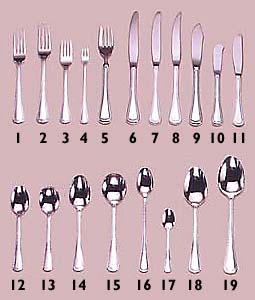
Treating the guest with respect, patience and an all around good nature was the number one unspoken prerequisite for getting a job in a fine dining restaurant.  Having the thick skin to deal with persnickety requests, over-served codgers, diva mistresses and self-important dowagers was held in higher regard than owning six pens that match (and light up!).  It may be referred to as "old school" today, but those who know are nodding their heads right now.  Lord, just knowing the difference between a soup spoon, a boullion spoon and a dessert spoon would be my test for an aspiring fine dining server today.  They might hemorrhage if I gave them a fish knife or fork!  There rarely is a butter knife these days, and they're not needed.  Between restaurants having to cut costs to be able to turn a profit, and the passing of old traditions like setting the table with all the proper flatware, stemware and show plates (a.k.a. chargers), it's no wonder the old guard are like the last of the jedi.


Not too long ago, young, inexperienced waiters started out as bus persons to learn from being in the environment of a formal restaurant and shadowing the lead server.  Even now, this American version of an apprentice is a position all but gone from restaurants. A bus person would earn partial tips and a sub-minimum wage.  So, if you take away all the ruffles and flourishes of fine dining, the server has more time to clear and reset their own tables.  Bye-bye bus boys.  A food-runner, on the other hand, is now in high demand.  They stand at the ready in the kitchen and shuttle food to the dining room and deposit at the guest's place setting.  Then it's back to the kitchen to run more.  They are worth their pay, because they speed up the dining pace. 

No, what we have today is a new breed of dining- fast casual. There's no need for all the fuss of decades past.  Today's style of dining and serving is chummy.  It's folksy and self-deprecating.  It's approachable in a way that says, "We wouldn't dare offend you as much to imply you weren't properly dressed or suited to dine with us."  In short- one size fits all- please deposit your money in any way you see fit.  And, from an operator's view point, can you really afford to turn anyone away?  

The national average of profit margin for a full service restaurant is 10 cents on every dollar.  Some do better, some do worse.  Above 20% is extraordinarily rare.  With the cost of energy, food and spirits rising, the only way to keep that margin is to raise prices or cut costs.  86 the butter knives. 

Yes, there are those out there still practicing their art.  There are those that are the last of the golden years of dining.  White gloved servers lifting silver cloches from bone china, all in unison as the guest hoists their sterling silverware to dig in.  And they're not all white elephants, either.  Even today, new restaurants open with $30 entrees, vertical selections of cult cabernets and floral budgets.  But, they usually don't intend on making a return on their investment.  An old restaurant joke goes, "How do you make a million dollars in the restaurant business?  Start with two."

The trip down memory lane was necessary, therefore, to answer the question, "Do kids and fine dining mix?"  Let's go back to the credo of the restaurant manager:  good manners start at home.  If parents take the time to teach their children what is proper behavior in a public place, they can expect good results.  If a child cultivates a taste for foods their parents eat, and as a result comes to appreciate that a trip out to a restaurant yields great rewards, and oh- ice cream!- they're going to get it.  Trust me.
  
On the other hand, if the parents decide they're going to use Lacroix at the Rittenhouse in Philadelphia or Per Se or La Bernadin in New York as a litmus test for their toddler's road test in etiquette, it's not only poor judgment, they're asking for the caustic stares and indigestion that comes from getting up and down 10 times during your meal.  But, practice common sense.  Just because you can afford to spend $45 on a steak for junior doesn't mean you should.

Now that I've eulogized fine dining, I'm not necessarily ready to bury it.  I never believed for once that it would go completely away.  It's just hiding and holding back until we fully understand what it is we've given up with informal dining and the chain mentality.  For every franchise owner out there, there is an operator who started in the business at the bottom and worked all the way up.  They, too, know the economic viability these days for formal restaurant start-up.  But, they, like myself and many others out there sit patiently waiting.  The day shall return when a new generation will learn about the ways of the past.  And there will be a place for the gentle sophistication of the formal, fine dining restaurant in this country again.  And a child shall lead them.


Friday, October 9, 2009

The Magazine Closing That Rocked The Culinary World


With the news this week that publisher Conde Nast was shutting down Gourmet magazine after 70+ years, a simmering debate and passionate discussion has been going on among the food cognoscenti about the decision.

I can't remember the last time I picked up a Gourmet magazine.  I do know, however, where past issues are at home with recipes that include the world's best chocolate pots de creme, a killer pasta dish from Bologna, really delicious and fun ice cream sandwiches and an old clipping that talked about a "new" restaurant setting the culinary world on fire called The French Laundry.  

In the decade of excess when everyone was learning what polenta, sun-dried tomatoes and pesto were, there was an expanse of culinary magazines on all sorts of topics.  As our appetite for knowledge increased, the number of magazines writing about food did with it.  There was even the short-lived Foodie Magazine for those passionate-nerdy food types.  I Guess there weren't enough "foodies" at the time, because the magazine folded within a year.  Either that, or, as in the case of Cook's Magazine, they were bought (by Conde Nast, no less) and Gourmet ate up all their subscribers.   It was a war to divide and conquer the most culinary magazine subscribers possible.  So, adding Ruth Reichl to the masthead of the magazine was a brilliant move.  Especially since she'd written widely popular and entertaining books and provided some of the most controversial and memorable reviews as the costumed culinary critic for the New York Times.  Even if they were a little TMI, Reichl's passion connected a people.  And for good or bad, it drew a line in the sand: Gourmet magazine was the benchmark for all that was excellent in food publishing. 


Most of the conversations this week have been about that polarization, mixed with melancholic nostalgia at the untimely demise.  Yet, I think its demise was indeed timely. As the economic pendulum swung way back in the other direction last year, the ripple effects continue to be felt in this down economy.  For starters, luxuries will always suffer first.  Gourmet, therefore, was at the top of the list of candidates for a date with destiny in the land of conspicuous consumption, with monster SUVs and the third beach home.  It's no wonder the culture wars are now about elitism and socialism.  They're buzz words that show the public is passionate about their comfort items.  Take them away, and it's like you burned Radar's teddy bear.  

But, are we really talking about a magazine that was "too gourmet", as Tyler Florence said this week, or is it a simple issue of a magazine that didn't change with the times?  And, rather than ask the old bird to adapt, did they just put it down?  Here's my argument.  Listed are the current magazines and/or sites that just Conde Nast publishes:  Vogue,W, Style, Glamour, Allure, Self, Teen Vogue, GQ, Details, Men's Style, Architectural Digest, Brides, Modern Bride, Elegant Bride, Brides.com, Lucky, Cookie, Golf Digest, Golf World, Vanity Fair, Bon Appetit, Epicurious.com, Conde Nast Traveler, Travel and Leisure, Concierge.com, Wired, Wired.com and The New Yorker. Most people didn't know that Modern Bride got the axe, too; but, with FOUR opportunities to cash in on the millions in marketing for the marrying, there appears to be room for tightening the belt, wouldn't you say?  

So, what made Bon Appetit more relevant than Gourmet?  I'm not sure it is, but one certainly had the pulse of the times more than the other.  Bon Appetit has the cache of a very euro-lifestyle magazine without the fussiness.  My favorite foodie mag, Saveur, however, has a more down-to-earth approach with big, gorgeous photos of farm to table foods and the artisans who produce them.  Yet, it's smart, like the other two.  I think there is still a market for very diverse food magazines today, I just think some of the older ones need to move on first. 

That said, there are really just too many insipid magazines on the shelves today. There is no excuse, for example, for a magazine like Lucky.  Yet, it goes on.  I know this, because this magazine arrives to my house as a "freebie" for my wife each month, and it sits on the coffee table or in a stack of mail until the next one arrives.  After four years, I got curious, flipped through the pages and finally had to ask, "Hon- what IS this magazine about?"  It's a magazine about shopping.  Shopping.  It seems there is a limitless supply of advertisers, because they don't exclude anyone!  "Here's how to shop- save money by spending money! " Cha-CHING!


As I follow this line of logic, I begin to understand why it's touched a nerve with people and me.  A most pertinent opinion piece was in the New York Times this week from the previously mentioned Cook's Magazine publisher, Christoper Kimball.  After 10 years, his magazine shut down in 1990 unable to compete with Gourmet.  But, he started back up in 1993, "advertising-free, with a 100-percent subscriber-financed model, including a thriving paid Web site."  Smart move.  19 years later, Cook's Illustrated stands out as a unique and respected culinary magazine among the masses, while Gourmet sings its swansong.  Kimball says,


" The shuttering of Gourmet reminds us that in a click-or-die advertising marketplace, one ruled by a million instant pundits, where an anonymous Twitter comment might be seen to pack more resonance and useful content than an article that reflects a lifetime of experience, experts are not created from the top down but from the bottom up. They can no longer be coronated; their voices have to be deemed essential to the lives of their customers. That leaves, I think, little room for the thoughtful, considered editorial with which Gourmet delighted its readers for almost seven decades."
  
I'd like to see this Darwinian model continue, but it can only spell doom for the finer aspects of fine food, dining and cooking.  If we are indeed a culture where faster and simpler is better, it'll be impossible for an esoteric contingent to survive.  Sad, then, that it will come down to profitability versus content and creativity.  

I teach a class once a semester at Wimington University to Food Arts students.  My lecture is on the traditions and origins of front and back of the house positions in restaurants and hotels.  As I cover my measly 27 years experience in the industry, I also take them back to what I see as the beginning, the rise of Auguste Escoffier 100 years earlier.  I've spoken of his impact on our industry in other posts, but mostly in the positive.  So it may be a reach, but as Escoffier created a much needed amount of respect and dignity among and for food service personnel, no one could have guessed, for example that from that awareness there eventually could evolve a full-time Food Network.  And, wildly popular reality shows with tyrannical chefs screaming at shivering and cocky culinary hopefuls.  So much of what airs on the Food Network is NOT about food, but entertainment with food thrown in.  Poor Escoffier would roll over in his grave if he saw an episode of Hell's Kitchen.  

The competition shows turn me off as well, because I realize I'm being set up to criticize food on television.  Food you can't taste.  Yet if you watch, you find that you pick apart how it was prepared, what the chef looked like, their attitude, and anything else the editors throw in  from the  dozens of hours of footage, and before you know it, you've joined the ranks of millions of Americans who are forming very strong opinions about someone or something based on 30 minutes of television.  

It all makes me lose my appetite.

LinkWithin

Related Posts with Thumbnails