Showing posts with label Music. Show all posts

Tuesday, May 28, 2013

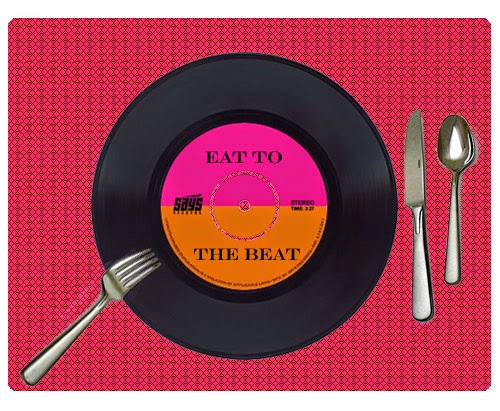
Eat to the Beat

 
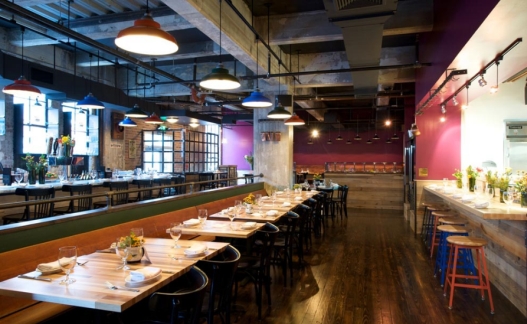
It’s said that the color red is supposed to stimulate the appetite.  Bright dining room lights (vs. dim) are supposed to make you eat faster.  Textures and appearance are critical to your eating mood, especially if you’ve ever eaten sushi.  Restaurants pay thousands of dollars installing sound-dampening panels to ensure when they fill, it doesn’t sound like The Super Bowl.  But, what about the effect of music on your eating habits?

The speed of music played during a meal directly affects the pace of eating, and thus the rate or ease of digestion.  Studies have shown a mild increase in the rate at which people eat when there is spirited music versus gentle classical.  And louder, more aggressive music works the opposite way, reducing the number of bites and leaving the eater with an irritated, uneasy feeling.  This trade secret has long been in the quiver for many unscrupulous, if savvy, restaurateurs looking to turn tables in a pinch.  And, if you’re the last table of the night and suddenly notice the music shut off, that’s your cue to hit the road, Jack.

There are obvious arguments for music in restaurants, most of them common sense.  Music provides an ambient noise that makes people feel more relaxed to talk among dinner guests without being self-conscious of others listening in.  Also, music is a useful fog for that sensitive discussion between acquaintances, attorneys or would-be cheaters.  Music in a major key is more melodic to the ear and relaxing than minor, or dissonant tones; for example, Jack Johnson good, The Cure, bad.  In a public dining room, melodic rhymes relieve diner tension; Bustah Rhymes, causes it.  This same aural psychology is applied in casinos.  A cacophony of slot machine clatter would drive anyone mad after 10 minutes, but in a harmonic loop of arpeggios, the bings and bongs of winning machines become hypnotic. 

Music is personal and subjective.  Whether you’re preparing a meal or eating one, we play what makes us feel good.  It motivates!  Home cooks and line cooks rarely share the same playlists, of this you can be sure, but both hook in and stir it up to their own personal soundtrack.  A little bossa nova, Coltrane or cafĂ© accordion can relax the soul when putting together a leisurely Sunday supper for the family.   Alternately, a gritty grill cook breathes a little easier when the occasional f-bomb or axe solo grinds out of the Ipod dock.   Music is also a cheap and accessible pressure valve.

Not every professional kitchen, however, condones music.  Even in my own first kitchen, I wanted complete focus.  As much of an audiophile as I considered myself, I wasn’t willing to let details slide if someone was off in a Pink Floyd fantasy.  But, one afternoon while prepping for a party, I was alone and threw on some Rolling Stones to get me over the hump.  When the cooks arrived, they smiled, put on aprons and quietly went to work.  I’m pretty sure the food was some of the best we put out.  From that moment on, I’ve always shared the stereo with my cooks.


Here is an example where music may have actually helped improve the quality of food of an establishment.  One of the hottest and most revered restaurants in the world is Eleven Madison Park in New York City.  In 2006, when a critic reviewed the restaurant, though her comments were favorable, she lamented that the kitchen could use “a bit more Miles Davis”.  Without fully understanding what she meant, the line resonated with the chef and manager.  So, Swiss-born chef Daniel Humm read as many articles as he could find about Miles, and came up with a list of the words most commonly used to describe him.  The list included: cool, collaborative, fresh, vibrant, endless reinvention and spontaneous, to name a few.  Today, the sounds of his quartet and quintet can be heard piped into the kitchen as well as the dining room.  And, a reverent black and white framed photo of the trumpet master hangs in the Spartan kitchen.  Last month Humm was named Best Chef in the US by the James Beard Foundation, and Eleven Madison Park among the top 10 restaurants in the world, with three Michelin Stars and four from the New York Times.  Cool, indeed.


Music can affect mood, even if you’re not aware of it.  When the Shoprite at the waterfront opened a few years back, I queued up like everyone else to see what modern marvels awaited the culinary curious.  Much to my surprise, I first noticed not the shiny floors and pyramids of produce, but the music that was playing.  There was a smart playlist piped in of 80s tunes from slightly off the beaten path.  It added an unconscious spring to my step and made me take note of the age of other shoppers, mostly under 40, also tapping their toes.  Grocery shopping cool?  It could happen.  But, I get it.  We all have to shop, so any little nugget of newness can be a tipping point for customers looking to break up the monotony.  “When I met you in the res-tau-rant.  You could tell I was no debutante!”

Originally published in Out & About Magazine June 2012

Wednesday, December 5, 2012

In Memory: Dave Brubeck


To live to the age of 91 is an admirable accomplishment, and we must accept that all our jazz mentors will one day pass.  But, Brubeck's passing (one day short of his 92nd birthday), especially at this time of year, is significant for me.  I can't think of a time when I was first learning about jazz that there wasn't a Dave Brubeck.  He was a giant in his art form, and like Bill Evans, had a style that was all his own.  Just listen to this version of "Santa Claus is Coming To Town" and tell me you don't hear that joyous quartet synergy that exists in every one of his recordings.  Somewhere in Manhattan (or Paris) Woody Allen is having a moment to himself.


Sunday, September 2, 2012

Saturday, December 31, 2011

Happy New Year


Farewell, 2011! 

It was another interesting year for food, celebrity cook-types, wine, The Phils and of course, music.

A VERY quick wrap of some of my 2011 favorites.  

Dinner at Amis after ONE of the blizzards in February.  Guinness Export: first time in the states since- 1940s? Dope.  Eleven Madison Park and Rotis cookbooks.  


In concert, Aimee Mann, OMD and English Beat.  On TV: Portlandia, Workaholics, and Beavis and Butthead.  


2011 Philadelphia Phillies- 102 wins, 5th consecutive NLE Championship.  And on that note, Vance Worley's pitching.  Wilson Valdez's winning pitching effort in the 19th against the Reds! What the WHAT? Cliff Lee's first major league HR.  Hunter Pence (Good Game! Let's Go Eat!).  And following it all on Twitter was pretty fun, too.  

Beer got more delicious.  Produce got more local.  Good cheese became more available.  In addition to my 4 year old's penchant for seaweed, olives, bacon, salmon, and soba, we added shrimp and octopus!  Three or four dozen delicious Sunday dinners at M&D's (right?).  

The Chef's Table revival at the UWC.  Shigoku oysters from the West Coast (holy mother of God- over the top).  Foie gras and shrimp toast together in one dish.  Scallop dumpling and squab consomme.  Amazing locally foraged mushrooms- and monstrous porcini from Oregon. Kabocha squash (don't know how I missed this).  Barely Buzzed coffee-rubbed cheddar from Bee-Hive Cheese Co.  And, home-made Orange Grappa from Italy.  


Domestic sparkling from Argyle in Oregon and Gruet in New Mexico.  Robert Stemmler Pinot Noir, Estate.  Merry Edwards Sauvignon Blanc. Mission Estate Pinot Noir.  Barricadiero, carried all the way back from Italy (MiMi!).  Just about every wine I drank from Moore Brothers, especially the wines from Mas Amiel.  

Gabrielle Hamilton's Blood, Bones and Butter and the return of non-fussy food. Amazon's Cloud Player and Kindle App. for the Android.  

I caved in and for the first time watched episodes of Top Chef: Texas and Harry Potter.  I liked both.  

To anyone I cooked with, ate with or drank with in 2011, I'm looking forward to lots more in 2012.


Friday, December 16, 2011

Happy Christmas: War is Over


"Sweet Bird of Truth"  Matt Johnson of The The, 1987


(Spoken) Flight leader, this is "Combat" your forward end controller
I have three targets for you
Your first target is a blockhouse, target number 11 at the north-east corner of the combat zone, request: Napalm
Rodger, flight leader, the identity of your request is, eh, batch of Napalm on the blockhouse in the north-east corner of the target area
Flight leader, understand, 30 seconds
White flag, this is "Combat", we have you in sight
Roll on to the west, call to confirm you have target area, a'ight

Arabia, Arabia, Arabia, Arabia, Arabia, Arabia, Arabia, Arabia, Arabia, Arabia, Arabia, Arabia, Arabia, Arabia
Six o'clock in the morning and I'm the last person in this plane still awake
Y'know I can almost smell the blood washing against the shores of this land that can't forget it's past
Oh the wind that carries this plane is the wind of change, heaven sent and hell bent
Over the mountain tops we go, just like all the other GI Joe's, adios
This is your captain calling (With an urgent warning), we're above the gulf of Arabia (Our altitude is falling)
And I can't hold her up (There's no time for thinking), all hands on deck (This bird is sinking)
Across the beaches and cranes, rivers and trains, all the money I've made, bodies I've maimed
Time was when I seemed to know, just like any other GI Joe
Should I cry like a baby, or die like a man while all the planets little wars start joining hands?
Oh what a heaven, what a hell, y'know there's nothing could be done in this whole wide world

Arabia

I don't know what's wrong or right, I'm just a regular guy with bottled up insides
I ain't ever been to church or believed in Jesus Christ but I'm praying that gods with you when you die
This is your captain calling (With an urgent warning), we're above the gulf of Arabia (Our altitude is falling)
And I can't hold her up (There's no time for thinking), all hands on deck (This bird is sinking)
Arabia, Arabia, Arabia, Arabia, Arabia, Arabia, Arabia, Arabia, Arabia, Arabia, Arabia, Arabia, Arabia, Arabia


Iraq War~ 2003-2011 

Thursday, October 6, 2011

Ten Years That Changed My Life: An Ode to My Ipod

 Sometimes we aren't fully aware of greatness until the ones who embody it are gone.  This is not a eulogy for Steve Jobs, and I am not a member of the world's largest cult known as Apple.   I have never owned an Apple computer (although I did learn how to use a computer on the Macintosh).  I don't currently own an IPad, nor do I have an IPhone.  I never felt left out of the  phenomenon that is the Apple craze, but the day I discovered the device called the IPod and what it could do, my world changed forever.
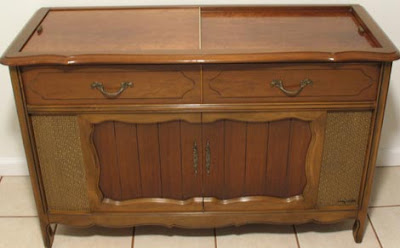

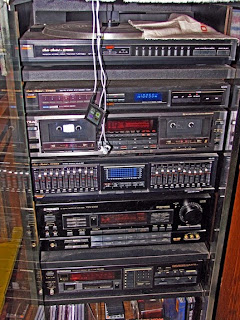
I grew up surrounded by music, with all members of my immediate family playing an instrument, singing or reading music. We had the requisite console stereo that played vinyl albums, which was later augmented by the 8-Track player.  We were very fortunate to have an uncle who was in vending (read that anyway you want) and my parents got us our very own jukebox that played 45s.  I spent my allowances on the latest releases, loading up the player to sound just like my favorite AM station.  But the most significant perk was being able to control what played.  It was rigged so you didn't have to put money in.  And, we discovered the "eject" button in case we had a fat-finger mistake or couldn't wait to hear the latest single from The Knack.  All this was novel and drove the fun at family functions, but the game changer was the all-in-one "media center" that allowed you to record from vinyl or radio to cassette or even- gasp!- from cassette to cassette!  All for about $159.99 at your local Sears or K-Mart.


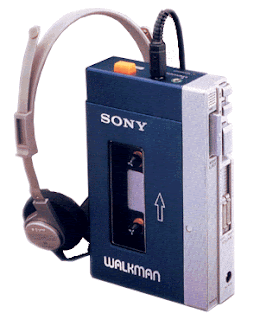
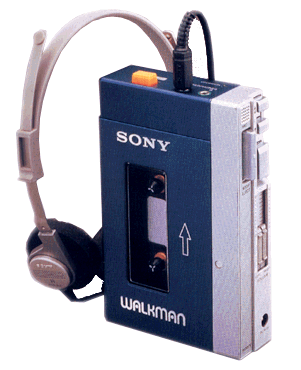
Not long after that, the Walkman strode into our lives.  A Star Trek tri-quarter looking device that was no bigger than a box of Crackerjax with personal mini-headphones, so much cooler than the ear sweat-inducing Princess Leia head-huggers. Now that we were all listening to cassettes, naturally, we all wanted to record our own.  Blank cassettes started around 45 minutes in length- 22 1/2 minutes each side.  And, that was fine, because a typical album only lasted about that long. But then came the 60 minute and 90 minute tapes.  What, pray tell, do you do with these??  Soundtracks were really hot in the 70s, with movies like Animal House compiling a bunch of hit singles to make a shoulder industry out of movies along with toys, posters and other marketable tchotchke.  And with that, the mixed tape was born.  Favorite Love Songs.  Party Rock.  Christmas Hits.  Best of the Beatles!  Stoner Tunes.  Are you kidding me?  The mixed tape became an art form.  Creating a mini-soundtrack that could set the mood which lasted anywhere from an hour to an hour and a half.  But sadly, once you played the tape to death, you had memorized the play order and it got stale.  Fast.


My first job was working in the record section of a department store.   Shortly after that, I worked at Wall-to-Wall Sound and Listening Booth, your one stop mall shopping for audio equipment and the latest (and oldest) hits.  Having the privilege of buying music at deep discounts when you're a teenager AND at the height of a musical revolution (punk and new wave) is not only exhilarating, it's downright dangerous.  Very often, I'd just hand my paycheck back to them, hoping to clear my tab from the latest vinyl binge.  But, just when you've built up a formidable library worth bragging about, deep with selection and breadth like a good wine cellar, another new form of technology comes- and you start over again.  
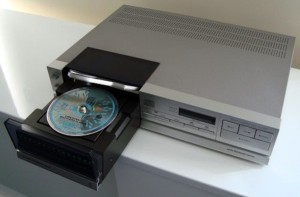
Switching to the compact disc was a no-brainer for people, because it couldn't be scratched the way a record could (and that presented its own problems for another emerging musical genre) and eliminated a crackling, gravelly sound that I never imagined I would miss.  As this technology evolved, the next phase in having complete mastery over your music library came with the "shuffle" function.  No longer would you have to stare blindly at the album cover and listen to the same songs in the same order ever again.  Shuffle was huge.  And, just when it seemed like it couldn't get any more exciting, there came the three-disc, then the five-disc and even 10-disc CD changer.  A benchmark in music listening came when I could load up all of my Smiths CDs and shuffle them at once, allowing for hour upon hour of pathetic whining and self-pity.  Even if owning a 10 disc player was the antithesis of suffering.  

Upon announcing I wanted the new 400 disc changer with programmable remote from Sony for Christmas, my family pronounced me officially insane.  But, I got it and gamely filled it completely up, creating my own categories of genres, which included 80s, Classical, Classic Jazz, Acid Jazz, World and VH1, that burgeoning category others knew as adult contemporary, but alas, a genre a thirtysomething didn't want to admit to owning.
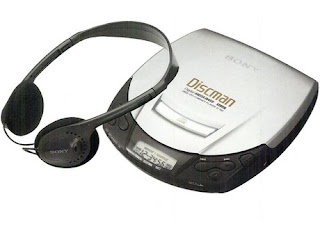
Sony jumped right on the dwindling interest in the Walkman and created a device the size of a Big Mac capable of playing single compact discs (also with shuffle) aptly named the Discman.  How could this little metallic sandwich produce the kind of intense sound as my full-size stereo, all while I clocked 3 miles on a treadmill??  (Author's note: just because you can use it on a treadmill, doesn't mean you should.  Wipeouts are expensive, but not nearly as damaging to your ego as when the entire gym watches you go down in flames and your player belches the disc across the room as a final indignity.)  

CDs were smaller and lighter, and thus easier to store.  No longer did you have to schlep a pleather suitcase of mixed tapes around on a vacation, getaway or long roadtrip.  Neatly compacted, zip-up books with plastic sleeves could hold 100 cds, and it took up no more space than a phone book.  To drag 100 cds all the way to Europe while attempting to travel light seems nerdish and excessive, that is, of course, until you whip out the perfect dinner jazz album watching the sunset on the Basque coast.  Or have the ultimate disc to fall asleep to when you can't.  Or need to access the right party tunes, when one unexpectedly crops up- you become a hero, a Renaissance DJ.  Close friends know I used to travel to dinner parties, friends homes and the occasional after-hours gig with my own music. 

The only thing I thought was left to evolve in this ever-changing universe of musical convenience was creating a recordable compact disc.  That was it:  copy your music (or your friend's music) onto a disc that you could load onto a multiple disc player? Or, record your old vinyl back onto disc, retaining that golden sound of yesteryear (even if the mid-section had been completely gutted out by the transfer of analog to digital).  And, finally, using a mixer board to create seamless tracks of beat-mixed music while burning your own copy??  Bonanza!

The technology was evolving exponentially now.  The new way of obtaining music was to get a computer with a fast enough internet connection so you could download a large file known as an MP3 that mimicked the ones that were created by the record companies for disc format.  It seemed like the computer was poised to become the new jukebox- the future of condensed listening.  No actual tangible disc to insert, just tiny bytes of compressed information magically making music out of digital information.  Napster and Kazaa music-sharing services changed the way we thought about obtaining music.  They created a huge shake-up in traditional music sales. It seemed everyone could get it, very often for free, and at a time when there were hardly any rules to the internet, let alone rules about digital file sharing.  

It was a chaotic period.  Formats were changing so quickly, no one wanted to spend their money anymore on re-replacing their music libraries- so they went where they could get the latest incarnation- and for free.  Online file sharing.  Musicians and record executives were crapping themselves, wondering how they would be able to survive when their final product had become something you couldn't hold, didn't need packaging for, could easily be shared with millions and no one to govern the dozens of sites that were giving it away for free (see Radiohead for how that turned into a plus for the band).  

I owned every last one of these devices and gadgets.  Some improved upon design, some on price.  I flirted with free downloading and creating a library of MP3s.  But, it seemed like I was starting over, yet again.

"Someone needs to figure this shit out," I thought.

I had heard only tangentially about the Ipod, but I was mostly convinced they were the next Mini-Disk player, a lead balloon if ever there was one in the  progression of music players.  My first encounter with an Ipod was a wedding gift I had received from a friend who is the biggest Applemaniac I know. I was not interested in being converted to the Apple way, so I proceeded skeptically.  I also knew there were proprietary drawbacks that made me scoff even further. 
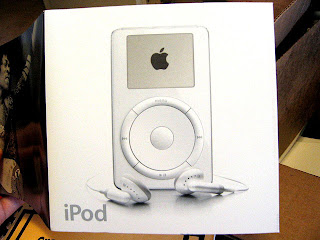
The packaging was an eyebrow raiser:  smooth, clean, minimal and compact.  The first generation Ipod resembled a futuristic passport or high-tech pacemaker.  Still, I was not sold.  With only one port for listening and one for charging, I wondered how it would actually work.  And I wondered.  And wondered.  There was no manual on how to operate the damn thing!  Am I supposed to just "get" what to do?  I bought the Missing Manual and spent days with my Ipod, laptop and guide hoping a light bulb would go on.  Ripping, burning, uploading, file conversions- WTF- I was pissed.  And what's with these earbuds?  I had the thing a week before there was any music on it.  Most of the problems arose from not knowing where the music was going once it was transferred to the hard drive.  And so, even though it was foretold the songs would go directly into my Music Match Jukebox (the software that would run it), it became clear, Apple had not made the MMJ, and thus, there were some square peg-round hole issues.   I had to use their software (Itunes) for this to really work.

But then it clicked- I could rip 10 albums a half hour to my hard drive!  They would go instantly to my Ipod upon plugging it in.  All my previously pirated files from Napster would upload in an instant of dropping and dragging.  And they were all alphabetized!  And put into genres!  And I could click one button and browse by artist or song!  Eureka!  A revelation.  The first generation IPod was 5 gigabytes, capable of holding some 1000 songs right in your pocket! 


This was the moment I had been waiting my whole life for.  

Every hurdle to the perfect listening device had been cleared.  I held in my hand the soundtrack to my life, which I could take anywhere, and with one very simple patch cord, I could plug it into any stereo, old or new.  I could plug in computer speakers and listen.  I could rock out the surprisingly efficient earbuds, or buy up to the noise-cancelling DJ version.  I could transfer all my music- vinyl, CD, MP3- into one neatly organized, efficient and flexible digital card catalog.  I already owned a cassette converter for my Discman- so I could listen to my IPod in the car, as well.  I even read in my manual there was a super-secret feature that could record voice (and it did!).  Switch to disc mode and I could store files like Christmas shopping lists.  And you could strap it onto your arm and run, jump, roll and flail about without creating a public incident (well, it didn't affect the Ipod, let's say).  In place of the mixed tape came the "playlist"; as easy to make by dropping and dragging songs on your computer as it was by double-clicking the songs on the device itself.  No time limits, no duplicates, and fully shuffleable depending on my mood.  This was the Holy Grail for me.  

Naturally came the proliferation of Ipod products:  The ITunes Store, Ipod docking stations, different colored cases and earbuds, car radio adapters- it was time to diversify.  As Apple started to put their tiered pricing into place, they realized they could make these things smaller and thinner, they could hold more data and they could keep the price about the same, or make it less for people who couldn't afford the big boy.  Variations like the Mini, the Nano,and the Shuffle; a Genius button, full color screens, picture files, video, whole movies- HOLY CRAP! SLOW DOWN!!  Finally- and inevitably- the IPhone was born, merging just about everything a hand held device ever was into one. I don't own an IPhone, and again- I don't want one.  But, evolution marched on.

Ten years later, I'm on my fourth Ipod and it's still an Ipod Classic- 6th Generation, with 80 gigs of storage, capping out at just around 15,000 songs.  I've since dumped all my pictures and video so I can store more music.  And, I'm already preparing to step-up to the next level, the 7th Generation Ipod which holds 160G of information.  It's rumored to be the last of the Classic Ipods. 

I take my RoPod with me everywhere.  It's another limb.  An angel on my shoulder.  My orchestra in the pit.  My musical muse.  

Were the Pharoahs of ancient Egypt alive today, I'd want to give as much credit to the slaves who built the pyramids, and not just the architects.  And so it is that I thank anyone and everyone who made the Ipod possible.  Not the least of whom was Steve Jobs.
Thursday, August 18, 2011

Wednesday, February 23, 2011

More Songs About Buildings and Food

Everyone seems to think they know about music from 1978.  Ignoring the simultaneous exploding genres of disco, country and western and metal, there were bands making music that didn't fit any mold, and as such, they were largely missed by Americans.  Kraftwerk,  O.M.D. and Talking Heads arguably did their best and most unique work in the late 70s.  

More Songs About Buildings and Food is the second album from TH.  Its jangly, bouncy guitar riffs and hyper drum beats career through funk and reggae with pschobilly reverberation echoed by David Byrne's stranger-than-life voice and lyrics.  To say the album was ahead of its time is a huge understatement.  But then, so was the band.  No performance captures the genius of Talking Heads more for me than this clip of "Found a Job" from the More Songs... album.  It's from the 1984 film Stop Making Sense directed by Johnathan Demme.  It's 3 and half minutes of the four members doing what they do best. 

Wednesday, December 29, 2010

Billy Taylor 1921-2010

Billy Taylor  1921-2010
We sometimes take for granted some of the jazz legends that are still living.  And so, when one leaves us, it stings a little knowing we won't be treated to any more of their artistry.  An American jazz pianist, composer, educator and jazz legend has passed on.  We will miss you, Dr. Taylor 

Wednesday, December 8, 2010

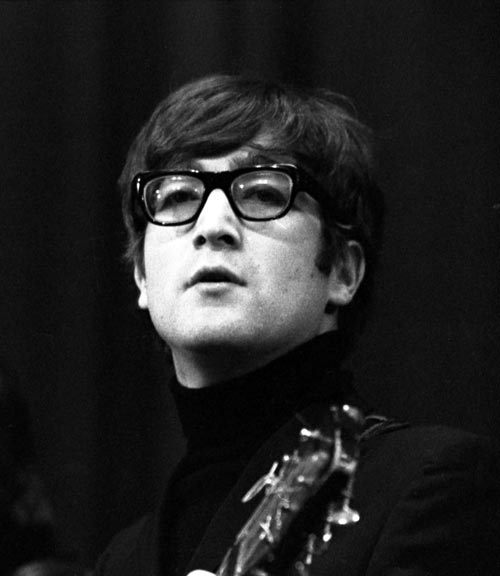
John Lennon: Oct. 9, 1940- Dec. 8, 1980

"Life is what happens to you while you're busy making other plans."  

Never are we reminded more of the preciousness of life as when someone special in our lives is taken from us suddenly.  I was 14 in 1980 when I heard John Lennon had been shot and killed.  I didn't know much about his life after The Beatles, accept that he was still alive and lived with Yoko Ono in a place called The Dakota.  That confused the hell out of me, since I heard he lived in New York.  

As a musician, I was really into The Beatles as a kid.  My parents had their albums, and they always seemed to be on the radio.  When some of the girls in my class wept that he had been killed, I didn't understand what for.  It actually seemed a bit contrived, too.  They painted peace symbols in eyebrow pencil on their cheeks and temporary tears at the corners of their eyes to show their permanent sadness.  "The world suffered a big loss for Peace today", one said.  Still, I didn't get it.  Idolatry was too big a word for me to use back then, but I understood its usage.  Did they understand that?

What I did get, however, was the huge musical loss we had just been dealt.  If ever there was to be a chance that The Beatles would reunite to play a concert, release a new album or even go back on tour, it was certainly most permanent now.  And that struck a strong emotion in me:  despair.  What could be or could have been.  Missed opportunities and potential represent some of the saddest of life's realities.  

As I grew older, I began to learn more about my new hero.  I learned which Beatles lyrics were his- and it made sense.  He was at once sarcastic and satirical, roguish and romantic.  I learned about his activism and ornery side, too.  I read books about him and his children.  I even understood Yoko, his much maligned widow who still evokes a great hatred among people that is at best irrational, and at worst the opposite of what John Lennon was about.

He made me laugh, too.  Like in a scene from Hard Day's Night, while the band is goofing off, he is seen quietly, yet curiously, holding a bottle of Coke up to his nose and snorting.  Subtle was John's forte.  In today's New York Times, Yoko Ono tells a story about how she and John used to laugh together.  And, one of her best and favorite memories of John was when they would make tea together.  Despite the myriad emotions we feel when we lose someone dear, the best way to overcome the grief and appreciate our time with them is with laughter.

For me, however, it will always be the music of John Lennon and The Beatles that bring the fondest memories; and for my daughter, they're the kind I can pass on.

Friday, November 12, 2010

Martini Hour


This Monday, November 15 at The Grand in Wilmington, one of the funnest (and my favorite) bands playing today, Pink Martini, will perform.  Start your weekend early with a video from the 1951film that inspired their cover of the song "El Negro Zumbon".  And, see you at the show on Monday!

Thursday, July 29, 2010

Ska Alert!

If you are of a certain age, you remember the rollicking ska bands of the 80s, led by English lads Madness and the English Beat, who later sired General Public.  Of course, there were many others, just as there were many before them in the early 60s.  The sound of the 80s ska borrows from the original Jamaican ska, which was a slower reggae beat with lots of brass and loopy bass lines.  

There are many bands that helped create the signature sound of ska, but none so much as The Skatalites.  The premier ska band, they are responsible for planting the roots of a music tree whose branches include the styles of rocksteady, reggae, rap, dub, punk, two-tone, 3rd wave, ska-jazz, ska-core and ragga.  Not only are they still playing, but the legendary band is coming to the Delaware Waterfront this Saturday, July 31! 

The People's Festival Tribute to Bob Marley is now a traditional event here in Wilmington that honors the legacy of the one time resident and legend of reggae.  Included in the sizzling line up along with the Skatalites, Midnite, King Chango, the Bullbuckers, New Orleans' Kirk Joseph, The Master of The SousaFunk and Wilmington-based Spokey Speaky will be performing on two stages throughout the day.  The Universal African Dance and Drum Ensemble will also perform.  

Friends: if you are serious about your music, this is a rare opportunity you shouldn't miss.  Tickets for the all day event are a ridiculous $15, or $20 at the gate.   

Saturday, April 24, 2010

F&C Rewind: The Sunday Playlist

My "holy" day has always been, and always will be Sunday.  I live in a world that doesn't observe a traditional seven day week.  You know, a beginning and an end?  So, when Sunday arrives, I really would rather not play restaurant, and take a few steps back and behave (however naive) as a civilian.  

Rituals are ok, mind you.  I'm not that OCD to freak if I don't get all my goodies.  But, if we're gonna go there, I need my NYT crossword and from the moment I rise, there needs to be music.  It matters not what else is going on- just keep it playing.  

I'm partial to Beatles early in the day, because of my attachment to Brunch with the Beatles on 98 WOGL.  But, I'm also sentimental for Syd Marks' Sinatra show.  And, then from my days of working brunch at the Virginia in Cape May, I love the sounds of Donald Fagan and Steely Dan, as well as VH1 faves like Annie Lennox, Mazzy Star and The Cowboy Junkies.  I love the early radio sounds of Ella Fitzgerald and Nat King Cole.  I dig 80s ballads from artists like Aimee Mann from Til Tuesday and Bryan Ferry.  And, give me a bossa nova, and I may never get up from the couch. 

The requisite for making it to the ever growing Sunday playlist is songs that make you NOT want to leave your chair.  I may hit the "genius" button every once and awhile on the Itunes, but I've been accumulating a play list for Sundays that allows the likes of Autour de Lucie to mingle with the likes of Tony Bennett and Herbie Hancock.  

Bagels or muffins?  French toast or pancakes?  Bacon or sausage?  Is there a wrong answer?  No.  They are all just variations on a wonderful theme.  Six hours of bliss.  It's the only time when it's legal to walk around in your PJs at 2pm or eat eggs as your first meal at 1pm.  How about just stumbling outside to garden with not a care if the phone rings or if the front door is locked? 

What are your Sunday rituals?  What fills your soul on a Sunday morning?  And, lay it on me- what's in YOUR Sunday playlist?

Tuesday, February 16, 2010

A Belated Valentine: Sade Returns

There is something to be said for an artist who can take off TEN years from making an album and still be relevant.  It seems many of my favorite artists do this.  They keep me entertained for several years on their scant portfolio of music, almost creating a greater appreciation for their art.  And then one day, a new work comes out and you find that all that you loved once about that musician has returned in glorious, gleaming aural beauty.  Yes, the artist formerly known as Helen Folasade Adu is one such artist.  Sade has returned, as fresh as ever.

I confess a certain crush on her beauty.  Born in Nigeria and raised in Britain, Adu makes 50 look like the new 30.  My wife was born in Ethiopia and raised in Italy.  There is an undeniable intrigue about a woman whose playground has been the world.  They carry themselves differently, they age differently and mature with the same velvety sensibilities as fine wine.  

Granted, many people pigeon-hole Sade as one of those VH-1 performers who wind up in the dreaded "Adult Contemporary" category.  And with Sting, they'd be right.   The video for the new single, "Soldier of Love" is contemporary and shows maturity(even if a little Janet Jackson-esque), but I'd hardly call her washed up or ready for an exorcism on "Behind the Music". 


Sade's voice is one of the most recognizable on the airwaves.  It is sultry, educated, firm and lilting all at once.  On "Soldier of Love", the latest release and single, the first words are sung after a commanding new wave tango beat and trumpet call- and you ask yourself, "Is this Sade?"  Yes.  Her voice has matured and sounds to have dropped an octave, that is until she begins a refrain about losing the use of her heart, but still being alive.  "I'm at the borderline of my faith. I'm at the hinterland of my devotion."  This is Sade's "Frozen" period.  

Just like Madonna, Sade and her long time producer Mike Pela, have found the proper polish for her bronze voice with lovely instrumental couplings.  "Morning Bird" has the very familiar feel to the "Love Deluxe" years, but with the addition of undoctored solo piano, it's an amazingly fresh sound.  Sade shows the healthy range of her voice in between haunting cello, piano and a barely audible arabesque tambourine beat.  This type of empty-room, musica triste sound is what can be found on another of my favorite artists' newish releases "Antidepressant" (2006) by Lloyd Cole.

"Be That Easy" is a lush, lazy waltz with reverberating psycho-billy guitars and snare brushes that could easily be a Julie Cruise tune written for a David Lynch film were it not for the warm layered harmonies.  Instead of scaring the shit out of you, it makes you want to pull up a big heavy quilt and watch the snow fall as you drift off for a monster nap.

As the album progresses, it doesn't seem possible the sounds could get more lush, but they do.  "In Another Time" sees the first appearance of the trademark saxophone we all associate with the Smooth Operator.  Heartbeat-type down tempo beats are another signature of many Sade tracks.  "Skin" lopes along with the same kind of retro-soul beat of an even more chill version of "Sexual Healing" from Marvin Gaye, as she simultaneously references "Michael- back in the day".   If you're thinking this is the perfect Sunday Album, you would be dead on.  There is so much to like on this release that when you consider how long it's been since her last release, it makes you a little giddy and a little sad all at once.  A mere 10 tracks and just over 41 minutes, less is definitely more.  


With lyrics that reference the moon, birds, love warriors and lost chances, flames and a safe hiding place for your broken heart ("The Safest Place"), "Soldier of Love", as with all six previous releases, reaches for the inner heart strings of anyone who has ever loved the music Helen Sade Adu makes for the world to enjoy.


Wednesday, December 9, 2009

Let There Be Music!


It's really hard for a chef to post at this time of year.  But, when it's in ya, ya gotta get it out.   And so, I want to talk about an important part of dining (to me anyway), and while I'm at it, I'll try to tie it into the season.

I have yet to speak openly about my absolute passion for music.  No- I'm not running out of ideas for posts early on in the game.  But, I'm so devoted to music- my music- that like food, when it is in short supply, I grow cranky.  I need food, I need wine with my food, and I need music with my food and wine.  Period.

I am that guy.  I bring my Ipod to dinner parties.  I "suggest" music when it's not there.  When it's bad- I change it.  When it's soft, I turn it up.  When it's off topic, I steer back.  See- somewhere along the line, the same way that we integrate food into our memories, I've skipped a rail or two and now the three- food, wine and music- are inseparable, interchangeable, indispensable.  Some of you may think this is hype- I assure you, it is not.  

This "merging of the passions" got serious with the advent of the Ipod and digital music.  Not that my front of house experience kept me from getting my fingers sticky.  But, when it became possible to create a playlist, without building a 90-minute mixed tape, without having to stick to 80 minutes of CD time, without any limitations on what plays, in what order and for how long- well- it's ON.  

You have to get, first, that I link the culture of music to the culture of food.  For example, as cheesy as it may be, when I'm at a real Japanese restaurant, I wanna hear music that makes me think of Japan.  I don't want to hear classic rock.  I don't want to hear house and trance.  There is so much awesome music out there, that, yes- I actually do have music that is both culturally correct and cool to quaf sake and slurp sashimi to.  That said, I like to hear music when I'm eating that at least equals the rate at which I am chewing, and doesn't exceed it.  There are all kinds of statistics I could give you about intensity of music volume and even brightness of lighting in restaurants that directly affect the rate at which you eat.  But, I don't wanna ruin it for you.

Then, there's Pandora.  The space-age, intelligent music service that is the closest thing we have to a free-thinking, non-sentient DJ.  It is nothing short of brilliant.  Once you get past the novelty of typing in a song or artist and hearing what comes out, then try to really challenge it;  add other artists, limit content, give it encouragement and reprimand it for being bad, and you've got the closest thing to a musical clone of you possible.  It's one step better than having someone take over your Itunes, because it resources music you don't necessarily have access to.  But, I digress.


Can there really be a more quintessential holiday musical compilation than "A Charlie Brown Christmas?"  I argue, not.


This incidental collection of music from the TV special is one of dozens of albums produced by the great pianist Vince Guaraldi.  He also has solo albums, he's recorded with his quintet, with an obscure, but ultra-talented Brazilian guitarist, Bole Sete- and of course, his trio.  But, no matter what recording, we all know the sound of the bubbling beat that begins the Charlie Brown theme.  We can picture Chuck and Linus hoofing through the snow to buy a tree while the trio lazily laments to O' Tannenbaum.  And of course, the chain of characters catching snow flakes on their tongues and sliding about the ice to Skating.  

The lazy melancholy we can all connect to at this time of year is captured in every bar of every song.  But it's not all a downer.  Just like the holidays, we relate to the highs and lows we experience in a time that is charged with emotions, memory and life.  

This is the cultural connection I'm talking about.  They're musically indelled images from memory.  It's hard, therefore, to be in a bustling bistro where classic French country cuisine is the fare, and they're playing the Gypsy Kings.  But, forget my cranky complaints- how much more ENJOYABLE would it be to hear some gypsy swing or Charles Trenet and Josephine Baker while finishing off a steak frites and a Stella Artois or carafe of beaujolais?  


When you sit down to crack a bushel of crabs open and sip some frosty longnecks- do you pop in the Carpenters anthology, or do you work in a thoughtful playlist of Bruce Springstein, Blues, Nina Simone, 70's pop and the Stones?  I think I've made it clear which I'd choose.


Yes, for those who know me well, this is for serious.  I'm willing to bet that for each of you out there who can name their top three restaurants ever, the one that is #1, you can also tell me about the music they play.  Even if you don't know the artists, you could say for certain there is a recognition.  Now, what about the rest?  *Come on- think aout it.*  See?


Funny thing is, when you dine in Europe, the lights are turned up and there is no music.  WTF?  Where did all these dimly lit, cozy restaurant images come from in our heads with romantic period music lilting in the background? I'll tell you where:  AMERICAN CINEMA.  Because, sitting in a real, classic Italian pizzeria in Verona or a boisterous brasserie in Paris, there simply is no music- and the lights are like the DMV.  


One of the more surprising recommendations from Thomas Keller's recent cookbook, Ad Hoc at Home, is to make sure music is a part of your kitchen experience.  Chef Charlie Trotter is also an avid fan of music- he likes everything from Portishead to John Coltrane- and even modeled one of his cookbooks after the concept of the jazz improvisations of trumpeter extraordinaire Miles Davis.  What more appropriate way to describe a menu that changes daily, relies on the classics, but provides combinations that are artful, modern and thought-provoking?  Self-indulgent? Yes.  Accurate?  Absolutely.
So, get in touch with your inner DJ.  Poke around the internet.  And, when  you hear music at a restaurant you like, someone has made great strides for you to notice, even if you don't notice.  Ask what it is.  Search engines these days, like the ones from Pandora, Amazon and Itunes are so advanced, you're bound to find music you enjoy while dining, cooking or just throwing back some cocktails.  Now I like the sound of that.


Saturday, August 29, 2009

Cow on a Hot Tin Roof

Swing has always had a special place in my musical line up.  It doesn't seem to matter how old, how new or how many instruments are involved, you can't beat the beat that gives a treat.  
The Hot Club of France gains credit for popularizing the swinging gypsy sound in the 30's throughout the cafes and cabarets of Paris.  Led by Django Rheinhardt and Stephane Grappelli, it's a style with prominent stand-up bass, wild fiddle and a bouncing, plucky guitar.  It's a hoedown looking for a barn full of people.  And it doesn't matter what language the songs are sung in, it still doesn't mean a thing unless it's got that swing.  Take for example, on the Putumayo Label, Swing Around the World.  Roughly 10 different countries take a crack at the classic sound.  It's a great CD for cooking and sitting around drinking.  I think everyone in my family has a copy.
Within the last few years, I realized there are several talented bands who directly borrowed their names from the original Hot Club, and they jam with all the enthusiasm and spirit as their predecessors.  The Hot Club of San Francisco has a more minimal sound, while Hot Club Sandwich (love that name!) has a rowdier approach.   The Hot Club of Detroit has a tinge of klezmer, with prominent accordion and clarinet, but the ever present holy trinity of bass, fiddle and guitar are still there.

The Hot Club of Cowtown is a band I just discovered, but they are by no means a new band.  This trio has just released a new album, Wishful Thinking, and is keeping the spirit of hot jazz and western swing alive.  This excerpt from their website gives you a bit more insight:


Lauded on NPR, darlings of international stages from Japan's Fuji Rock Festival to Stagecoach and all points in between, HCCT began as a combustible trio playing traditional music but began to develop its own sound through invitations to collaborate, tour with, and work alongside more contemporary artists.  The trio was hired (and survived) tours with Bob Dylan and Willie Nelson, first opening for them then playing with them: Elana, a classically trained violinist and the legitimate heir to the great tradition of Western swing which she learned firsthand horse wrangling and working with Texas fiddle masters (and a few stolen encounters with traveling Romany fiddlers), became the first dedicated female instrumentalist to tour in Bob Dylan's band in over 30 years.


An invitation from Bryan Ferry for HCCT to reinterpret his material coaxed the band into the modern mainstream. Rachel Ray put them in her cookbook!  Their appearances at mega-festivals from Byron Bay (Australia) to Fuji Rock (Japan) to Glastonbury (UK), and performances on Jools Holland's TV show, "Later," have brought the band international acclaim and a little closer to the millions waiting to fall in love with their music.  HCCT has taken a traditional idiom, dusted it off, transfigured it, and reinterpreted it on its own terms. The music is blazing, modern, and has more energy than ever."
Yeehaw. 
Couldn't have said it better (and didn't want to).  My favorite tracks include The Long Way Home, which Norah Jones did recently and Elana James' breathy, almost Jessica Rabbit rendition of Someone to Watch Over Me.  
Get it, share it and support the band and other musicians like them.
R

LinkWithin

Related Posts with Thumbnails