Showing posts with label books. Show all posts

Thursday, January 31, 2013

Mind Your Peas and Queues


For someone who never had a great interest in the English language in high school, I cannot offer much explanation for how I turned out to be a word nerd.  I recall giving my parents book reports and such to proofread, but I would become agitated when there was a lot more red pen than I had bargained for.  Yes, I wanted to know if I had left out a comma or apostrophe, but not that my syntax was wrong, or that there was a more efficient or eloquent way to express the thought.


It was during college that I became hooked on the New York Times Crossword Puzzle.  Many view it as the pinnacle of puzzles, others, a self-inflicted punishment of puns and wordplay.  But I saw it as a daily lesson on language and an opportunity to bone up on dinner party parlance.  Let's face it: after a few years of doing them on a regular basis, you're going to pick up a lot.  A lot of what I gained was due to my understanding of the Spanish language.  I never studied Latin, but when conjugating words, similar rules apply to most of the romance languages.  Even in English, it only takes filling in a word you think you know how to spell to find out that it doesn't fit, and then you know the right way.  More than anything, I liked the challenge of finishing what I started.

How I became a Grammar Nazi among my friends, is still up in the air.  I still lay no claim to being anything beyond decent at punctuation.  I've always been a chatty person, and so my sentences tend to run on.  So when writing creatively, I take a lot of creative license, which is, of course, another way of saying I don't follow the rules.  This is evidenced in the very post you are reading, as it has taken me three paragraphs to finally mention the subject of this post: The War on Words, a new book written by my colleague, Bob Yearick. 

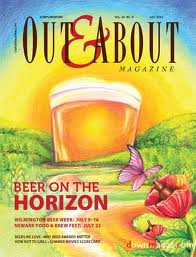
Bob is the editor-in-chief at Out and About Magazine, a Wilmington, Del., monthly that covers the arts, entertainment and restaurant scenes.  He has been writing for 45 years.  As you can imagine, I was a little intimidated when first approached by O&A for writing a regular column, but I was encouraged in hearing that the staff enjoyed my blog posts.  I saw this as another opportunity to strengthen my writing skills under the tutelage of a seasoned pro.  

Bob’s “The War on Words” column, which debuted in 2007, has become a reader favorite.  Now these columns have been collected in a paperback book. Each page contains a lesson in grammar, punctuation or pronunciation, all presented in an entertaining and sometimes snarky manner, of which Fork-n-Cork is heavy in content.  Still, like crosswords, there are rules, people.  And if we want to be taken seriously in the real world, we need to know how to spell.  

The book reveals what Yearick believes is the most misused punctuation mark and the most misused word, as well as such language niceties as the true meaning of “begs the question.” Hint: it does not mean “raises the question.”
The English language and its abuse, especially by public figures, has been his obsession for many years. “I spent a lot of time in the corporate world and I’m a big sports fan,” he says. “Corporate types and sportscasters and sports writers are among the primary offenders when it comes to misusing the language. They’ve given me plenty of fodder for my column.”

In the introduction to the book, Maria Hess, editor-in-chief of Delaware Today, says, “Bob gets actual fan letters and has become something of a local grammar superhero. He can’t leap tall buildings in a single bound, but he has managed to get thousands of people to care about proper use of the English language. In a world where texting, twittering and email are eroding our writing skills, Bob’s accomplishments are nothing short of heroic.”  

Yes, word nerds rejoice; we have a hero, and his name is Bob Yearick.

The War on Words can be purchased through the Out & About website: www.outandaboutnow.com, for $9.95 plus $3 shipping, or contact Yearick at ryearick@comcast.com. It is also available at Ninth Street Books in Wilmington and the Hockessin Book Shelf. The e-book is available from Amazon, Barnes & Noble, Sony and iBook for just $3.95. 

Saturday, December 31, 2011

Happy New Year


Farewell, 2011! 

It was another interesting year for food, celebrity cook-types, wine, The Phils and of course, music.

A VERY quick wrap of some of my 2011 favorites.  

Dinner at Amis after ONE of the blizzards in February.  Guinness Export: first time in the states since- 1940s? Dope.  Eleven Madison Park and Rotis cookbooks.  


In concert, Aimee Mann, OMD and English Beat.  On TV: Portlandia, Workaholics, and Beavis and Butthead.  


2011 Philadelphia Phillies- 102 wins, 5th consecutive NLE Championship.  And on that note, Vance Worley's pitching.  Wilson Valdez's winning pitching effort in the 19th against the Reds! What the WHAT? Cliff Lee's first major league HR.  Hunter Pence (Good Game! Let's Go Eat!).  And following it all on Twitter was pretty fun, too.  

Beer got more delicious.  Produce got more local.  Good cheese became more available.  In addition to my 4 year old's penchant for seaweed, olives, bacon, salmon, and soba, we added shrimp and octopus!  Three or four dozen delicious Sunday dinners at M&D's (right?).  

The Chef's Table revival at the UWC.  Shigoku oysters from the West Coast (holy mother of God- over the top).  Foie gras and shrimp toast together in one dish.  Scallop dumpling and squab consomme.  Amazing locally foraged mushrooms- and monstrous porcini from Oregon. Kabocha squash (don't know how I missed this).  Barely Buzzed coffee-rubbed cheddar from Bee-Hive Cheese Co.  And, home-made Orange Grappa from Italy.  


Domestic sparkling from Argyle in Oregon and Gruet in New Mexico.  Robert Stemmler Pinot Noir, Estate.  Merry Edwards Sauvignon Blanc. Mission Estate Pinot Noir.  Barricadiero, carried all the way back from Italy (MiMi!).  Just about every wine I drank from Moore Brothers, especially the wines from Mas Amiel.  

Gabrielle Hamilton's Blood, Bones and Butter and the return of non-fussy food. Amazon's Cloud Player and Kindle App. for the Android.  

I caved in and for the first time watched episodes of Top Chef: Texas and Harry Potter.  I liked both.  

To anyone I cooked with, ate with or drank with in 2011, I'm looking forward to lots more in 2012.


Monday, December 5, 2011

F&C Rewind: By The Book: A Cook's List of Essentials

At this time of year, it becomes very challenging to focus for an hour or two on producing a new post.  As such, I like to pull out particularly poignant posts and put them back up to keep you interested!  Since it is the gift-giving time of the year, I thought it'd be apropos to re-run my list of favorite or must-have cookbooks to add to your arsenal.  In revisiting this piece, I found that while I have since added many more to my collection, those I originally chose for The Top still retain their standings.  Bon appetit!
~~~~~~~~~~~ 
I've lost track of how many cookbooks I own.  Yet, I always know when one is "missing".  I do know that as I get older, I buy fewer.  But, the other night I thought that it had been some time since I pulled out a cookbook just to peruse the contents for pleasure.  I grabbed the Frog Commissary Cookbook, an oldie, but a goodie.  I had actually just gotten a copy, so while it was published in 1985, it was new to me.  

By all standards of what a cookbook should be, it's one of the best.  It has simple, succinct recipes with quick, informative descriptions of ingredients, methods and dishes that may not have been common knowledge in the Decade of Greed.  My favorite part is the "how to" in the margins.  I think it's useful to know, for example, the items and quantities to set up a proper bar for a cocktail party of 50.  Or, the essentials of setting up a raw bar, hors d'oeuvres buffet or continental breakfast.  This is real, practical stuff.  The style of food is eclectic and not pretentious.  But, by today's standards, the book would never sell more than 1000 copies.  


It wasn't designed for the coffee table.  More like, it was designed to put your coffee cup on.  Nor does it have full page, glossy, sexy food porn shots.  It doesn't praise the farmer who delivers their eggs, it doesn't feature drawings or paintings from staff, and it doesn't cost $55.  It's a true utilitarian cookbook.  

The Moosewood Cookbook of old is another with easily-soiled, coloring book quality pages, and matching hokey drawings of dancing broccoli from a time when vegetarians weren't so annoying (yeah, I said it).  Another paperback, it may be the gold standard for diverse, non-meat recipes that runs the full gamut of appetizers to desserts.  And, I dare say they're healthy, too.

The Silver Palate is another crossover book that should sit on the shelf of the serious cook.  It too is from an age when the author sought to give not just a broad spectrum of current, creative and healthful recipes, but it came from an accomplished cook who, like Julia Child and James Beard, wrote for the everyday cook.

So, why then, do I have so many cookbooks if I already know how to cook?  I'm trying to figure that out myself.  After much consideration, beyond the obvious answer of "recipes", my collection provides inspiration.


I own every cookbook from Thomas Keller and Charlie Trotter, because I admire their style, their philosophy, their creativity and probably above all else,  their discipline.  I can pick up one of their books and feel their unique style ooze out of a phrase of admonishment.  To prepare food at that level requires a certain work ethic and commitment on the part of the chef.  At times, I'll open the books and page through them simply to look at their pictures, presentation or what ingredients they combine.  Maybe even peruse a particular season to get ideas.  Often, I just like to revisit an idea.  But, I rarely prop them open and "cook from them".  They are conceptual books meant for the lover of food and art.  This is the style of cookbook most common on the shelves today. 
In this same genre, I have the Inn at Little Washington books.  Along with Trotter and Keller, they tell of the building of their brand:  the loyalty of their staff, faithful customers and what a unique dining experience they are.  It's like buying the program at the ballgame.  You saw the show, now take the glossy keepsake home for years of enjoyment to come.


Another section of my culinary library is built on the "must haves".  My go-to book for classical Italian is Marcella Hazan, my Japanese, Nobu.  Baking, CIA and Cheese, Steve Jenkins.  Some genres require more than one, and as a Francophile, I own no less than 20 French cookbooks.  Paris cooking is covered by Patricia Wells, while country cooking is beautifully and completely rendered in Anne Willan's recent Country Cooking of France.  I have a rudimentary, yet useful book of recipes from the Basque region (in French).  I have the masters; Blanc, Ducasse, Guerard, Bocuse, Troisgros, Girardet.  Then, cross over into the US for the expats, and I have Ripert, Boulud, Robouchon, Richard, Jean-Georges and Pepin.  

Recipes from Da Fiore of Venice focuses on the gorgeous seafood and regional ingredients of the Veneto.  While the publisher BK (from England) has put out several primers on ethnic cuisine, of which Indian Cuisine has been the most useful to me.


Saveur's three book series on American, Italian and French cuisine is a must for their "real" recipes, grounded in tradition and authenticity.  It doesn't hurt that they have some of the most beautiful photography of any food magazine today.  

Back when I was just a waiter aspiring to take over the world, I bought a copy of Larousse, Gastronomique.  It is the mother of all culinary tomes, both encyclopedia and recipe collection at once.  It has entries on Antonin Careme and Julia Child.  It has the origins of salade nicoise and the proper way to make a vegetable "charlotte".  It's very...old school.  If, on the other hand, you need a reference guide, whether you're a newbie or want to check your spelling on a menu, The Food Lover's Companion is the most user-friendly resource on the market.  There are three editions, two editions of the Wine Lover's Companion and now the Cheese Lover's Companion, the last husband-wife collaboration before the founder, Sharon Tyler Herbst passed away just a few years ago.

I suppose if there were one book that was a game-changer for me, it would have to be Gray Kunz "The Elements of Taste".  For an advanced cook, you long for a collection of thoughts and ideas that encompasses and sums up the building and layering of flavors from a conceptual standpoint with examples to back it up.  When this book was released, I read it from cover to cover.  I began to think differently in the way I wrote menus, created dishes, the way I seasoned food and more importantly, the way I corrected my seasonings.  The book is broken into four categories:  Tastes That Push, Tastes That Pull, Tastes That Punctuate and Taste Platforms.  And, rather than arranging food by course or primary ingredient, they identify 14 basic tastes (salty, sweet, floral, herbal, "funky," meaty, etc.).  The binding on my copy is beaten up, the pages slightly stained with wine and demi-glace.  It's the one book I don't loan out anymore, and it's because it's not in print anymore.  New copies on Amazon start at $355 each (*$136 today-R.A.L.).

I have several books on only one subject from, pancakes and foie gras, to truffles and duck.  Soups, sauces, shellfish and seafood, mostly by James Peterson.  You need Harold Magee to answer those nagging questions about which boils faster, hot or cold water?  Or, how to hard-boil an egg without the green sulfuric ring around the yolk.  It goes without saying, but Beard and Child belong on your shelves, and should be read.  Craig Claiborne, Deborah Madison and Mario Batali have earned the right.  There are so many other great books- all of which have contributed to the enormous array of talent we experience today.  

Whatever reason you like buying a particular cookbook, it is personal and you don't owe it to anyone to explain why.  The above mentioned books have broadened my knowledge and creativity in the culinary arts, and I hope you find the list of use.  No matter what your level of cooking, is there ONE cookbook that changed your life?      

Thursday, November 10, 2011

Take this APP and Shove It!

It's time to take another glance at technology, pop culture, and the world of food.  Along with political protests and Famous Dictator Deaths (for $500, Alex), 2011 will likely go down as the year of the Tablet, the popular digital gadget and "must-have" of toddlers, students and adults, alike. 

My alma mater just released last month a fully interactive tablet application for "The New Professional Chef", the exhaustive, comprehensive Bible for all CIA students and grads.  And, in good turn, after testing it out and piling on a little kindling (ahem) to the fire, The New York Times asked the incendiary question, "Are Cookbooks Obsolete?"

I suppose the same question has been asked recently of magazines and newspapers.  We're already in the midst of a sea change in traditionally printed materials.  Gourmet Magazine is dead and burried. But, cookbooks obsolete?? Let me begin by acknowledging that tablets as teachers have an edge over texts as they promote space saving, speed and accessibility.  Putting a reference such as Pro Chef into a compact, highly convenient, interactive application for mobile devices was brilliant.  Mostly, because it's meant to be used as a teaching tool.  But, you ask, "Aren't all cookbooks teaching tools?"  Hardly.  There are several styles of cookbooks- and yes, utilitarian is one.  But, the real question is, "Of all the cookbooks you have, what percentage of them do you actually cook from?"  Are we talking single digits, here?  

I guessed as much.  

Cookbooks are a very unique way for people to connect with food.  When we choose a book for our collection, we attach ourselves to its personality.  The beautiful photography can activate Proustian memory in some, salivating in others.  We can see ourselves sitting in folding chairs at the long vineyard or farm table with carafes of rose and fresh cut flowers, kids, dogs, family and huge bowls of colorful pastas, salads and breads.  The freshly baked cake on a decorative ceramic pedestal looks a lot nicer than it does on the heirloom cookie sheet with foil.  And, the people in cookbooks are more beautiful than we are.  We live vicariously through the culinary landscapes they depict.

Last week was the release of another cookbook, possibly the most anticipated of 2011,  Eleven Madison Park.  The boys at EMP are riding the crest of some remarkable recent publicity, a well-deserved three stars from Michelin Travel Guide and the news they are branching out on their own from Big Daddy Danny (Meyer) to not only purchase EMP, but open a new hotel next year.  This book is the modern equivalent of The French Laundry cookbook or Grant Achatz's Alinea; beautifully photographed, extra-large format books that define an era and critical genre of American cooking.  EMP is a stunningly gorgeous book that leaves you shaking your head and licking your lips at once.  For advanced cooks, it represents a cuisine you must grasp or risk being left behind.  At the criminally priced $25.77 on Amazon, this book could easily fetch $100 or more, specifically because it is so revered as a "must have" for foodies.  Yet, I cannot imagine sitting down with a smart phone or tablet and getting a fraction of the pleasure I get from reverently leafing through the heavy, white pages of culinary artistry it provides.

A dish from Eleven Madison Park Cookbook; Photography by Francesco Tonelli
Whenever I am writing a menu of great importance, I open a mature bottle of wine and pull the big boys off the shelf: Ducasse, Blanc, Kunz, Robuchon and their American counterparts, previously mentioned.  The same consideration given to appreciating the wine's nuances is given to the genius and years of professional and creative contributions these artisans provide.  Charlie Trotter who helped define this type of modern, food-as-art cookbook is famous for saying of his first book, and I'm paraphrasing, "Use this book as either a collection of recipes to try or simply use the pictures and recipes as inspiration; but think outside the recipe."  

Mood has as much to do with inspiration as source.  As I slowly turn the pages and sip history, I am reminded that a cook's collection of cookbooks define his style and philosophy on the subject.  A method here, a shortcut there- even if you flat out copy a recipe, it'll never come out the same way twice.  Reducing that tactile experience to sliding screens of reconfigured 1s and 0s seems unromantic at best, and more like being cheated of some really creative ideas.

No, I'm not willing to give up aesthetics for convenience.  Yet, I confess that I bought Gabrielle Hamilton's Blood, Bones and Butter for my phone with Kindle technology.  I couldn't wait to read it, and I knew at that time of year, I was more likely to read it digitally because of my work load.  I loved it; it was convenient and quick and it was always there when I had a few moments to spare for another chapter or two. And the built in book light was a bonus for these aging eyes.  But, I feel as though someone has stolen from me a book that should now be nestled right between Comfort Me With Apples and The Soul of a Chef on my shelf at home.  Instead, I have it on my phone.  Sigh.

Even more preposterous is the idea that people would stop giving hardcover cookbooks as gifts.  Culturally we all benefit from reading and cooking from cookbooks.  I suppose I love the Pixar film Ratatouille so much because of its message- which, by the way is NOT "Anyone Can Cook" (Linguini can't cook- and is relegated to waiting tables at the end).  The resounding message to all ages is, and should be, encourage creativity.  After all, what is a cookbook if not a collection of ideas meant to evoke a visceral connection to food?  If it was to feed ourselves or to learn to cook, surely we would have all starved to death by now.

Thursday, March 10, 2011

Blood, Bones and Butter

Okay, I know I've given some time to Chef Gabrielle Hamilton on this blog already- but, I'm only on the third chapter of this marvelous memoir and I am rapt with my own memories of growing up, first food experiences, sibling rivalry and intense smell association.  In short, this is a chef's chef memoir, and I am devouring it.  More to come...

Sunday, October 17, 2010

Opus, Where Have You Gone?


Is it me, or are people becoming nastier?  Less patient, more paranoid.   Where is their lust for life?  Doesn't anyone remember the kumbaya of "Our Time in Eden" by Mother Earth herself, Natalie Merchant?  Or the little books urging us to not sweat the small stuff, to learn from our Kindergarten experiences and embrace the Eckhart Tolle that is supposed to reside in all of us??

When you go through a cycle of surreal circus news like we've had the last few weeks- celibate, creationist witches for Congress, bullying teens turn suicide tragedy, modern-day Red Scare politics, gay-bashing, and a general paranoia among people- you long for an island of sanity to escape to.  (Although I confess a little grumpiness of my own; e.g. I can't even enjoy my Phillies in the playoffs because FOX and TBS manage to turn the great Fall Classic into a gimicky, dumbed down, American League-leading Yank-fest, with vapid commentary.)  It all calls for a steady and consistent IV drip of common sense, sarcasm, irony and wisdom. A tonic to help the masses look less like asses.  For me, the daily and Sunday comic, Bloom County used to be that bromide.  No- religion.  Opus, where have you gone?

This isn't your ordinary pine-for-the-days-of-old kind of post.  I don't need the "that was then this is now speech".  Bloom County was timeless- like the Beatles or Roald Dahl books.  

Each delicately crafted character held a collection of human hopes, dreams, frailties, and flaws.  And, yes- anxieties!  Who can forget Michael Binkley's closet?  Spawned from normal kid fears of things that go bump in the night, Binkley's closet became a hilarious stage for the freakiest of pop culture icons to strut and fret upon.  Tammy Faye Baker, Jesse Helms, Richard Simmons and Milton Friedman were some of the more memorable fodder to hit the strip.  Soviet Premier Yuri Andropov (how long did he live as president?) and Cuban Leader Fidel Castro showed up one night to haunt Binkley, but it turned out they had the wrong closet- it was supposed to be Ronald Reagan's. 

Bloom County held a cast of mini-eggheads (both human and woodsy animal-type) who knew more about philosophy, politics, etiquette, love and hardship than their adult counterparts.  The womanizing Steve Dallas was getting dumped on more regularly than a daisy in a cow pasture, that is, until he was captured by aliens and turned into a feminist.  Binkley's single dad showed all the hardships and frustrations of being a single parent during toddlerhood.  Cutter John, the soft-hearted but passionate wheelchair bound friend of the Bloomies led high-speed excursions on his wheel chair through the meadow on the USS Enterpoop.  Any reference or connection to Star Trek, it seems, is guaranteed acceptance among the general comic reading public (see: Comicon for proof). Because we can all laugh.

We all understood the constantly frazzled Bill the Cat: we've been there.  It is uncertain whether he was left that way by some drug experiment (or experimental drug!) or whether he was simply toting an extra chromosome around.  He's been a televangelist, a cult leader, a presidential candidate and a rock star, all supporting the theory that crazy is as crazy does.  Just look at the aforementioned week of news topics.  Either way, his trademark "ACK!" has many a day summed up my feelings of life as a cat in an adult world. 

But perhaps the one we could all fondly relate to was the neurotic, bowtie wearing penguin, Opus.  Often mistaken for an iguana, he was given to fits of shouting loud declarations calling for fairness, common sense and acceptance of the absurd.  His late night habit of ordering from infomercials and an addiction to herring showed the imperfect side of us all.  His frequent chats with "the sky", from the safe haven of Bloom Meadow, mirrored American existentialist feelings in a rapidly developing world of technology and rapidly declining morals.  Searching for something he couldn't have or long lost (in his case, his mother) was the common thread through the strips' years, though he did achieve satisfaction in the end.  Opus was more than the underdog.  He was "someone" we could lean on in uncertain times (which seemed to be ever present).  He was a panacea. 

Just like other rebirths, spin-offs and imitations (even if by the original creator), Bloom County was more than the sum of its parts.  And, now more than ever, we could use a daily dose or two of the silliness.  Quoted in the late 70s about his newly minted comic, creator Berkely Breathed said, "As I see it, the world is getting more dangerous. But of course it's getting funnier proportionately, hence a mixed blessing. Clearly this decade is in need of some serious analysis on the comic pages."  

Timeless, I say.  Timeless.

Wednesday, August 18, 2010

F&C Rewind: It's a Blog, Blog, Blog, Blog World!

This is a re-post.  It was originally made on October 15, 2009
I was checking out the FoodBuzz Food Blog nominees for the 1st Annual Food Blog Awards (talk about a mouthful), and I never had any idea how many people are blogging their meals.  There are people following the Julia and Me route; for example, Alinea at Home is a blog devoted to cooking all the recipes in Molecular Cheftist Grant Achatz’ recent book, Alinea.  Brave soul.  And Bouchon for Two is a blog from a budding chef who is learning how to cook from Thomas Keller’s Bouchon cookbook.  Seems like a more practical project to me.

But, looking at these nominated blogs, it seems these people are as much into the production of the blog as the food and cooking.  And that can be fun, too.  No doubt, cooking is a full time activity in itself.  But, keeping your recipe straight, getting the right amount of light for photos (something I am still working on), making sure steps aren’t left out, editing the shots and then, there's writing and proofing the actual copy or voice of the blog- it’s like a full-time, one-person magazine!  Then, there are you crazies out there who put video in?  My.  Ambitious, to say the least. 

And for all that work, does anyone get paid?  I mean, yeah, there’s the possibility of earning ad dollars.  More like pennies.  But, when you really get some traffic, you might get some sponsors or a bump from a big time blogger like Oprah mentioning your site.  Okay, I made that part up.  But, really- am I being naïve that this is supposed to be about expression of creativity and just good clean fun?  My friend and fellow blogger, Dave McDuff of McDuff’s Food and Wine Trail says, “Be careful!  It can be very addictive.” (Just an aside here, in case you decide to take issue with my use of "addictive" vs. "addicting", there is even a blog for that- ask Grammar Girl- if you like your grammar tips "quick and dirty".  And, who doesn't?)  So then, are "comments" the payment of the blog world?  If so, I will not be quitting my day job. 

Then there’s the stat checking.  I am amazed at what information is compiled.  I know where you are, how often you check, how you find me, how long you stay, what you look at, when you leave and when you come back.  For example, because of my use of Auguste Escoffier’s picture, I can see I've had hits from just about every country in Europe, Mexico, Bolivia, Canada, and Turkey.  And because my “peanut pumpkin” was tagged with its other names in French, it is the second most common way people find this blog, other than my name and Escoffier's.  It’s crazy, I tell ya. 

So, I guess what I’m saying is that if you want to take all of it seriously, you can.  I could put up sexy food pics as the first image to capture surfersby, or I could make sure the title of each post is catchy, trendy or even a hot topic.  I prefer not to get into gossipy stuff like, for example, what a douchebag Kanye West is.  Oooop!  Too late.  But there it is- now let’s see if it brings any traffic for people using keywords “Kanye” and “Douchebag”.
I wish I was more patient with writing recipes.  People love them.  But, by now in my cooking life, I only think in terms of ratios and order of cooking.  I write recipes for cooks to follow.  And if I buy a cookbook, I want to get the essence of the topic and, what else?  Beautiful, lovely food shots.  But even when I read a recipe, I’m only interested in seeing what’s in it by comparison to how I would cook it or how it is normally cooked.  Amounts are trivial.  It’s no wonder Jamie Oliver and Thomas Keller don’t like to use exact measurements.  They hope you are getting a broader picture of a method for cooking that dish.  Even Julia was more interested in getting the concept of the dish across to you more than an exact translation.  Folks, it took me longer to blog my chili recipe than it did to cook it.

So, by now you’ve noticed that the pictures on this post have nothing to do with what I’m talking about.  I’ve put pictures of dishes that I’ve cooked in the past which photographed well and are appealing to the eye (so much for subtlety).  But, I wanted to see if my theory was right.  If so, regular visitors will read this blog entry in about 2.3 minutes, mostly because of the fetching photos, before moving on.  My “grumpy old man” post about Gourmet closing, for example had only two pictures, and it had one of the lowest “stay times” since I started blogging.  If you’re just stopping back and noticing the new format, you will stay a little longer.  And if it’s your first time here, you’ll stay an average of 20 minutes to check it all out.  But, hey, who’s counting?

So, thanks for stopping by today!!   
And now- Gratuitous PIE!
Good Housekeeping Cranberry Pie.  Not mine.

Saturday, July 17, 2010

Cooking by Ratio: So Easy, Even a Caveman Can Do It

Food and techie fans: prepare to have your world rocked. 

Recently, I spoke about "ratio cooks", or cooks who rely on the bare essentials that never change when it comes to cooking.  For example, when faced with the quandry, "How much stock do I use for a pound of risotto", a ratio cook would say that you always use 3:1 liquid to rice.  Whether you use water, stock, wine or a combination of all three, your rice will cook correctly with a 3:1 ratio.  

Michael Ruhlman, author of several books on food, cooking and celebrity cookbooks, and generally considered required reading for any serious cook, has just released an application for smart phones based on his most recent book, Ratio.  It not only contains the 30 or so ratios of which I speak, but also calculates and converts recipes at the touch of a button or two, has tips on technique (for those a little rusty), and weights and measures conversions.  The future of convenient cooking is here!  And, it costs only $5.


Tuesday, May 18, 2010

By The Book: A Cook's List of Essentials

I've lost track of how many cookbooks I own.  Yet, I always know when one is "missing".  I do know that as I get older, I buy fewer.  But, the other night I thought that it had been some time since I pulled out a cookbook just to peruse the contents for pleasure.  I grabbed the Frog Commissary Cookbook, an oldie, but a goodie.  I had actually just gotten a copy, so while it was published in 1985, it was new to me.  

By all standards of what a cookbook should be, it's one of the best.  It has simple, succinct recipes with quick, informative descriptions of ingredients, methods and dishes that may not have been common knowledge in the "decade of greed".  My favorite part is the "how to" tips in the margins.  I think it's useful to know, for example, the items and quantities to set up a proper bar for a cocktail party of 50.  Or, the essentials of setting up a raw bar, hors d'oeuvres buffet or continental breakfast.  This is real, practical stuff.  The style of food is eclectic and not pretentious.  But, by today's standards, the book would never sell more than 1000 copies.  


You see, it wasn't designed for the coffee table.  More like, it was designed to put your coffee cup on.  Nor does it have full page, glossy, sexy food porn shots.  It doesn't praise the farmer who delivers their eggs, it doesn't feature drawings or paintings from staff, and it doesn't cost $55.  It's a true utilitarian cookbook.  

The Moosewood Cookbook of old is another with easily-soiled, coloring book quality pages, and matching hokey drawings of dancing broccoli from a time when vegetarians weren't so annoying (yeah, I said it).  Another paperback, it may be the gold standard for diverse, non-meat recipes that runs the full gamut of appetizers to desserts.  And, I dare say they're healthy, too.

The Silver Palate is another crossover book that should sit on the shelf of the serious cook.  It too is from an age when the author sought to give not just a broad spectrum of current, creative and healthful recipes, but it came from an accomplished cook who, like Julia Child and James Beard, wrote for the everyday cook.

So, why then, do I have so many cookbooks if I already know how to cook?  I'm trying to figure that out myself.  After much consideration, beyond the obvious answer of "recipes", my collection provides inspiration.


I own every cookbook from Thomas Keller and Charlie Trotter, because I admire their style, their philosophy, their creativity and probably above all else,  their discipline.  I can pick up one of their books and feel their unique style ooze out of a phrase of admonishment.  To prepare food at that level requires a certain work ethic and commitment on the part of the chef.  At times, I'll open the books and page through them simply to look at their pictures, presentation or what ingredients they combine.  Maybe even peruse a particular season to get ideas.  Often, I just like to revisit an idea.  But, I rarely prop them open and "cook from them".  They are conceptual books meant for the lover of food and art.  This is the style of cookbook most common on the shelves today. 
In this same genre, I have the Inn at Little Washington books.  Along with Trotter and Keller, they tell of the building of their brand:  the loyalty of their staff, faithful customers and what a unique dining experience they are.  It's like buying the program at the ballgame.  You saw the show, now take the glossy keepsake home for years of enjoyment to come.


Another section of my culinary library is built on the "must haves".  My go-to book for classical Italian is Marcella Hazan, my Japanese, Nobu.  Baking, CIA and Cheese, Steve Jenkins.  Some genres require more than one, and as a Francophile, I own no less than 20 French cookbooks.  Paris cooking is covered by Patricia Wells, while country cooking is beautifully and completely rendered in Anne Willan's recent Country Cooking of France.  I have a rudimentary, yet useful book of recipes from the Basque region (in French).  I have the masters; Blanc, Doucasse, Guerard, Bocuse, Troisgros, Girardet.  Then, cross over into the US for the expats, and I have Ripert, Boulud, Robouchon, Richard, Jean-Georges and Pepin.  

Recipes from Da Fiore of Venice focuses on the gorgeous seafood and regional ingredients of the Veneto.  While the publisher BK (from England) has put out several primers on ethnic cuisine, of which Indian Cuisine has been the most useful to me.


Saveur's three book series on American, Italian and French cuisine is a must for their "real" recipes, grounded in tradition and authenticity.  It doesn't hurt that they have some of the most beautiful photography of any food magazine today.  

Back when I was just a waiter aspiring to take over the world, I bought a copy of Larousse, Gastronomique.  It is the mother of all culinary tomes, both encyclopedia and recipe collection at once.  It has entries on Antonin Careme and Julia Child.  It has the origins of salade nicoise and the proper way to make a vegetable "charlotte".  It's very...old school.  If, on the other hand, you need a reference guide, whether your a newbie or want to check your spelling on a menu, The Food Lover's Companion is the most user-friendly resource on the market.  There are three editions, two editions of the Wine Lover's Companion and now the Cheese Lover's Companion, the last husband-wife collaboration before the founder, Sharon Tyler Herbst passed away just a few years ago.

I suppose if there were one book that was a game-changer for me, it would have to be Gray Kunz "The Elements of Taste".  For an advanced cook, you long for a collection of thoughts and ideas that encompasses and sums up the building and layering of flavors from a conceptual standpoint with examples to back it up.  When this book was released, I read it from cover to cover.  I began to think differently in the way I wrote menus, created dishes, the way I seasoned food and more importantly, the way I corrected my seasonings.  The book is broken into four categories:  Tastes That Push, Tastes That Pull, Tastes That Punctuate and Taste Platforms.  And, rather than arranging food by course or primary ingredient, they identify 14 basic tastes (salty, sweet, floral, herbal, "funky," meaty, etc.).  The binding on my copy is beaten up, the pages slightly stained with wine and demi-glace.  It's the one book I don't loan out anymore, and it's because it's not in print anymore.  New copies on Amazon start at $355 each.

I have several books on only one subject from, pancakes and foie gras, to truffles and duck.  Soups, sauces, shellfish and seafood, mostly by James Peterson.  You need Harold Magee to answer those nagging questions about which boils faster, hot or cold water?  Or, how to hard-boil an egg without the green sulfuric ring around the yolk.  It goes without saying, but Beard and Child belong on your shelves, and should be read.  Craig Claiborne, Deborah Madison and Mario Batali have earned the right.  There are so many other great books- all of which have contributed to the enormous array of talent we experience today.  

Whatever reason you like buying a cookbook, it is personal and you don't owe it to anyone to explain why.  These particular books have broadened my knowledge and creativity in the culinary arts, and I hope you find the list of use.  No matter what your level of cooking, is there ONE cookbook that changed your life?      

Wednesday, October 28, 2009

AD HOC AT HOME


Thomas Keller has made a very successful career out of cooking with the absolute best ingredients, using the finest, most disciplined technique and maintaining a work ethic that at times doesn't seem human.  Legions of cooks and chefs follow his every move as he personifies excellence in cooking.  His name is synonymous with perfection.   He has arguably influenced more professional cooks than any other chef working in the country today.  How long can you sustain that?  When is it time to exhale?  And, can he, will he ever do a cookbook for the average man?  

Ad-Hoc at Home is that book for Thomas Keller. 

If The French Laundry cookbook was Keller's ground breaking bible on how to make the most precious, perfect cuisine, and Bouchon was his paean to French country cooking, and Sous Vide Cooking showed his expertise for cooking with a technique, not new to the French, but is taking finer establishments by storm on this side of the Atlantic, then with Ad-Hoc at Home he is ready to truly bare his soul as a cook. 

When you open this book for the first time (equally beautiful in design and rich with painterly images of food as any of his other books), you can't help notice the copious pictures of Chef Keller playfully smiling and relaxed.  The book is laid out in categories of foods and with lessons on how to prepare them for anyone who wants to learn them.  The Laundry was just the same, and for that matter, so are the others.   Keller can't help doing what he does best: teach.  His lessons are succinct and relevant.  They aren't tips for cooks- they are concepts.  Building blocks.  Miss one, and you don't stand a chance of ever getting the most out of his recipe or lesson.  And his overall lesson is this:  "Great product + great execution = great cooking." 


I won't cimb up in my ivory tower for this next bit, but at my alma mater, The Culinary Institute of America, whose motto is "preparation is everything", they prepare you to leave their vaunted halls being able to cook absolutely anything.  How much you paid attention, how hard you worked, how much you compromised and how much you were willing to sacrifice determined whether or not you could avail yourself of those lessons later in life.  Keller never attended culinary school.  Part of the legend of Thomas Keller is how much he's achieved without formal training.  But, it just goes to show the power of the human mind and what you can achieve.  Those aren't culinary lessons, they are life lessons.

And so, it seems appropriate that Ad Hoc combines this philosophy of striving for excellence with a passion for preparing (and eating) the finest tasting food possible. 


For those who have read and keep his other books on their own shelf, you'll be pleasantly surprised to see the more human side of Keller.  A CUPCAKE in a Thomas Keller cookbook??  And not a play on words, like Gateau St. Honore cooked in a porcelain coffee cup bain marie with carefully quenelled butter cream icing on a demi-tasse spoon.  I mean plain, no doubt insanely delicious, but simple, white cupcakes.  His Buttermilk Fried Chicken has just seven ingredients.  If you are a lover of salads, he offers about 10 classics that are both pronounceable and can be prepared for your mom and dad.  In other words, salad.  Salads.  It's a salad.  It's.  Salad.


If you learned how to properly and humanely snap the neck of a rabbit in French Laundry, he takes a kinder, gentler approach in Ad Hoc for getting extra meat out of lobster, breaking up a head of garlic and rolling out dough for soup crackers, all with a rolling pin. 


Did I mention the smiling?  It really is something.  For those who don't understand what a break this book is from his past, it is like sharing a beer with your pastor- when you're 16.  He may be the only 3 Star Michelin chef with a recipe for broccolini.  Yes- that hybrid veggie you snub your nose at in the grocery store.  This is one cookbook that's going to get dirty.  You should plan on getting either a cover for it, a cookbook stand or both.  Once you see it, read it, and cook out of it, you'll find yourself buying it for your favorite cook. 


What makes this cookbook so special is what it is not.  It is not pretentious.  It is not precious.  It is not to be put on a pedestal.  You can pick up Ad Hoc not having read any of Keller's other books or even know who he is, and you will find yourself an instant fan.  For the seasoned pro, the delight will be in revisiting all the Keller commandments of cooking, but with a much less authoritative tone.  He still begs you to get rid of your tongs and stop manhandling your food.  He wants you to really understand the importance of salt.  And he restates his love for eggs, as they turn up in various recipes and diverse preparations.  


When you read the first chapter about Keller connecting with his estranged father after years and years, you'll understand the inspiration for a book and restaurant that is about generosity, of food, of portions, of spirit.  When you understand that Thomas was raised by his mother and considers her one of his mentors, you'll see why this feels like a final chapter on the Book of Keller.  

The Chef cooked his father's last meal for him the night before he passed away.  After he did so, he says a lightbulb went on.  The book is laced with "lightbulb" moments, or good ideas; the first sums up how he may have come to such an epiphany that could easily be the theme of his book: 
"The first lightbulb moment I want to offer is one I was lucky to realize in time, and hope that others will, too.  It may seem obvious but it's worth repeating: Take care of your parents."

I've shared more meals with my parents than with probably anyone else.  My life is rich with memories of cooking and eating with them and the rest of my immediate and extended family, and loved ones.  "Obvious", yes.  Common, know.  

I've yet to cook one recipe out of this book.  I haven't even had it for more than 24 hours.  But already, I feel a closer connection to this chef who has at times seemed like a deity.  I suppose it's like meeting your idol and finding that they're just like you.  And with all their frailties, they're human, too.

On page one of the Introduction, last paragraph, just before you take the dive into Ad Hoc at Home, Keller makes one last honest gesture to take any fear out of using this book:

"When we eat together, when we set out to do so deliberately, life is better, no matter your circumstances.  Whether it's a sad or difficult time, whether it's an ordinary-seeming day, or whether it's a time of celebration, our lives are enriched when we share meals together.  And that's what this book is about."
 Thank you, Chef.
 

LinkWithin

Related Posts with Thumbnails