Showing posts with label Uncategorized. Show all posts

Thursday, June 3, 2010

Sea Change, Part II

With summer unofficially upon us, an entire catalog of my most cherished memories can be recollected from the foods I've eaten, most notably, from the sea.   Local striped bass begins to move up the East coast, and with it soft-shell crabs in search of warmer weather to shed their shells.  Hard-shell blue claw crabs begin to surface at roadside stands and seafood shops.  Fluke and flounder begin to make local appearances.  And, when the boisterous bluefish arrives, you know it's bbq season.

Food and memory is a common theme.  As I returned from the Jersey shore this weekend (in unprecedented traffic), the melancholic drive seemed a little softer as the smell of local barbecue pits and hibachis carried me home.  Detouring off the main roads, I found myself drunken with the sweet aroma of corn silk and honeysuckle. Passing through a small one-traffic light town with a winding creek, you take in the combination of freshly applied tar and salt water from the docks.  

The rite of crabbing is as pivotal an early life experience in the Mid-Atlantic as kickball or wiffleball tournaments on summer break.  Watching a gaggle of skinny, pale kids toss their lines into the murky water, I am instantly transformed to my days of tying slimy chicken necks to butcher's twine with fishing weights.  The one cooler you brought is for the crabs, and it sits empty.  Swatting green-head flies, you eat your sandwich early, for fear of what it may attract if left in the sun too long.    And, you're pretty certain if the sun gets any hotter, you'll be the first human to watch styrofoam turn into molten liquid.  Square and star-shaped traps can bring in the big haul, but it's the crafty crabber who shows their skills by detecting and successfully pulling a crustacean from the sea floor while scooping it up with the nearby net. 


Whether deep sea fishing, surf fishing, wading in shallow water for sunnies or pulling up a trap of blue claws, catching and eating our own seafood along the coast is part of our DNA.  Surely, our lives would be much different without it. 


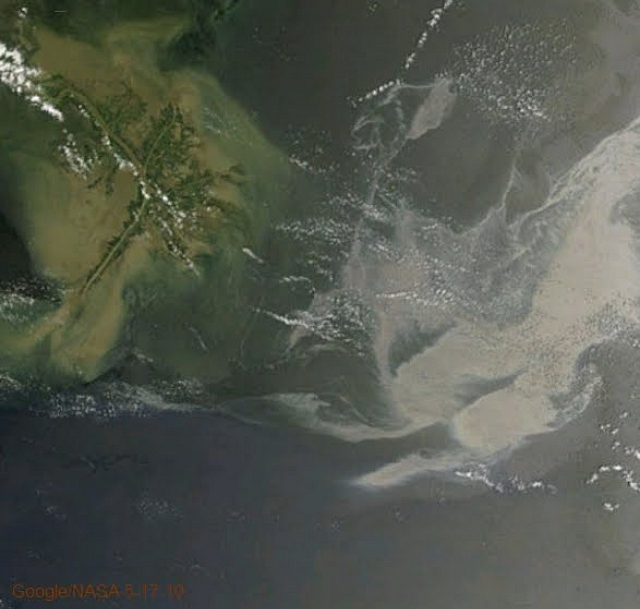
So, then what if it's not just for recreation, but your way of life?  What if you rely on the uninterrupted cycle of nature in the nation's waterways to make a living?  In my last post, I referenced the dramatic effect of the Deepwater Horizon oil spill that is at this very moment gushing crude oil into the Gulf of Mexico.  In today's New York Times, it is reported that in Louisiana, "the oil slick is wreaking havoc on the fishing industry here, which brings about $2.4 billion a year to the state, the state’s seafood marketing board says. At least 27,000 jobs depend directly on the fisheries."  


The more insidious story under-reported is the one where BP has hired away almost all the idle fishing boats to assist with clean up and dispersement. Seafood processors say in many cases, "the biggest hindrance right now is not oil, but a lack of fishermen to haul in the catch in the areas still open to fishing."   

Imagine that:  fisherman who make a living from bringing in their catch are now hamstrung from going out and fishing by the very people who put them out of business because they are strapped for cash.  CNN just broke a story about a fisherman's wife who is going on the record about the dozens of fisherman who are coincidentally sick, presumably from a combination of the oil vapors and the dispersants in use. BP's theory?  "Food poisoning is clearly a big issue...It's something we've got to be very mindful of."  Starting to feel insulted?  Imagine you're a fisherman.  "People don't want to talk. They're scared," one wife says, of repercussions and consequences from BP. "Our financial situation lays in the palm of their hands."


This colossal twist of irony is compounded by the fact that Louisiana's "official biologists" have found that as of right now, there is no indication of contaminated seafood from the spill.  That, will undoubtedly change, but what they face, however, is what the Times described as a "public relations nightmare".  Who wants seafood from a region they see on the news every night with glopped up sea birds and glooped up jetties?  

Here's an example:  would you eat Louisiana redfish if I offered to make it for you tomorrow night for dinner?  Answer honestly.  Most of you would say "no", because of what you've seen and what you've heard.  The reality is that red snapper (and tuna) is caught at much deeper depths than where the spill is located and will spread.  


"'Only 6 of 10 tuna boats are going out now', he said, but 'the ones that are going are banging them up,” slang for a large catch.  Despite the plentiful fish, many boat captains cannot find enough deckhands. 'They are getting paid by BP to not go to work,' he noted."

President Obama was quoted in a Larry King interview today as saying he "is furious" over the spill, but that's "it's his job to fix things...not just yell at people."  Well, let me know when the yelling begins on his behalf.  It'd be a nice change from the Vulcan persona we see all the time.  BP is compounding this national tragedy by throwing money (a perverted form of hush money, at that) at the problem to minimize their own public relations nightmare and make themselves appear to be compassionate.  

So, maybe you knew this, maybe you didn't, but let's recap:  BP has hired away frightened gulf fisherman to perform what they believe is a good cause in cleaning up BP's mess (someone must, right?) and could actually be jeopardizing their health in doing so.  While in reality, the cache of seafood that awaits catch, to date, is uncontaminated; yet there aren't enough deck hands and fisherman to bring the seafood to shore.  Got it?  Imagine the happy scenario at the beginning and tell me, "Now who's furious?"

Tuesday, June 1, 2010

Sea Change


"The sea, the great unifier, is man's only hope. Now, as never before, the old phrase has a literal meaning: we are all in the same boat. "
Jacques Yves Cousteau

When I attended the Culinary Institute of America, seven days were devoted to the identification, preparation, butchering, proper handling and storing of all things from the precious waters of our lands.  My instructor was a cantankerous and passionate former Marine by the name of Chef "Corky" Clarke.  He is legend at CIA.  To mishandle seafood in his kitchen was akin to hurling a tomato at a statue of the Virgin Mary.  I emerged from my seven days in a fog, as if I had been smacked in the gob repeatedly with cold mackerel.  I didn't so much have an aversion to delicacies of the sea as I did his abrasive style of teaching.  I didn't understand what fueled his love for the sea, so I was elated then to move on to the next block.  Imagine the irony when I landed my first job out of school as chef of a seafood restaurant.    It took all of one week for humility and reality to sink in:  the sea was my muse.   

On a typical restaurant menu, you'll likely see beef, chicken, lamb, pork and sometimes, veal, as sure as you'll see salads, soup, appetizers and dessert.  When a restaurant includes seafood, you're likely to see salmon, shrimp, crab (in this region) and if you're lucky scallops.  The closer to coastal areas you are, mussels and clams are likely to be available, with lobster the mother of all menu real estate. 

Imagine having an enormous, far-reaching palette of flavors and choices that encompasses dozens of textures and possible preparations.  While working with these various species you daily discover why each must be treated with respect and care to allow the ideal enjoyment.  It's a daunting responsibility.  I don't watch the show, but I heard about an episode when Iron Chef Morimoto chided Bobby Flay for his cavalier handling of a whole salmon fillet.  I get it, now.    

I'm a chef, and I write a blog about food and wine.  As is common, I discuss the symptoms of an industry anomaly, but generally champion the greater cause.  What troubling times these are.  The recent catastrophe in the Gulf of Mexico is nothing short of a modern day Chernobyl.  Its effects are environmentally devastating and long-lasting.  Yet, it's only become the focus of the MSM within the last week or so.  We've focused on what we're fed in the headlines, easily distracted by a Hollywood divorce or viral YouTube video.  After over 40 days of hemorrhaging crude oil, the toppled Gulf oil rig has only just made it to the forefront of the news.  And, there are no signs of stanching the devastating flow, which many now acknowledge could continue into late summer.

Occasionally when ordering seafood, there can be a red tide or some other form of environmental threat that puts the availability of say, oysters, rockfish or other forms of seafood on temporary hold.  It passes, and we go back to ordering it again, mildly miffed at the setback.  The current oil spill will not only deplete the region of indigenous sea life, it ends the jobs of those who fish for it, process it, sell it, buy it, cook it and serve it.  And that's just seafood.

The time for thinking outside the box has passed.  This is not a potential threat, it's upon us with irreversible effects, and those effects are not just relegated to a loss of Louisiana shrimp and oil-soaked pelicans.  It doesn't take a degree in marine biology to follow the line of thinking that beyond the seafood industry, there are multiple other forms of collateral damage waiting to unfurl.  Beyond the wildlife, also affected are insects, marshes, beaches, boating, inlets, harbors, turtles, drinking water supplies and tourism; an entire ecology and economy is rocked to its core, not because of a spill, but because of an irresponsibility to devise solutions for inevitable disasters, not potential ones.

It's the duty of someone else other than me to attribute both the financial impact and political blame for this tragedy.  Unfortunately, that is how we rate disasters of this magnitude.  There will be far too few discussions about how this outcome is just one example of how far beyond oil-dependence we are as a planet.  From Chernobyl to 9/11, hurricane Katrina to the Gulf spill- whenever safety and preservation are pushed to the forefront of a national discussion, we continue to do nothing.  We are guilty of repeating the gravest error that man can commit against himself: indifference.


(end Part I)

Friday, May 21, 2010

F&C Rewind: Culinary Myths; The Good, The Bad and The Ugly of a Chef's Opinion

I'm often asked where I like to eat or what I like to eat on my night off.  So, let's just cut to the chase, and I will answer that:  I like to eat at home, and my favorite meal is a roasted whole chicken with root vegetables and golden brown Yukon potatoes, with a bottle of Rhone red.  Oh, and crusty bread.  Second place is Bolognese over bigoli (pasta), again, at home.  Red, again.

The part that most people have a problem with is believing that.  "Why would you want to cook on your night off?" Or, "Chicken? How boring!"

Whenever I get invited to someone's house for dinner (and it's not often, gang), I get the invariable, "Oh, well it's not going to be anything special; certainly not by YOUR standards."  Or my favorite, "Oh- I'm so intimidated, I'm just going to make a simple little something...it's nothing, really!"  Awesome. Just cut the crap about me casting aspersions from my ivory tower, and feed me.  I'm hungry.


Ask any chef and they will likely agree with me:  we are happy when ANYONE cooks for us.  And, we do like to cook for ourselves and others on our day off, because it's entirely different.  It's for friends and family, usually, and there is no pressure, clock-ticking or bullshit involved.  Most often, it's with some inexpensive bottles of wine and a hunk of cheese to snack on while doing it.  See?  No silver domes, no homemade pate en croute or foie gras three ways.  So enough; it makes us feel like we give off some aura that says, "My brie doesn't stink."

So, what to make?
Tips on feeding the guys in white:  The more comfort-foody it is, or any recipe from your mother or grandmother, the bigger the hit.  Ethnic food is a big bonus, too.  I wouldn't try a recipe to impress if you've never made it before.  We don't do it to you, so let's just agree that is out.  Pasta is always a hit.  Just don't say you saw it on Rachel.  We'll be looking for something wrong.

Culinary myth #2: All chef's would rather eat sushi.  A: True.  We cannot get enough of it.  We would eat it every day, all day.  When we're tired, feeling a little peckish, and wanna grab a bite and a beer; SUSHI is our first choice.  When we wanna splurge and treat ourselves; SUSHI.  When our spouse is out of town and we really don't wanna cook; SUSHI.  In word association analysis, you say, "sex", we say "SUSHI".

Look- I'm not saying we DO eat it all the time; it's too damn expensive.  But if we could- well.  There it is.

Myth #3:  Chef's eat everythingA:  False.  For example, exception to myth #2; uni.  'Not down with the sea urchin, man.  Also, I am one of several chefs who, inexplicably, cannot and will not eat coconut.  There are foods I don't love, and I'll still cook with them.  But, sweetened, chewy, grainy coconut is not going in my mouth.  Coconut milk?  Love it.  Ask your chef friend what food it is they will not eat.  You'll be surprised.  And if it's coconut, I wanna know about it!

Myth #4 All Chef's Have Tempers.  A:  Mostly, true.  But let's clarify that.  It's how you handle that temper.  I've always seen it as a maturity issue.  A screaming, yelling chef who can't control his temper has issues with control of his/her own.  Those in control and confident don't need to fly off the handle just to get attention and respect or results.  Even when frustrated, the bigger picture indicates that this too shall pass.  Not to mention, I prefer the closed door session, anyway.  I'd rather resolve the problem one on one, while creating the most amount of personal anxiety for the recipient as possible without raising my voice and behaving like an ass.  Have I yelled?  Yes.  Will I yell again? Yes.  Like the gym teacher says, "I yell because I care."  Throwing things?  LOL! Really, it's strictly reality TV antics, guys, or the chef has a tiny...spatula.  NEXT!

Myth #5 A Chef Cooks Your Meal, and Every Meal at a Restaurant  A: NOT.
People really think we are standing back there with our hands on everything.  Even in the smallest of restaurants, a chef can't prepare every single ingredient, cook every dish and assemble every plate.  A chef wears many hats.  The first is that of cook (or should be).  But typically, we are teachers (and babysitters) and we must make sure our cooks have the knowledge, confidence and tools to do their jobs.  The best pupils, therefore, produce food most like their chef would.  We also make sure your portions are consistent, taste for consistency of flavor, sweep the floor, drop a few baskets of fries when the fry-guy gets weeded.  We clean up constantly after lazy people.  And then, we find time to have the nerve to change the menu to keep it interesting for the guest, while having to build on a set of skills we've taught the cooks so they can execute the dishes.
You want to truly compliment a chef?  Tell them how good your meal was on a night he wasn't working.  Getting people to cook like you do, see what you see and have the same sense of passion and urgency as if the guest was sitting in your living room, that's a challenge.  I've had people tell me their food didn't taste the same as when I was there.  That's a CHEF FAIL.  Even though they might think it's a compliment.
How high you aim and where you set your sights determines whether you can consistently execute at that level, and ultimately if you succeed.  Some of the most talented cooks in this country are guys you've never even heard of.  They exhibit a discipline that is remarkable, with a huge sense of pride to match.  They get the credit for cooking your meal, day after day, night after night.  We get the credit for making sure it's exactly like we would cook it.

Finally, EGO: If there wasn't a healthy sense of pride of accomplishment, we might not be wowed by some of the world's incredible restaurants and the chefs who built them.  If there wasn't a desire to be the best, to make no mistakes, lead not follow- we couldn't come close to having perfection in a meal.  Ego is nothing more than walking the walk.  Some do, some don't.  My FAVORITE chef joke goes like this:

"What's the difference between a chef and God?  God doesn't think he's a chef."

Tuesday, October 6, 2009

Culinary Myths: The Good, The Bad and The Ugly of a Chef's Opinion

I'm often asked where I like to eat or what I like to eat on my night off.  So, let's just cut to the chase, and I will answer that:  I like to eat at home, and my favorite meal is a roasted whole chicken with root vegetables and golden brown Yukon potatoes, with a bottle of Rhone red.  Oh, and crusty bread.  Second place is Bolognese over bigoli (pasta), again, at home.  Red, again.


The part that most people have a problem with is believing that.  "Why would you want to cook on your night off?" Or, "Chicken? How boring!"

Whenever I get invited to someone's house for dinner (and it's not often, gang), I get the invariable, "Oh, well it's not going to be anything special; certainly not by YOUR standards."  Or my favorite, "Oh- I'm so intimidated, I'm just going to make a simple little something...it's nothing, really!"  Awesome. Just cut the crap about me casting aspersions from my ivory tower, and feed me.  I'm hungry.


Ask any chef and they will likely agree with me:  we are happy when ANYONE cooks for us.  And, we do like to cook for ourselves and others on our day off, because it's entirely different.  It's for friends and family, usually, and there is no pressure, clock-ticking or bullshit involved.  Most often, it's with some inexpensive bottles of wine and a hunk of cheese to snack on while doing it.  See?  No silver domes, no homemade pate en croute or foie gras three ways.  So enough; it makes us feel like we give off some aura that says, "My brie doesn't stink."


So, what to make?
Tips on feeding the guys in white:  The more comfort-foody it is, or any recipe from your mother or grandmother, the bigger the hit.  Ethnic food is a big bonus, too.  I wouldn't try a recipe to impress if you've never made it before.  We don't do it to you, so let's just agree that is out.  Pasta is always a hit.  Just don't say you saw it on Rachel.  We'll be looking for something wrong.

Culinary myth #2: All chef's would rather eat sushi.  A: True.  We cannot get enough of it.  We would eat it every day, all day.  When we're tired, feeling a little peckish, and wanna grab a bite and a beer; SUSHI is our first choice.  When we wanna splurge and treat ourselves; SUSHI.  When our spouse is out of town and we really don't wanna cook; SUSHI.  In word association analysis, you say, "sex", we say "SUSHI".


Look- I'm not saying we DO eat it all the time; it's too damn expensive.  But if we could- well.  There it is.

Myth #3:  Chef's eat everythingA:  False.  For example, exception to myth #2; uni.  'Not down with the sea urchin, man.  Also, I am one of several chefs who, inexplicably, cannot and will not eat coconut.  There are foods I don't love, and I'll still cook with them.  But, sweetened, chewy, grainy coconut is not going in my mouth.  Coconut milk?  Love it.  Ask your chef friend what food it is they will not eat.  You'll be surprised.  And if it's coconut, I wanna know about it!


Myth #4 All Chef's Have Tempers.  A:  Mostly, true.  But let's clarify that.  It's how you handle that temper.  I've always seen it as a maturity issue.  A screaming, yelling chef who can't control his temper has issues with control of his/her own.  Those in control and confident don't need to fly off the handle just to get attention and respect or results.  Even when frustrated, the bigger picture indicates that this too shall pass.  Not to mention, I prefer the closed door session, anyway.  I'd rather resolve the problem one on one, while creating the most amount of personal anxiety for the recipient as possible without raising my voice and behaving like an ass.  Have I yelled?  Yes.  Will I yell again? Yes.  Like the gym teacher says, "I yell because I care."  Throwing things?  LOL! Really, it's strictly reality TV antics, guys, or the chef has a tiny...spatula.  NEXT!

Myth #5 A Chef Cook's Your Meal, and Every Meal at a Restaurant  A: NOT.
This is one that shocked me.  People really think we are standing back there with our hands on everything.  Even in the smallest of restaurants, a chef can't prepare every single ingredient, cook every dish and assemble every plate.  A chef wears many hats.  The first is that of cook (or should be).  But typically, we are teachers (and babysitters) and we must make sure our cooks have the knowledge, confidence and tools to do their jobs.  The best pupils, therefore, produce food most like their chef would.  We also make sure your portions are consistent, taste for consistency of flavor, sweep the floor, drop a few baskets of fries when the fry-guy gets weeded.  We clean up constantly after lazy people.  And then, we find time to have the nerve to change the menu to keep it interesting for the guest, while having to build on a set of skills we've taught the cooks so they can execute the dishes.

You wanna compliment a chef?  Tell them how good your meal was on a night he wasn't working.  Getting people to cook like you do, see what you see and have the same sense of passion and urgency as if the guest was sitting in your living room, that's a challenge.  I've had people tell me their food didn't taste the same as when I was there.  That's a CHEF FAIL.  Even though they might think it's a compliment.


How high you aim or where you set your sights determines whether you can consistently execute at that level.  Some of the most talented cooks in this country, you've never even heard of.  And, they exhibit a discipline that is remarkable, with a huge sense of pride to match.  They get the credit for cooking your meal.  We get the credit for making sure it's exactly like we would cook it.

Finally, EGO: If there wasn't a healthy sense of pride of accomplishment, we might not be bedazzled by some of the world's incredible restaurants and chefs who built them.  If there wasn't a desire to be the best, to make no mistakes, and be the most unique, we couldn't come close to having perfection in a meal.  Ego is nothing more than walking the walk.  Some do, some don't.  My FAVORITE chef joke goes like this:

"What's the difference between a chef and God?  God doesn't think he's a chef."

LinkWithin

Related Posts with Thumbnails