Showing posts with label recipes. Show all posts

Monday, December 5, 2011

F&C Rewind: By The Book: A Cook's List of Essentials

At this time of year, it becomes very challenging to focus for an hour or two on producing a new post.  As such, I like to pull out particularly poignant posts and put them back up to keep you interested!  Since it is the gift-giving time of the year, I thought it'd be apropos to re-run my list of favorite or must-have cookbooks to add to your arsenal.  In revisiting this piece, I found that while I have since added many more to my collection, those I originally chose for The Top still retain their standings.  Bon appetit!
~~~~~~~~~~~ 
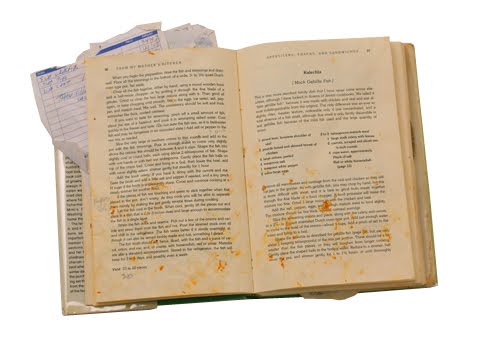
I've lost track of how many cookbooks I own.  Yet, I always know when one is "missing".  I do know that as I get older, I buy fewer.  But, the other night I thought that it had been some time since I pulled out a cookbook just to peruse the contents for pleasure.  I grabbed the Frog Commissary Cookbook, an oldie, but a goodie.  I had actually just gotten a copy, so while it was published in 1985, it was new to me.  

By all standards of what a cookbook should be, it's one of the best.  It has simple, succinct recipes with quick, informative descriptions of ingredients, methods and dishes that may not have been common knowledge in the Decade of Greed.  My favorite part is the "how to" in the margins.  I think it's useful to know, for example, the items and quantities to set up a proper bar for a cocktail party of 50.  Or, the essentials of setting up a raw bar, hors d'oeuvres buffet or continental breakfast.  This is real, practical stuff.  The style of food is eclectic and not pretentious.  But, by today's standards, the book would never sell more than 1000 copies.  


It wasn't designed for the coffee table.  More like, it was designed to put your coffee cup on.  Nor does it have full page, glossy, sexy food porn shots.  It doesn't praise the farmer who delivers their eggs, it doesn't feature drawings or paintings from staff, and it doesn't cost $55.  It's a true utilitarian cookbook.  

The Moosewood Cookbook of old is another with easily-soiled, coloring book quality pages, and matching hokey drawings of dancing broccoli from a time when vegetarians weren't so annoying (yeah, I said it).  Another paperback, it may be the gold standard for diverse, non-meat recipes that runs the full gamut of appetizers to desserts.  And, I dare say they're healthy, too.

The Silver Palate is another crossover book that should sit on the shelf of the serious cook.  It too is from an age when the author sought to give not just a broad spectrum of current, creative and healthful recipes, but it came from an accomplished cook who, like Julia Child and James Beard, wrote for the everyday cook.

So, why then, do I have so many cookbooks if I already know how to cook?  I'm trying to figure that out myself.  After much consideration, beyond the obvious answer of "recipes", my collection provides inspiration.


I own every cookbook from Thomas Keller and Charlie Trotter, because I admire their style, their philosophy, their creativity and probably above all else,  their discipline.  I can pick up one of their books and feel their unique style ooze out of a phrase of admonishment.  To prepare food at that level requires a certain work ethic and commitment on the part of the chef.  At times, I'll open the books and page through them simply to look at their pictures, presentation or what ingredients they combine.  Maybe even peruse a particular season to get ideas.  Often, I just like to revisit an idea.  But, I rarely prop them open and "cook from them".  They are conceptual books meant for the lover of food and art.  This is the style of cookbook most common on the shelves today. 
In this same genre, I have the Inn at Little Washington books.  Along with Trotter and Keller, they tell of the building of their brand:  the loyalty of their staff, faithful customers and what a unique dining experience they are.  It's like buying the program at the ballgame.  You saw the show, now take the glossy keepsake home for years of enjoyment to come.


Another section of my culinary library is built on the "must haves".  My go-to book for classical Italian is Marcella Hazan, my Japanese, Nobu.  Baking, CIA and Cheese, Steve Jenkins.  Some genres require more than one, and as a Francophile, I own no less than 20 French cookbooks.  Paris cooking is covered by Patricia Wells, while country cooking is beautifully and completely rendered in Anne Willan's recent Country Cooking of France.  I have a rudimentary, yet useful book of recipes from the Basque region (in French).  I have the masters; Blanc, Ducasse, Guerard, Bocuse, Troisgros, Girardet.  Then, cross over into the US for the expats, and I have Ripert, Boulud, Robouchon, Richard, Jean-Georges and Pepin.  

Recipes from Da Fiore of Venice focuses on the gorgeous seafood and regional ingredients of the Veneto.  While the publisher BK (from England) has put out several primers on ethnic cuisine, of which Indian Cuisine has been the most useful to me.


Saveur's three book series on American, Italian and French cuisine is a must for their "real" recipes, grounded in tradition and authenticity.  It doesn't hurt that they have some of the most beautiful photography of any food magazine today.  

Back when I was just a waiter aspiring to take over the world, I bought a copy of Larousse, Gastronomique.  It is the mother of all culinary tomes, both encyclopedia and recipe collection at once.  It has entries on Antonin Careme and Julia Child.  It has the origins of salade nicoise and the proper way to make a vegetable "charlotte".  It's very...old school.  If, on the other hand, you need a reference guide, whether you're a newbie or want to check your spelling on a menu, The Food Lover's Companion is the most user-friendly resource on the market.  There are three editions, two editions of the Wine Lover's Companion and now the Cheese Lover's Companion, the last husband-wife collaboration before the founder, Sharon Tyler Herbst passed away just a few years ago.

I suppose if there were one book that was a game-changer for me, it would have to be Gray Kunz "The Elements of Taste".  For an advanced cook, you long for a collection of thoughts and ideas that encompasses and sums up the building and layering of flavors from a conceptual standpoint with examples to back it up.  When this book was released, I read it from cover to cover.  I began to think differently in the way I wrote menus, created dishes, the way I seasoned food and more importantly, the way I corrected my seasonings.  The book is broken into four categories:  Tastes That Push, Tastes That Pull, Tastes That Punctuate and Taste Platforms.  And, rather than arranging food by course or primary ingredient, they identify 14 basic tastes (salty, sweet, floral, herbal, "funky," meaty, etc.).  The binding on my copy is beaten up, the pages slightly stained with wine and demi-glace.  It's the one book I don't loan out anymore, and it's because it's not in print anymore.  New copies on Amazon start at $355 each (*$136 today-R.A.L.).

I have several books on only one subject from, pancakes and foie gras, to truffles and duck.  Soups, sauces, shellfish and seafood, mostly by James Peterson.  You need Harold Magee to answer those nagging questions about which boils faster, hot or cold water?  Or, how to hard-boil an egg without the green sulfuric ring around the yolk.  It goes without saying, but Beard and Child belong on your shelves, and should be readCraig Claiborne, Deborah Madison and Mario Batali have earned the right.  There are so many other great books- all of which have contributed to the enormous array of talent we experience today.  

Whatever reason you like buying a particular cookbook, it is personal and you don't owe it to anyone to explain why.  The above mentioned books have broadened my knowledge and creativity in the culinary arts, and I hope you find the list of use.  No matter what your level of cooking, is there ONE cookbook that changed your life?      

Saturday, October 29, 2011

F&C Rewind: Sunday Suppers: Meatloaf


When the weather gets damp, cool and gloomy like it's been the last week, some recipes come out of hibernation and make it into the heavy rotation of Sunday suppers.  One of our faves is meatloaf. 

But, not any old meatloaf.  This jazzed up meatloaf has mushrooms, peas and mire poix.  It's crusted with pine nuts, and layered throughout is hard boiled egg.  "HERESY", you scream!  Not really.  It's made very similarly to what meatloaf really is, and that is a type of forcemeat.  Pates and terrines are forcemeats, as are sausages, hot dogs and bologna.  Olive loaf?  Forecemeat numero uno.   
When making a forcemeat, a traditional French method of charcuterie, there is a standard ratio of meat to fat, followed by what we call "garnishes".  Most often people think of parsley and lemon crowns or large plouches of herbs that lie next to a finished dish as a garnish.  But, garnish refers to ingredients studded throughout the forcemeat that give it its unique flavor.  For example, a traditional dish made in this method is a duck galantine.  A boned out duck is filled with a mixture of finely ground duck meat and fat, along with garnishes of pistachio, orange zest and other vegetables.  After it is stuffed, it is rolled into a cylindrical shape and cooked.  When it cools, it is sliced down into discs resembling meats like salami that have a flecked appearance  and texture.  An example of a popular type of galantine is turducken

So, how did your mom figure out how to make a meatloaf without grossing out the family?  First of all, there are few meatloaf recipes out there that I know of where you are actually grinding your own meat at home.  If growing up our culture had more variety meats at the supermarket, we very well might be eating some version of game meatloaf or duck terrine on a Sunday at mom and dad's.  And some do!  But, as such, we used what was commonly available to us and affordable: ground beef.  Older generations will tell you they almost always used a blend of ground beef, pork and veal.  That's because their meats came right from the butcher, and it was readily available.  Only recently have uber-grocers caught on to marketing this blend which they call...wait for it...the meatloaf mix.  

But pates and terrines are cooked in hot water baths to evenly distribute the heat of the oven while gently poaching the meat, thus keeping the fats  from separating.  It's a sophisticated, yet time-consuming method of cooking.  So, home cooks needed a less complicated way to cook their forcemeats; and, so they just roasted them in the oven.  
The texture of a meatloaf is decidedly chunkier and not as smooth as pate. For that smooth texture, a tamis is often used.  A tamis is a fine mesh sieve used on forcemeats by passing the meat mixture through the screen to promote a silky, smooth and even consistency.  "Okay, Captain Loquacious, can we get back to this meatloaf??"  Yeah, yeah- I just wanted to make sure proper credit is given to all those home cooks who make a killer meatloaf. If you didn't like meatloaf growing up, it's because your mom didn't make this one.


Base:
1 1/2 # ground beef, pork and veal
1/2 small yellow or sweet onion, minced
2 pieces garlic clove, minced
1 stalk celery, small dice
1/2 carrot, small dice
5 white button mushrooms, finely chopped
1 raw egg
1/2 cup freshly grated parmesan
1 piece of fresh bread, pulled into small pieces
3-4 good-sized squirts of ketchup
1 good-sized spoonful of Dijon mustard
1-2 dashes of worcestershire sauce
Salt and pepper

Garnishes:
1/4 cup of fresh or frozen peas
2-3 hardboiled eggs, peeled
1 tablespoon of chopped parsley

Topping:
1/4 cup of toasted pine nuts, roughly chopped
More ketchup and mustard and some more fresh bread crumbs

In a saute pan, slowly cook the mushrooms in a little butter and oil until they steam.  Add your mire poix, or carrots, celery and onion.  When softened, add the garlic and cook until you smell all the ingredients together.  Turn them out onto a plate and let them cool down completely.  Place the mixture into a bowl with the ground meat, raw egg, grated parmesan, fresh bread, parsley and wet ingredients.  Season generously with salt and pepper.

Note: I've grown accustomed to making a small patty and cooking it to taste.  It only takes a minute or two, but it's a good way to tell if you've put enough salt and pepper in without going the "tartare" route.

Now, mix the ingredients by hand until just incorporated for a rougher texture.  For a denser texture, mix more.  Now drop in the peas and mix.  In your roasting pan, turn out the mixture and form your loaf.  Using your fingers or a spoon, take out an egg-sized portion of meat to make room for the eggs.  Drop them in a tight line so they are end to end.  Push the loaf together from the ends and then drop the scooped meat on top of the eggs to cover them.  Like at Easter, hide the eggs.

For your topping, mix all the ingredients into a paste and spread evenly over the meatloaf. 

Place in a 375 F degree oven and cook for about 35 minutes, depending on the thickness of the loaf.  When the loaf is firm, or around 155 F degrees in the center, it is finished.  Use a sharp knife to make slices and a spatula to lift them so the egg doesn't fall out.

Serve gobs of Dijon mustard, ketchup or steak sauce if you like, along with some Ugly Betty veggies and warm bread.  Like Thanksgiving turkey, there are few wines that do not work with meatloaf.  I like earthy reds, but drink what you enjoy.  And- well, you know- enjoy

Tuesday, July 5, 2011

F&C Rewind: Feeling Crabby

If there is one item I could live without ever ordering, preparing or seeing on a menu again, it's the crab cake.  It's become the most egregiously made, bastardized dish throughout the mid-Atlantic, with variations so vast, it's no wonder locals are so visceral in their opinions on the subject. 

For me, it begins with what people come to expect in a crab cake.  If there is anything other than boulder-sized chunks of crab in front of them, they complain of "too much filler".  Ughgh.  I'll get back to that, but I think it must stem from what people don't know about making these local delicacies.  The crab cake should be primarily crab with seasonings that complement the sweetness of the meat.  It should be moist and tender, properly seasoned, and it should hold together as it slides off a spatula and onto your plate or bun.  

Smarter cooks know that the fewer ingredients you use in a dish, the more you must respect the ones you do use. All those lovely lumps of precious crabmeat are held in trapezoidal compartments within the crab, and they're delicately extracted and separated into and sold as the valuable categories of jumbo lump, backfin, lump and claw meat.  Experienced crab eaters would never discriminate and abandon all the briny goodness that comes from eating all the various types of meats from their crustacean cronies.  But, try using something other than jumbo lump, and the average Joe screams heresy.  They are unaware that the only way to keep a crab cake bound together is to use complementary ingredients that help hold them into the signature "cake" form.  The intense and sweet flavor is often given from using a combination of the jumbo AND claw meat.  The delicate nature of the claw/leg meat (like that of the Jonah crab) also helps to bind when mixed with the base.  So, my ill-informed filler-fanatics, crab claw meat that binds, is still crab.  It's a wise use of crab meat and if you are going to produce them in volume, it helps keep them at a reasonable price.

Typically a little bit of egg, bread or mousse combination is used to help bind these two flavorful types of crab meat.  Egg alone will not do the trick, but adding fresh white, doughy bread crumbs, like from Wonderbread, help hold the crab together.  Taking the protein of shrimp or scallops and combining in a processor with egg white and heavy cream will give you a delicate mousse that is both flavorful and does the trick nicely of binding the crab.  Beyond that, what else you put in is a matter of taste.  Avoid putting in anything that will detract from the main flavor or cause too much moisture or dryness, and you've got your own personal version of the dish that made Maryland famous.  So, why then do so many of them suck?

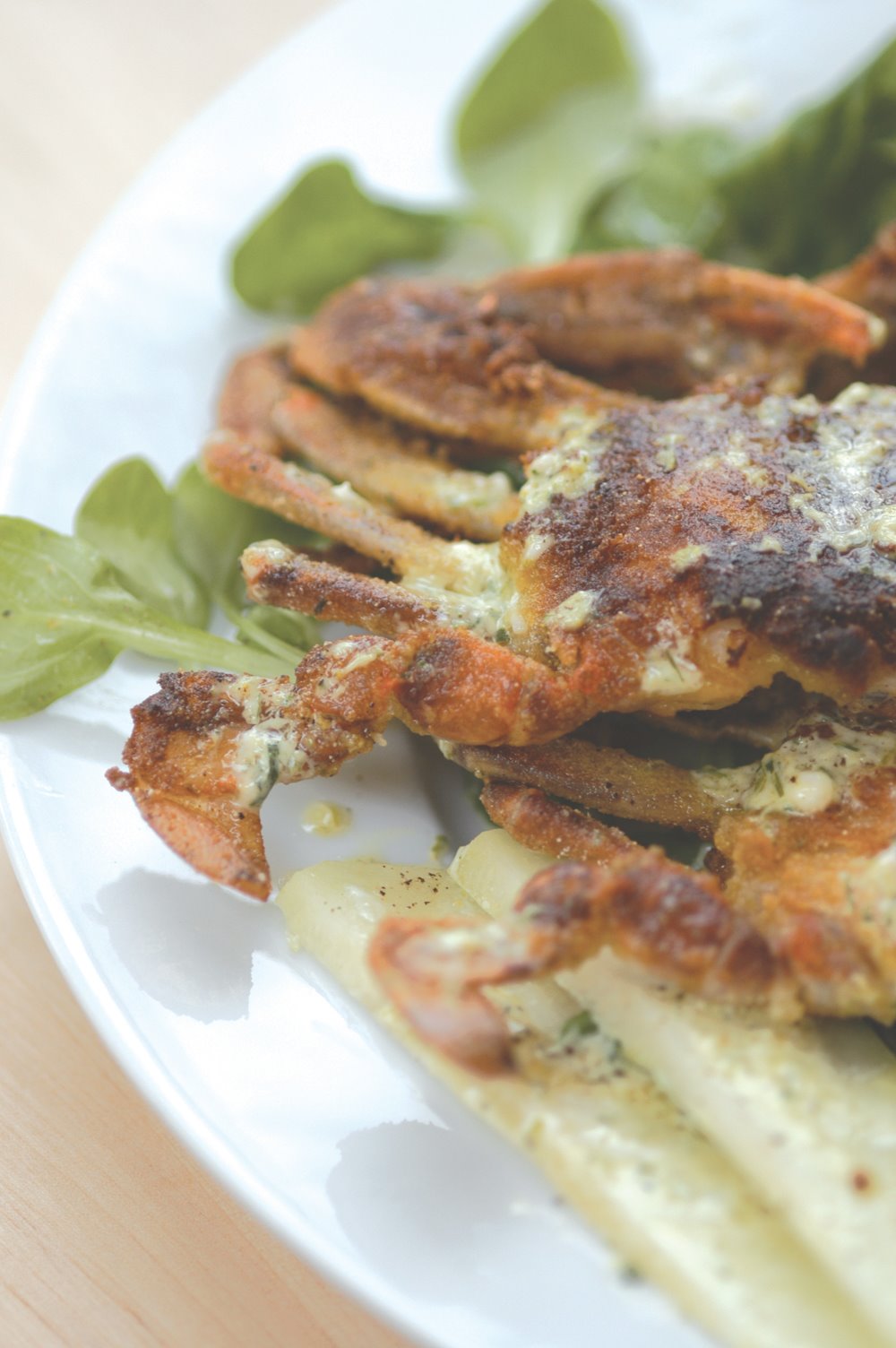
For all the crab cakes I loathe, it is mostly because they are mass produced for a homogenized appeal.  Each chef has their own idea of what a good crab cake is, and very often it's one that appeals to the masses.  Nothing wrong with selling a lot of crab cakes, I suppose.  Hey, Yugo sold a lot of cars, too.  But, I'm long since past ordering one in a restaurant, simply because I know I will be disappointed.  Give me a softshell crab, on the other hand, and it successfully captures all the things I love about a properly made crab cake:  crispy, toothsome texture, held together nicely in it's own natural sauce and it's as about as "pure" as it gets.  Slap on a little remoulade or equally gooey-tart sauce on a toasted, buttery bun, and my hankering for a sandwich of fresh crab is satisfactorily sated.

I don't hate the crab cake.  Really.  And I'm certainly not being snobby about it.  In fact, I love them so much, it's out of respect for their uniqueness that I sound off.  So, I guess you could say that I am being a bit of a purist.  And, just to show you how much I care, I'm going to share my recipe as long as you promise to make them for only two people.  Four, at the most.  And not another crab cake more.

The main concept behind making this version of a crab cake for only a few people is that it forces you to concentrate on following the recipe and to not cut corners.  Additionally, when you've mastered making these, you'll feel as though each time you make them again, it will be for people you really love and want to spoil.  You'll be giving them something they can't get anywhere for any price!  Now you know why some chefs don't give up recipes.  So, for you, my faithful Fork-N-Corkers, I am willing to make an exception, all in the name of respect for that little puck of tide-water goodness: the regal crab cake.

Robear's Secret Crab Cake Recipe
Makes four 5 oz. crab cakes
  • 8 oz. fresh jumbo lump crab meat
  • 8 oz. fresh crab claw meat
  • 1 small onion, small dice
  • 2 ribs celery, small dice
  • 4 oz. whole butter
  • 3 leaves fresh basil
  • Juice of 1 lemon
  • 1 teaspoon Old Bay seasoning
  • 1 dash or two of Tabasco
  • 1 dash of Worcestershire sauce
  • 1 egg
  • 1/4 cup mayonnaise 
  • 1 tablespoon dijon mustard
  • 2 pieces fresh white bread, broken into small pieces
  • Salt and White pepper


In 2 oz. of butter gently cook the celery and onions until soft.  Do not brown.  Add the Old Bay and basil.  Remove the mixture including the butter and set aside to cool.  


Combine the wet ingredients in a bowl and mix until just combined.  This is your base.  After you pick through your crab to remove shells, you will use it to bind the crab together along with the bread crumbs.  Season with salt and dashes of white pepper.  TASTE!  If you feel as though you could eat the whole thing right there, it's ready.  Fold the crab, fresh bread crumbs and some of the base together until it can hold it's own shape.  Resist using the entire mixture.  You are meant to have extra, but this is where people screw up:  when they add all the base, they try to compensate by adding more bread to dry it up, and this is where the perception of "too much filler" comes from.  You can always add more if you really need it, but the key concept here is to barely bind those ingredients together without turning it into a seafood meatball.


Form four cakes onto a plate, cover and refrigerate for at least an hour.  This is also a key step: don't skip it!


When it's time to cook, turn your oven to 355F.  In a non-stick pan, put a couple tablespoon of oil and heat the pan to medium hot (only lightly smoking).  Use a spatula to gently lift the crab cakes and place them in the pan.  Add the remaining 2 oz of butter now.  First, the pan will sizzle, then it will subside.  It will build back up to a hiss first (that's the steam) and then finally return to a sizzle.  When you see that the edges are beginning to brown, use your spatula and with both hands slowly turn the cakes.  Place the whole pan in the oven for 12-15 minutes.  Serve immediately from the pan.  


Open some pinot blanc, Macon chardonnay or other white to complement the sweetness of the crab.  Bon appetit! 


Thursday, April 21, 2011

Pithy Remarks

Are you cooking yet this spring?  If so, what are you cooking?  There are several ways to take advantage of seasonal delights, and one of my favorites is infusing the many types of citrus available to us.

Meyer Lemons and Blood Oranges are among the most common citrus fruits we see in spring.  Grapefruits and pomelos also show up, as well as kumquats.  They add bright notes to a salad or fish dish, but consider them for what they are (an acid), and they're a game changer.  

Last weekend, I made an asparagus salad (just blanched) with julienne radish, shaved parmesan and shallot-citrus vinaigrette.  This is true seasonal cooking.  Just replace your vinegar with a combination of citrus juices, and use a fruity olive oil.  Fresh herbs are another way to brighten the dish.  Also, don't neglect the oil-rich rinds of these seasonal gems.  They're loaded with flavor that can be extracted, zested, infused or candied.  Or, if you're old fashioned, twist a little in your martini.

Monday, March 28, 2011

Primo Piatto!

Sometimes, it can be a drag waiting for the weather and ingredients to catch up to the daylight savings time and budding bulbs.  I've been anxiously awaiting some decent artichokes to feature and wild morels to take the stage on the plate.  Ramps will probably be available this week, and, yes, my beloved striped bass is running (and running strong), but cold weather is cold weather, man.  What's a foodie to do?

One of my favorite "bridge meals" from Winter into Spring is the humble Risotto alla Principessa.  You really only need your base ingredients (rice, onion, garlic and stock), some lemon, a good parmesan and nutty-tasting, tender Spring asparagus.  And fortunately for us, Mother Nature is cooperating on the asparagus.  


The northern Italian dish of rice, asparagus and cheese is one of those subtle, classic dishes that focuses on good ingredients, simplicity and method.  The naturally creamy, light and lemony risotto is the perfect meal for when you're feeling warm in spirit, but still need that certain something to take the chill off the bones.  


Ingredients:
  • Arborio or Carnaroli Rice  2 cups
  • Chicken Stock 4 cups
  • Dry White Wine 2 cups
  • Onion, small dice  1 small
  • Garlic cloves, whole  2 ea.
  • Bay leaf 1 ea.
  • Butter and Olive oil  4 oz. combined
  • Asparagus, chopped on a bias  1# (bunches are usually 2#)
  • Grana Padana or Reggiano Parmesan 2 cups
  • Salted Butter, cold and diced 1 cup
  • Lemon Zest 1 ea.(microplaned is best)
  • Fresh Herbs, i.e. basil or chives, chopped 2 tablespoons
Method:
  1. Warm the oil and butter in a sauce pot.  Add the minced onion and garlic cloves.  Cook until tender, but not browned.
  2. Stir in the rice until coated with oil and butter.  Add the bay leaf.
  3. Add the white wine and stir until the wine has dissolved.
  4. Add the chicken stock 2 cups at a time, constantly stirring over medium heat.
  5. You may need to add more stock, but when the rice grains have begun to "pop", add your asparagus and continue to stir on medium to low heat until the rice is no longer "al dente" (sticks to the teeth).  By this point, the asparagus will have finished cooking.  At once, add the herbs, cheese, lemon zest and butter.  Season with salt and pepper until you taste all the ingredients, not just one or two.  Add more of anything you think it needs to taste "finished".  All the colors should be bright and vibrant, not dull.

Variations include:
  • Pancetta or Bacon- add finely diced cured ham at the first stage, with the onions.
  • Peas or Favas- in place of the asparagus, quickly blanch your beans or peas and add when it calls for the asparagus.
  • Shrimp or Fish- adding a protein like shrimp or scallops enriches this dish; sear some of that precious bass and serve atop the finished risotto.
  • Change your Cheese- in place of parmesan, switch it up and add some creamy goat cheese, mascarpone or tangy pecorino.
  • Go Decadent- atop any of these iterations, loft a soft-poached egg.


Wine?  Lemony, dry, tart wines from any region like American Northwest, Italian Alto Adige, Austrian gruner veltliners, New Zealand sauvignon blancs or chalky Chablis.  

Sunday, August 8, 2010

Why Is The Rum Gone?!

 
Rum.  There are many luscious spirits that lend themselves to cool summer cocktails, but the most under-rated in the catalog has to be those made with rum.  Vodka and Gin reign supreme, for sure. We've seen the incredible market that exists for vodka, with flavors that range from orange, raspberry, grapefruit and blueberry to red pepper, and the latest rage, whipped cream.  Gin has only recently begun to experiment with flavor infusions, with lime as the first, and certainly not the last.  But, rum stands out in the crowd for it's versatility.  

The most common is white, with gold (or aged) following next in complexity, and then there is dark or black rum.  Primarily distilled from sugar cane juice, either from the molasses created as part of making sugar (Rum Industrial) or directly from the sugar cane juice (Rhum Agricole and Cachaca), it is only made in countries that grow sugar cane.  

One of the newest dark rums on the market begins in the Caribbean and is finished in the states.  Named after the mythical beast that lives beneath the sea, The Kraken is without a doubt the most well-thought-out brand to be released in years.  With it's full mythological history to back it up, Kraken's motto is "Put a Beast in your Belly".  When it comes down to it, Kraken Rum is of good enough quality that it stands up to its hype. I bought a bottle while on vacation after reading up on it, and we kracked one open for happy hour.  As someone who tastes for a living, I immediately began to think of fun and appropriate mixers that might make good cocktails.
We began with tonic.  One of the most refreshing cocktails I enjoy in summer is Mount Gay rum and tonic, with loads of fresh lime.  In fact, if you have access to fresh key limes, the difference in flavor is significant.  On the East coast, Trader Joe's usually sells a small bag for about two dollars.  If you don't have key limes, just double up on what you would normally put in your drink.

The second mixer we chose was another traditional mixer, this one from Bermuda, ginger beer.  While Goslings Black Rum owns the copyright to the legendary cocktail Dark and Stormy, dark rum, ginger beer and lime is another delicious concoction which was said to be invented by the locals as they would watch a hurricane roll in and watch the tourists roll out.  A veteran of several hurricane parties myself, I love this in a big frosty mug, again with multiple wedges of juicy lime and loads of ice.  There never seems to be a shortage for specialty sodas which claim to be the best in show.  Rootbeer has long been a summer favorite for refreshment of all ages.  And, there are dozens of regional rootbeers, often made from various spices and ingredients, mainly the licorice root that gives rootbeer its distinct flavor.

Lastly, cream soda is a Mid-Atlantic favorite, with the appropriate amount of vanilla, cinnamon and spice that makes it the perfect pairing for light-hearted, spiced rum adult beverages. Rum and cream soda? Huuhyeah?!  It's like a liquid spiced wafer.  Easy, though.  The sugars compete in these cocktails, and they go down easy!  Keep plenty of salty snacks on hand, and if you decide to experiment with  cooking, think of using rum as a "sugar" element.  When needed to glaze it is perfect.  As a marinade, use fresh herbs of the summer variety.  

The Kraken Rum is available in just a handful of shops in Delaware right now, at about $20 a bottle.  I've only seen it in one or two restaurants, but mark my words:  once the beast is unleashed, expect the spoils to be sweet.  If you've had Kraken and recommend any recipes you'd like to share, share with Fork 'n Cork readers!

Wednesday, May 12, 2010

Feeling Crabby

If there is one item I could live without ever ordering, preparing or seeing on a menu again, it's the crab cake.  It's become the most egregiously made and bastardized dish throughout the mid-Atlantic, with variations so vast, it's no wonder locals are so visceral in their opinions on the subject. 

For me, it begins with what people come to expect in a crab cake.  If there is anything other than boulder-sized chunks of crab in front of them, they complain of "too much filler".  Ughgh.  I'll get back to that, but I think it must stem from what people don't know about making these local delicacies.  The crab cake should be primarily crab with seasonings that complement the sweetness of the meat.  It should be moist and tender, properly seasoned, and it should hold together as it slides off a spatula and onto your plate or bun.  

Smarter cooks know that the fewer ingredients you use in a dish, the more you must respect the ones you do use. All those lovely lumps of precious crabmeat are held in trapezoidal compartments within the crab, and they're delicately extracted and separated into and sold as the valuable categories of jumbo lump, backfin, lump and claw meat.  Experienced crab eaters would never discriminate and abandon all the briny goodness that comes from eating all the various types of meats from their crustacean cronies.  But, try using something other than jumbo lump, and the average Joe screams heresy.  They are unaware that the only way to keep a crab cake bound together is to use complementary ingredients that help hold them into the signature "cake" form.  The intense and sweet flavor is often given from using a combination of the jumbo AND claw meat.  The delicate nature of the claw/leg meat (like that of the Jonah crab) also helps to bind when mixed with the base.  So, my ill-informed filler-fanatics, crab claw meat that binds, is still crab.  It's a wise use of crab meat and if you are going to produce them in volume, it helps keep them at a reasonable price.

Typically a little big of egg, bread or mousse combination is used to help bind these two flavorful types of crab meat.  Egg alone will not do the trick, but adding fresh white, doughy bread crumbs, like from Wonderbread, help hold the crab together.  Taking the protein of shrimp or scallops and combining in a processor with egg white and heavy cream will give you a delicate mousse that is both flavorful and does the trick nicely of binding the crab.  Beyond that, what else you put in is a matter of taste.  Avoid putting in anything that will detract from the main flavor or cause too much moisture or dryness, and you've got your own personal version of the dish that made Maryland famous.  So, why then do so many of them suck?

For all the crab cakes I loathe, it is mostly because they are mass produced for a homogenized appeal.  Each chef has their own idea of what a good crab cake is, and very often it's one that appeals to the masses.  Nothing wrong with selling a lot of crab cakes, I suppose.  Hey, Yugo sold a lot of cars, too.  But, I'm long since past ordering one in a restaurant, simply because I know I will be disappointed.  Give me a softshell crab, on the other hand, and it successfully captures all the things I love about a properly made crab cake:  crispy, toothsome texture, held together nicely in it's own natural sauce and it's as about as "pure" as it gets.  Slap on a little remoulade or equally gooey-tart sauce on a toasted, buttery bun, and my hankering for a sandwich of fresh crab is satisfactorily sated.

I don't hate the crab cake.  Really.  And I'm certainly not being snobby about it.  In fact, I love them so much, it's out of respect for their uniqueness that I sound off.  So, I guess you could say that I am being a bit purist about it all.  Hey, I'm allowed!  And, just to show you how much I care, I'm going to share my recipe as long as you promise to make them for only two people.  Four, at the most.  And not another crab cake more.

The main concept behind making this version of the crab cake for only a few people is that it forces you to concentrate on following the recipe and not cut corners.  Additionally, when you've mastered making these, you'll feel as though each time you make them again, it will be for people you really love and want to spoil.  You'll be giving them something they can't get anywhere for any price!  Now you know why some chefs don't give up recipes.  So, for you, my faithful Fork-N-Corkers, I am willing to make an exception, all in the name of respect for that little puck of tide-water goodness: the regal crab cake.
Robear's Secret Crab Cake Recipe
Makes four 5 oz. crab cakes
  • 8 oz. fresh jumbo lump crab meat
  • 8 oz. fresh crab claw meat
  • 1 small onion, small dice
  • 2 ribs celery, small dice
  • 4 oz. whole butter
  • 3 leaves fresh basil
  • Juice of 1 lemon
  • 1 teaspoon Old Bay seasoning
  • 1 dash or two of Tabasco
  • 1 dash of Worcestershire sauce
  • 1 egg
  • 1/4 cup mayonnaise 
  • 1 tablespoon dijon mustard
  • 2 pieces fresh white bread, broken into small pieces
  • Salt and White pepper


In 2 oz. of butter gently cook the celery and onions until soft.  Do not brown.  Add the Old Bay and basil.  Remove the mixture including the butter and set aside to cool.  


Combine the wet ingredients in a bowl and mix until just combined.  This is your base.  After you pick through your crab to remove shells, you will use it to bind the crab together along with the bread crumbs.  Season with salt and dashes of white pepper.  TASTE!  If you feel as though you could eat the whole thing right there, it's ready.  Fold the crab, fresh bread crumbs and some of the base together until it can hold it's own shape.  Resist using the entire mixture.  You are meant to have extra, but this is where people screw up:  when they add all the base, they try to compensate by adding more bread to dry it up, and this is where the perception of "too much filler" comes from.  You can always add more if you really need it, but the key concept here is to barely bind those ingredients together without turning it into a seafood meatball.


Form four cakes onto a plate, cover and refrigerate for at least an hour.  This is also a key step: don't skip it!


When it's time to cook, turn your oven to 355F.  In a non-stick pan, put a couple tablespoon of oil and heat the pan to medium hot (only lightly smoking).  Use a spatula to gently lift the crab cakes and place them in the pan.  Add the remaining 2 oz of butter now.  First, the pan will sizzle, then it will subside.  It will build back up to a hiss first (that's the steam) and then finally return to a sizzle.  When you see that the edges are beginning to brown, use your spatula and with both hands slowly turn the cakes.  Place the whole pan in the oven for 12-15 minutes.  Serve immediately from the pan.  


Open some pinot blanc, Macon chardonnay or other white to complement the sweetness of the crab.  Bon appetit! 


Wednesday, January 27, 2010

Braise Heaven!


In winter there is but one glorious, soulful way to cook that surpasses the rest .  And if you know me, I'm talking even more than roasting.  I sing now- the praise of the braise.

For, it's the hearty effects of that slow, steady process of simmering chunks of meat in a heady stock with tannic red wine and root vegetables that can make the most rugged mountaineer swoon in his boots.  If a spicy bowl of chili nips at the heels of your taste buds as it goes down, a braise of tender short ribs or  veal osso bucco kisses and numbs your palette, convincing you to slow the pace of your bites, savoring every last decadent forkful of flavor.
  

Braised meats were historically the cuts of meat that came from the part of the animal that got a lot of exercise, or contained a level of fat or tissue that was necessary to render in order to get to the prized meat within.  Cooks were not in a position to waste any part of the animal at a time when there was no refrigeration, and so, necessity brought us the classical techniques of salt-curing, smoking, confit and canning to preserve what could not be used fresh.  And what wasn't cooked right away over an open fire required another method of preparation that made the meat both palatable and flavorful (not to mention, chewable).  


Soups are the distant cousin of the braise, but perhaps what gives braising it's most unique distinction is the combination of methods of "dry" and "moist" heat cooking.  We all know that searing meat creates flavor.  And that given the choice between a grilled ribeye steak and a boiled one, we're going to go for the grill.  But, what if a larger cut, like the shanks of lamb or veal are at hand?  The aforementioned fat and connective tissue within these cuts of meat require the "moist" heat, as well, to bring about the signature fork-tender qualities of a proper braise.  Searing the meat first, and then adding aromatic vegetables (such as root), along with earthy red wine, savory herbs and stock, now take the meat to a new level.  
The whole pot is brought to a simmer and covered.  It's then left on the stove or placed in the oven at a low heat to keep a steady, constant temperature.  This is where the moist heat, or steam, takes over.  As the vapor from the braise rises up, it is returned back into the braising pot, retaining the moisture necessary to cook, but also intensifying the marrying flavors as they meticulously reduce.  Sharp garlic becomes mellow, sweet carrots release their sugars, fresh rosemary and thyme  tame the unctuous, gamy nature of these lesser cuts of meat.  And red wine perfumes the sauce (and the whole house) to leave you anticipating the very first velvety bite.

Coq au Vin, Beef Bourguignon, Osso Bucco, short ribs- these are all dishes that apply the combination cooking method of braising.  But, braising isn't limited to meats.  Oh no, no, no.  What vegetables could you apply this philosophy to that would allow flavors to both mellow and texture to soften?  Artichokes and brussels sprouts come to mind, as does braising greens, like swiss chard and kale.  One of my all time favorites is fennel.  The other night for dinner, my wife and I had wild striped bass over braised leeks, fennel and celery with lentils, a very wintry meal for sure.  Searing slightly the fennel (because of its firm texture) in butter, I then added the softer celery and leeks and reduced the heat.  In place of a full on stock, I added butter and white wine, making sure the lid was in place to retain that all important steam element.  Occasionally stirring and checking the texture, the fish roasted in no time, and the lentils sat covered beneath their own earthy steam, waiting for the dish to come together.

After the requisite few hours needed to complete a righteous braise, you can then decide on what to pair with the tender results.  Osso bucco is very often served with risotto- of any kind.  Mushrooms, cheese, herbs, root veggies are all on the "friend" list of risotto.  Beef braises call for a buttery mashed potato with horseradish, say, or farmhouse cheddar, while appley, sweet pork can go with everything from soft polenta (or cheesy grits!  Hell, YEAH!) to hand-made pasta, with a second tier of braising- cioppolini onions.  And then- there's rabbit.  In my blue heaven, there is a large, white, wide-rimmed bowl of freshly made, hand-cut papardelle pasta with rabbit braised in white wine and dry vermouth, scented with parsnips and fresh porcini mushrooms.  *sigh*   Okay, okay- and truffles. 

DRINK:  Man, oh, man- the choices are many.  As a rule, with richer cuts of meat, go for more tannic, earthy wines such as barbera, chianti and chateauneuf du pape.  The more subtle the seasonings, you can delve into the beauties and mystery of burgundy or pinot noir from the north west US.  A clean, dry porter or milk stout could both season a beef braise as well as accompany it at the table.  And the heavenly rabbit of my dreams would become even more sublime with a mature barolo or barbaresco.  (note to self- must EAT before blogging *gulp*)

Tuesday, January 19, 2010

A Steaming Bowlful of Memory


There are certain foods for me that border on the Proustian.  I refer to the involuntary memory flashes that come with a whiff of grassy leeks, pungent fennel or the briny aroma and freshness of a steaming bowl of mussels.

A common fact about taste is that 80% of it is from what we smell when we eat.  Thus, a lame night out would consist of dinner with a head cold or a wine tasting surrounded by guests doused in perfume and essence de Marlboro.  But, the aggressive, vibrant and fresh aromas of steamed mussels can literally turn heads as a deep, crowded bowl of shiny black shells wafts by, leaving your eyes at half-mast and giving the feeling of standing on the dock in summer or nestled into a hard-backed wooden booth at the Union Oyster House in Boston.

My recurring Belgian reverie usually begins with me anchored at the back bar of Monk's Cafe in Philly.  With their five types of steamed mussels, skinny hand-cut fries and accompanying home-made bourbon mayonnaise, they don't get any better or any fresher in a place where every table can be seen with a stainless steel  potful.  With hundreds of beer choices from around the world, I've never spent less than three hours on a meal there, very often four or more.


There are certain ingredients that absolutely adore mussels.  Leeks and fennel are brothers in arms for a more traditional marriage.  Curry and cilantro for a slightly more exotic.  Never is fresh chopped parsley a more crucial finishing touch than when you lift the lid on a finished pot of steamed mussels.  As the vapor rises up through the freshly opened shells, the heady aroma of garlic and aromatic vegetables co-mingles with the precious release of clean seawater picking up the grassy aroma of the parsley and melds it into a dizzying savory steambath.

My grandparents always took us to an American Restaurant down the street in Lawrence Park, PA that was called the Sawmill Inn.  My grandfather religiously ordered the mussels as an appetizer which arrived to the table in a bowl large enough to toss salad.  As we kids dipped our fried shrimp and French fries in cocktail sauce, he sat quietly and savored each and every tender morsel, dunking his crusty bread and sipping his long-neck Reading.

Over the years, I've flirted with the different types of mussels out there to try.  The dense and meaty, almost always pre-frozen New Zealand green-lip kiwi mussels.  The poorly named Mediterranean mussels of Washington State with their incredible almost 1:1 ratio of meat to shell and extraordinarily plump and creamy flesh.  White water, rope-cultured mussels from around Narrangansett Bay in Rhode Island or the often bottom cultured Maine "blue" mussels are in the top echelon of sweetness and flavor.  And the well-known Prince Edward Island (PEI) variety, which rank in my top three for flavor.  Not always the meatiest, but some of the most flavorful you can cook and eat.
Another bonus feature for me when supping on mussels is their versatility as both a meal and an accompaniment, mainly to various beverages.  Mussels au natural cry for cold, fragrant beer from Belgium or France, while mussels in herbs, white wine, butter and lemon sing with a minerally white wine from the Alto Adige or Muscadet.  Back to our curry recipe, dry rieslings are in good company while smoked mussels with dill, shallot and lemon could pair nicely with a dry white sparkling wine.  Bread is almost always in good order, unless you go the Moules Frites route, those skinny, salty fries we talked about earlier that the European community blessed us with centuries ago.

You see, we should take some time to appreciate something as simple yet so sensual as fresh steamed mussels.  They're not fussy or trendy.  They're not expensive or elitist.  They're accessible, delicious and fun.  Why don't more people serve them, I wonder.

Steamed Brussels Mussels for Two
2-3# Fresh Mussels
1 stalk of chopped leek, white portion
1/2 bulb or 1 full stalk of fresh, diced fennel
1 minced shallot
1 minced garlic clove
2-3 oz. good olive oil
2 diced tomato concasse (without seeds or skin)
1 Tablespoon freshly chopped flat leaf parsley (Italian parsely)
1 1/2 cup of dry white wine (or one 12 oz. bottle Belgian wheat beer)
1 cup clam juice

Cooking:  Clean the "beards", or seaweed, from the mussels.  Tap each one and discard those that don't close.  Warm up your olive oil, leeks, fennel, garlic and shallot in a deep pot over medium heat.  As the vegetables begin to "hiss", add your mussels and turn up the heat to high.  Cover tightly for one minute.   Lift the lid and add the white wine and clam juice, replacing the lid to steam.  In about 5 minutes, check to see that the shells have all steamed open.  Toss in the chopped tomato and parsley just before serving.  Serving in the same pot keep the mussels from falling out of their shells and also keeps them hot.  Be sure to ladle the vegetables and broth into each bowl and serve with toasty, warm bread or skinny french fries.

Monday, November 16, 2009

The Perfect Chocolate Chip Cookie


I am not a baker.  Bakers are ultra-organized, super neat freaks and patient as Moses, as my grandmother used to say.  Baking is methodical and consistent.  And, contrary to the ongoing debate, it is an exact science.  Yes, yeasts and leaveners do have their own ideas about how and when they'll work, if at all.  But, the learned baker keeps this and any other factors under control by observation and accounts for any rogue ingredients.  A great baker doesn't get any "surprises".   And, for what it's worth, the most talented bakers I know are either Virgos or Geminis.  *Just sayin'*

Yet, for all that apparent rigidity and discipline, there is something very calming and therapeutic about baking.  If you're in the kitchen all day with your onions, garlic and other non-pastry ingredients, the chance to cook outside the box is a welcomed and delightful change.  It's like picking up a guitar; each time you play, it's always fun.  You pick up where you left off, tinker here and there.  And, the more you play, each time you learn a little more, and before you know it, you've got a list of songs you're good at.  That's baking, in a pie shell.

Just the sheer aromatherapy of baking can transform you.  I realize I'm preaching to the choir here; I mean, who doesn't swoon over smells of caramelizing sugar, fresh vanilla, warm chocolate, cinnamon and butter?  Baking is a treat for all the senses.  For me, the less gadgets, the better.  I want to get my hands dirty.  Give me a good set of mixing bowls, a killer scale and durable measuring cups and spoons, a Kitchen Aid, a sil-pat, great pans- and I'm good, yo.  

The second tenet of successful baking, after good equipment, is great ingredients.  Use good butter.  Please.  Know which flour a recipe calls for- and get it.  Farm fresh eggs are always going to be better than supermarket.  Period.  I could write a whole post on vanilla- just know that all vanilla is NOT created equal.  Cream and milk?  Fat is important.  And a little known fact, cream that is out of "date", is actually better for baking (It whips up faster).  Use fruits that are in season.  And finally, there is a reason why there are hundreds of types of chocolate.  Read a little about chocolate and educate yourself.  

I'm not talking just sweet baking, either.  Bread baking can soothe the savage beast.  Kneading dough with the sleeves rolled up is like a good workout.  And, the toasty, yeasty aromas that emanate from your oven on a Sunday morning or winter's afternoon can transform the moodiest, crankiest cook into the most blissed out baker. 


If there is one thing that baking has taught me, it's the importance of method, method, method.  If you follow a well-written recipe to the letter, you're gonna rock the house every time.  I think one of the reasons people fail when baking is because a recipe is too vague.  For example, the #1 reason cookies turn out flat and not fluffy is because people skip the step of chilling the cookie dough before baking.  It's like we can't wait another blessed second to get a steaming, gooey chocolate chip cookie off the sheet and into our mouth; if the recipe or chef explained why it's so crucial, we'd never skip the chilling process again.  

The liquifiers, other wise known as eggs and butter, require congealing with the other ingredients, the stabilizers.  When that little dab of dough hits the oven, the first thing to happen is the steaming of the butter and eggs.  If the dough is too warm, they go flat- instantly.  The colder it is, the longer it takes to liquify the eggs and butter, thereby allowing the cookie to retain its desired lumpy, chunky shape.  The steam released from the butter causes the dough to rise, aided by the eggs, and in just a short 9-14 minutes, depending on the recipe, you've got an enviable cookie.  


Don't stop there.  Follow that recipe!  When it says "cream the butter and sugar", know what you're doing and why.  By combining the two until they are one isn't enough.  You're incorporating volume that is equally crucial to the height of a killer cookie.  I've seen cookie recipes that call for using a paddle on the mixer, and some that call for the whip.  At this point, it's up to you.  Do you want a dense cookie, or a light, fluffy one?  This is the difference.  How about a c.c. cookie recipe that calls for all brown sugar?  Again, different sugars behave differently; brown sugar has moisture- whip it into butter and you're trapping air- which will work to your advantage for a fluffy cookie.  Double the amount of vanilla and your cookie tastes just a little more decadent than the ordinary.  Mix the chips (the last step) until just incorporated so you aren't activating the gluten in the flour further, and your "crumb" is larger.  "Overmix" and you have a chewier cookie.  Old baking soda?  Not nearly as effective as new.  Or, sift your flour, and your cookie is fluffier.  Do you see the numerous factors that contribute to the outcome of your cookie?  Yet, no one exlpains why.  


These are concepts.  Once you've experimented with them and ultimately obey them, they apply to all of cooking and baking.  

Freeze your tart shell like your cookie dough for a flakier crust.  Experiment with fat- do I use lard or butter?  Shortening or a combination?  Play with it until you find a recipe you really dig.  Experiment with moisture in your oven when baking bread.  Own a convection oven?  Whoa!  That's a whole other post, Bubbalouie!  But, know that heat source is a HUGE determining factor in the outcome of a baking product.


And so, as is common, my foodie nerd side gets carried away, and I approach a TMI phase.  If you follow this blog, you'll know that a common theme is "concepts and fundamentals".  Once you've grasped them, you have more control over what you're cooking.  No one is trying to make a scientist out of you, but when some of these tidbits are taken into consideration, it may help demystify cooking.  And that alone is worth the virtual paper this is written on.


The following is a straight-off-the-wrapper recipe for Nestle Toll House Chocolate Chip Cookies.  And it happens to be the only one I use.


  • 2 1/4 cups all-purpose flour

  • 1 teaspoon baking soda

  • 1 teaspoon salt

  • 1 cup (2 sticks) butter, softened

  • 3/4 cup granulated sugar

  • 3/4 cup packed light brown sugar

  • 1 teaspoon vanilla extract

  • 2 large eggs

  • 2 cups (12 oz. pkg.) Nestle Toll House Semi-Sweet Morsels

  • 1 cup chopped nuts


  • Directions

    PREHEAT oven to 375° F.

    COMBINE flour, baking soda and salt in small bowl. Beat butter, granulated sugar, brown sugar and vanilla extract in large mixer bowl until creamy. Add eggs, one at a time, beating well after each addition. Gradually beat in flour mixture. Stir in morsels and nuts. Chill batter until firm, about 45 minutes.  Drop by rounded tablespoon onto ungreased baking sheets.

    BAKE for 9 to 11 minutes or until golden brown. Cool on baking sheets for 2 minutes; remove to wire racks to cool completely.


    LinkWithin

    Related Posts with Thumbnails