Showing posts with label publishing. Show all posts

Thursday, January 31, 2013

Mind Your Peas and Queues


For someone who never had a great interest in the English language in high school, I cannot offer much explanation for how I turned out to be a word nerd.  I recall giving my parents book reports and such to proofread, but I would become agitated when there was a lot more red pen than I had bargained for.  Yes, I wanted to know if I had left out a comma or apostrophe, but not that my syntax was wrong, or that there was a more efficient or eloquent way to express the thought.


It was during college that I became hooked on the New York Times Crossword Puzzle.  Many view it as the pinnacle of puzzles, others, a self-inflicted punishment of puns and wordplay.  But I saw it as a daily lesson on language and an opportunity to bone up on dinner party parlance.  Let's face it: after a few years of doing them on a regular basis, you're going to pick up a lot.  A lot of what I gained was due to my understanding of the Spanish language.  I never studied Latin, but when conjugating words, similar rules apply to most of the romance languages.  Even in English, it only takes filling in a word you think you know how to spell to find out that it doesn't fit, and then you know the right way.  More than anything, I liked the challenge of finishing what I started.

How I became a Grammar Nazi among my friends, is still up in the air.  I still lay no claim to being anything beyond decent at punctuation.  I've always been a chatty person, and so my sentences tend to run on.  So when writing creatively, I take a lot of creative license, which is, of course, another way of saying I don't follow the rules.  This is evidenced in the very post you are reading, as it has taken me three paragraphs to finally mention the subject of this post: The War on Words, a new book written by my colleague, Bob Yearick. 

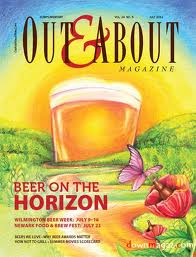
Bob is the editor-in-chief at Out and About Magazinea Wilmington, Del., monthly that covers the arts, entertainment and restaurant scenes.  He has been writing for 45 years.  As you can imagine, I was a little intimidated when first approached by O&A for writing a regular column, but I was encouraged in hearing that the staff enjoyed my blog posts.  I saw this as another opportunity to strengthen my writing skills under the tutelage of a seasoned pro.  

Bob’s “The War on Words” column, which debuted in 2007, has become a reader favorite.  Now these columns have been collected in a paperback book. Each page contains a lesson in grammar, punctuation or pronunciation, all presented in an entertaining and sometimes snarky manner, of which Fork-n-Cork is heavy in content.  Still, like crosswords, there are rules, people.  And if we want to be taken seriously in the real world, we need to know how to spell.  

The book reveals what Yearick believes is the most misused punctuation mark and the most misused word, as well as such language niceties as the true meaning of “begs the question.” Hint: it does not mean “raises the question.”
The English language and its abuse, especially by public figures, has been his obsession for many years. “I spent a lot of time in the corporate world and I’m a big sports fan,” he says. “Corporate types and sportscasters and sports writers are among the primary offenders when it comes to misusing the language. They’ve given me plenty of fodder for my column.”

In the introduction to the book, Maria Hess, editor-in-chief of Delaware Today, says, “Bob gets actual fan letters and has become something of a local grammar superhero. He can’t leap tall buildings in a single bound, but he has managed to get thousands of people to care about proper use of the English language. In a world where texting, twittering and email are eroding our writing skills, Bob’s accomplishments are nothing short of heroic.”  

Yes, word nerds rejoice; we have a hero, and his name is Bob Yearick.

The War on Words can be purchased through the Out & About website: www.outandaboutnow.com, for $9.95 plus $3 shipping, or contact Yearick at ryearick@comcast.com. It is also available at Ninth Street Books in Wilmington and the Hockessin Book Shelf. The e-book is available from Amazon, Barnes & Noble, Sony and iBook for just $3.95. 

Thursday, March 10, 2011

Blood, Bones and Butter

Okay, I know I've given some time to Chef Gabrielle Hamilton on this blog already- but, I'm only on the third chapter of this marvelous memoir and I am rapt with my own memories of growing up, first food experiences, sibling rivalry and intense smell association.  In short, this is a chef's chef memoir, and I am devouring it.  More to come...

Tuesday, May 18, 2010

By The Book: A Cook's List of Essentials

I've lost track of how many cookbooks I own.  Yet, I always know when one is "missing".  I do know that as I get older, I buy fewer.  But, the other night I thought that it had been some time since I pulled out a cookbook just to peruse the contents for pleasure.  I grabbed the Frog Commissary Cookbook, an oldie, but a goodie.  I had actually just gotten a copy, so while it was published in 1985, it was new to me.  

By all standards of what a cookbook should be, it's one of the best.  It has simple, succinct recipes with quick, informative descriptions of ingredients, methods and dishes that may not have been common knowledge in the "decade of greed".  My favorite part is the "how to" tips in the margins.  I think it's useful to know, for example, the items and quantities to set up a proper bar for a cocktail party of 50.  Or, the essentials of setting up a raw bar, hors d'oeuvres buffet or continental breakfast.  This is real, practical stuff.  The style of food is eclectic and not pretentious.  But, by today's standards, the book would never sell more than 1000 copies.  


You see, it wasn't designed for the coffee table.  More like, it was designed to put your coffee cup on.  Nor does it have full page, glossy, sexy food porn shots.  It doesn't praise the farmer who delivers their eggs, it doesn't feature drawings or paintings from staff, and it doesn't cost $55.  It's a true utilitarian cookbook.  

The Moosewood Cookbook of old is another with easily-soiled, coloring book quality pages, and matching hokey drawings of dancing broccoli from a time when vegetarians weren't so annoying (yeah, I said it).  Another paperback, it may be the gold standard for diverse, non-meat recipes that runs the full gamut of appetizers to desserts.  And, I dare say they're healthy, too.

The Silver Palate is another crossover book that should sit on the shelf of the serious cook.  It too is from an age when the author sought to give not just a broad spectrum of current, creative and healthful recipes, but it came from an accomplished cook who, like Julia Child and James Beard, wrote for the everyday cook.

So, why then, do I have so many cookbooks if I already know how to cook?  I'm trying to figure that out myself.  After much consideration, beyond the obvious answer of "recipes", my collection provides inspiration.


I own every cookbook from Thomas Keller and Charlie Trotter, because I admire their style, their philosophy, their creativity and probably above all else,  their discipline.  I can pick up one of their books and feel their unique style ooze out of a phrase of admonishment.  To prepare food at that level requires a certain work ethic and commitment on the part of the chef.  At times, I'll open the books and page through them simply to look at their pictures, presentation or what ingredients they combine.  Maybe even peruse a particular season to get ideas.  Often, I just like to revisit an idea.  But, I rarely prop them open and "cook from them".  They are conceptual books meant for the lover of food and art.  This is the style of cookbook most common on the shelves today. 
In this same genre, I have the Inn at Little Washington books.  Along with Trotter and Keller, they tell of the building of their brand:  the loyalty of their staff, faithful customers and what a unique dining experience they are.  It's like buying the program at the ballgame.  You saw the show, now take the glossy keepsake home for years of enjoyment to come.


Another section of my culinary library is built on the "must haves".  My go-to book for classical Italian is Marcella Hazan, my Japanese, Nobu.  Baking, CIA and Cheese, Steve Jenkins.  Some genres require more than one, and as a Francophile, I own no less than 20 French cookbooks.  Paris cooking is covered by Patricia Wells, while country cooking is beautifully and completely rendered in Anne Willan's recent Country Cooking of France.  I have a rudimentary, yet useful book of recipes from the Basque region (in French).  I have the masters; Blanc, Doucasse, Guerard, Bocuse, Troisgros, Girardet.  Then, cross over into the US for the expats, and I have Ripert, Boulud, Robouchon, Richard, Jean-Georges and Pepin.  

Recipes from Da Fiore of Venice focuses on the gorgeous seafood and regional ingredients of the Veneto.  While the publisher BK (from England) has put out several primers on ethnic cuisine, of which Indian Cuisine has been the most useful to me.


Saveur's three book series on American, Italian and French cuisine is a must for their "real" recipes, grounded in tradition and authenticity.  It doesn't hurt that they have some of the most beautiful photography of any food magazine today.  

Back when I was just a waiter aspiring to take over the world, I bought a copy of Larousse, Gastronomique.  It is the mother of all culinary tomes, both encyclopedia and recipe collection at once.  It has entries on Antonin Careme and Julia Child.  It has the origins of salade nicoise and the proper way to make a vegetable "charlotte".  It's very...old school.  If, on the other hand, you need a reference guide, whether your a newbie or want to check your spelling on a menu, The Food Lover's Companion is the most user-friendly resource on the market.  There are three editions, two editions of the Wine Lover's Companion and now the Cheese Lover's Companion, the last husband-wife collaboration before the founder, Sharon Tyler Herbst passed away just a few years ago.

I suppose if there were one book that was a game-changer for me, it would have to be Gray Kunz "The Elements of Taste".  For an advanced cook, you long for a collection of thoughts and ideas that encompasses and sums up the building and layering of flavors from a conceptual standpoint with examples to back it up.  When this book was released, I read it from cover to cover.  I began to think differently in the way I wrote menus, created dishes, the way I seasoned food and more importantly, the way I corrected my seasonings.  The book is broken into four categories:  Tastes That Push, Tastes That Pull, Tastes That Punctuate and Taste Platforms.  And, rather than arranging food by course or primary ingredient, they identify 14 basic tastes (salty, sweet, floral, herbal, "funky," meaty, etc.).  The binding on my copy is beaten up, the pages slightly stained with wine and demi-glace.  It's the one book I don't loan out anymore, and it's because it's not in print anymore.  New copies on Amazon start at $355 each.

I have several books on only one subject from, pancakes and foie gras, to truffles and duck.  Soups, sauces, shellfish and seafood, mostly by James Peterson.  You need Harold Magee to answer those nagging questions about which boils faster, hot or cold water?  Or, how to hard-boil an egg without the green sulfuric ring around the yolk.  It goes without saying, but Beard and Child belong on your shelves, and should be read.  Craig Claiborne, Deborah Madison and Mario Batali have earned the right.  There are so many other great books- all of which have contributed to the enormous array of talent we experience today.  

Whatever reason you like buying a cookbook, it is personal and you don't owe it to anyone to explain why.  These particular books have broadened my knowledge and creativity in the culinary arts, and I hope you find the list of use.  No matter what your level of cooking, is there ONE cookbook that changed your life?      

Friday, October 9, 2009

The Magazine Closing That Rocked The Culinary World


With the news this week that publisher Conde Nast was shutting down Gourmet magazine after 70+ years, a simmering debate and passionate discussion has been going on among the food cognoscenti about the decision.

I can't remember the last time I picked up a Gourmet magazine.  I do know, however, where past issues are at home with recipes that include the world's best chocolate pots de creme, a killer pasta dish from Bologna, really delicious and fun ice cream sandwiches and an old clipping that talked about a "new" restaurant setting the culinary world on fire called The French Laundry.  

In the decade of excess when everyone was learning what polenta, sun-dried tomatoes and pesto were, there was an expanse of culinary magazines on all sorts of topics.  As our appetite for knowledge increased, the number of magazines writing about food did with it.  There was even the short-lived Foodie Magazine for those passionate-nerdy food types.  I Guess there weren't enough "foodies" at the time, because the magazine folded within a year.  Either that, or, as in the case of Cook's Magazine, they were bought (by Conde Nast, no less) and Gourmet ate up all their subscribers.   It was a war to divide and conquer the most culinary magazine subscribers possible.  So, adding Ruth Reichl to the masthead of the magazine was a brilliant move.  Especially since she'd written widely popular and entertaining books and provided some of the most controversial and memorable reviews as the costumed culinary critic for the New York Times.  Even if they were a little TMI, Reichl's passion connected a people.  And for good or bad, it drew a line in the sand: Gourmet magazine was the benchmark for all that was excellent in food publishing. 


Most of the conversations this week have been about that polarization, mixed with melancholic nostalgia at the untimely demise.  Yet, I think its demise was indeed timely. As the economic pendulum swung way back in the other direction last year, the ripple effects continue to be felt in this down economy.  For starters, luxuries will always suffer first.  Gourmet, therefore, was at the top of the list of candidates for a date with destiny in the land of conspicuous consumption, with monster SUVs and the third beach home.  It's no wonder the culture wars are now about elitism and socialism.  They're buzz words that show the public is passionate about their comfort items.  Take them away, and it's like you burned Radar's teddy bear.  

But, are we really talking about a magazine that was "too gourmet", as Tyler Florence said this week, or is it a simple issue of a magazine that didn't change with the times?  And, rather than ask the old bird to adapt, did they just put it down?  Here's my argument.  Listed are the current magazines and/or sites that just Conde Nast publishes:  Vogue,W, Style, Glamour, Allure, Self, Teen Vogue, GQ, Details, Men's Style, Architectural Digest, Brides, Modern Bride, Elegant Bride, Brides.com, Lucky, Cookie, Golf Digest, Golf World, Vanity Fair, Bon Appetit, Epicurious.com, Conde Nast Traveler, Travel and Leisure, Concierge.com, Wired, Wired.com and The New Yorker. Most people didn't know that Modern Bride got the axe, too; but, with FOUR opportunities to cash in on the millions in marketing for the marrying, there appears to be room for tightening the belt, wouldn't you say?  

So, what made Bon Appetit more relevant than Gourmet?  I'm not sure it is, but one certainly had the pulse of the times more than the other.  Bon Appetit has the cache of a very euro-lifestyle magazine without the fussiness.  My favorite foodie mag, Saveur, however, has a more down-to-earth approach with big, gorgeous photos of farm to table foods and the artisans who produce them.  Yet, it's smart, like the other two.  I think there is still a market for very diverse food magazines today, I just think some of the older ones need to move on first. 

That said, there are really just too many insipid magazines on the shelves today. There is no excuse, for example, for a magazine like Lucky.  Yet, it goes on.  I know this, because this magazine arrives to my house as a "freebie" for my wife each month, and it sits on the coffee table or in a stack of mail until the next one arrives.  After four years, I got curious, flipped through the pages and finally had to ask, "Hon- what IS this magazine about?"  It's a magazine about shopping.  Shopping.  It seems there is a limitless supply of advertisers, because they don't exclude anyone!  "Here's how to shop- save money by spending money! " Cha-CHING!


As I follow this line of logic, I begin to understand why it's touched a nerve with people and me.  A most pertinent opinion piece was in the New York Times this week from the previously mentioned Cook's Magazine publisher, Christoper Kimball.  After 10 years, his magazine shut down in 1990 unable to compete with Gourmet.  But, he started back up in 1993, "advertising-free, with a 100-percent subscriber-financed model, including a thriving paid Web site."  Smart move.  19 years later, Cook's Illustrated stands out as a unique and respected culinary magazine among the masses, while Gourmet sings its swansong.  Kimball says,


" The shuttering of Gourmet reminds us that in a click-or-die advertising marketplace, one ruled by a million instant pundits, where an anonymous Twitter comment might be seen to pack more resonance and useful content than an article that reflects a lifetime of experience, experts are not created from the top down but from the bottom up. They can no longer be coronated; their voices have to be deemed essential to the lives of their customers. That leaves, I think, little room for the thoughtful, considered editorial with which Gourmet delighted its readers for almost seven decades."
  
I'd like to see this Darwinian model continue, but it can only spell doom for the finer aspects of fine food, dining and cooking.  If we are indeed a culture where faster and simpler is better, it'll be impossible for an esoteric contingent to survive.  Sad, then, that it will come down to profitability versus content and creativity.  

I teach a class once a semester at Wimington University to Food Arts students.  My lecture is on the traditions and origins of front and back of the house positions in restaurants and hotels.  As I cover my measly 27 years experience in the industry, I also take them back to what I see as the beginning, the rise of Auguste Escoffier 100 years earlier.  I've spoken of his impact on our industry in other posts, but mostly in the positive.  So it may be a reach, but as Escoffier created a much needed amount of respect and dignity among and for food service personnel, no one could have guessed, for example that from that awareness there eventually could evolve a full-time Food Network.  And, wildly popular reality shows with tyrannical chefs screaming at shivering and cocky culinary hopefuls.  So much of what airs on the Food Network is NOT about food, but entertainment with food thrown in.  Poor Escoffier would roll over in his grave if he saw an episode of Hell's Kitchen.  

The competition shows turn me off as well, because I realize I'm being set up to criticize food on television.  Food you can't taste.  Yet if you watch, you find that you pick apart how it was prepared, what the chef looked like, their attitude, and anything else the editors throw in  from the  dozens of hours of footage, and before you know it, you've joined the ranks of millions of Americans who are forming very strong opinions about someone or something based on 30 minutes of television.  

It all makes me lose my appetite.

LinkWithin

Related Posts with Thumbnails