Showing posts with label magazines. Show all posts

Tuesday, May 28, 2013

Eat to the Beat

 
It’s said that the color red is supposed to stimulate the appetite.  Bright dining room lights (vs. dim) are supposed to make you eat faster.  Textures and appearance are critical to your eating mood, especially if you’ve ever eaten sushi.  Restaurants pay thousands of dollars installing sound-dampening panels to ensure when they fill, it doesn’t sound like The Super Bowl.  But, what about the effect of music on your eating habits?

The speed of music played during a meal directly affects the pace of eating, and thus the rate or ease of digestion.  Studies have shown a mild increase in the rate at which people eat when there is spirited music versus gentle classical.  And louder, more aggressive music works the opposite way, reducing the number of bites and leaving the eater with an irritated, uneasy feeling.  This trade secret has long been in the quiver for many unscrupulous, if savvy, restaurateurs looking to turn tables in a pinch.  And, if you’re the last table of the night and suddenly notice the music shut off, that’s your cue to hit the road, Jack.

There are obvious arguments for music in restaurants, most of them common sense.  Music provides an ambient noise that makes people feel more relaxed to talk among dinner guests without being self-conscious of others listening in.  Also, music is a useful fog for that sensitive discussion between acquaintances, attorneys or would-be cheaters.  Music in a major key is more melodic to the ear and relaxing than minor, or dissonant tones; for example, Jack Johnson good, The Cure, bad.  In a public dining room, melodic rhymes relieve diner tension; Bustah Rhymes, causes it.  This same aural psychology is applied in casinos.  A cacophony of slot machine clatter would drive anyone mad after 10 minutes, but in a harmonic loop of arpeggios, the bings and bongs of winning machines become hypnotic. 

Music is personal and subjective.  Whether you’re preparing a meal or eating one, we play what makes us feel good.  It motivates!  Home cooks and line cooks rarely share the same playlists, of this you can be sure, but both hook in and stir it up to their own personal soundtrack.  A little bossa nova, Coltrane or cafĂ© accordion can relax the soul when putting together a leisurely Sunday supper for the family.   Alternately, a gritty grill cook breathes a little easier when the occasional f-bomb or axe solo grinds out of the Ipod dock.   Music is also a cheap and accessible pressure valve.

Not every professional kitchen, however, condones music.  Even in my own first kitchen, I wanted complete focus.  As much of an audiophile as I considered myself, I wasn’t willing to let details slide if someone was off in a Pink Floyd fantasy.  But, one afternoon while prepping for a party, I was alone and threw on some Rolling Stones to get me over the hump.  When the cooks arrived, they smiled, put on aprons and quietly went to work.  I’m pretty sure the food was some of the best we put out.  From that moment on, I’ve always shared the stereo with my cooks.


Here is an example where music may have actually helped improve the quality of food of an establishment.  One of the hottest and most revered restaurants in the world is Eleven Madison Park in New York City.  In 2006, when a critic reviewed the restaurant, though her comments were favorable, she lamented that the kitchen could use “a bit more Miles Davis”.  Without fully understanding what she meant, the line resonated with the chef and manager.  So, Swiss-born chef Daniel Humm read as many articles as he could find about Miles, and came up with a list of the words most commonly used to describe him.  The list included: cool, collaborative, fresh, vibrant, endless reinvention and spontaneous, to name a few.  Today, the sounds of his quartet and quintet can be heard piped into the kitchen as well as the dining room.  And, a reverent black and white framed photo of the trumpet master hangs in the Spartan kitchen.  Last month Humm was named Best Chef in the US by the James Beard Foundation, and Eleven Madison Park among the top 10 restaurants in the world, with three Michelin Stars and four from the New York Times.  Cool, indeed.


Music can affect mood, even if you’re not aware of it.  When the Shoprite at the waterfront opened a few years back, I queued up like everyone else to see what modern marvels awaited the culinary curious.  Much to my surprise, I first noticed not the shiny floors and pyramids of produce, but the music that was playing.  There was a smart playlist piped in of 80s tunes from slightly off the beaten path.  It added an unconscious spring to my step and made me take note of the age of other shoppers, mostly under 40, also tapping their toes.  Grocery shopping cool?  It could happen.  But, I get it.  We all have to shop, so any little nugget of newness can be a tipping point for customers looking to break up the monotony.  “When I met you in the res-tau-rant.  You could tell I was no debutante!”

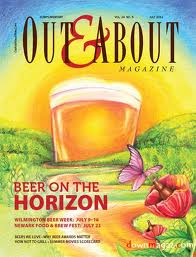
Originally published in Out & About Magazine June 2012

Thursday, January 31, 2013

Mind Your Peas and Queues


For someone who never had a great interest in the English language in high school, I cannot offer much explanation for how I turned out to be a word nerd.  I recall giving my parents book reports and such to proofread, but I would become agitated when there was a lot more red pen than I had bargained for.  Yes, I wanted to know if I had left out a comma or apostrophe, but not that my syntax was wrong, or that there was a more efficient or eloquent way to express the thought.


It was during college that I became hooked on the New York Times Crossword Puzzle.  Many view it as the pinnacle of puzzles, others, a self-inflicted punishment of puns and wordplay.  But I saw it as a daily lesson on language and an opportunity to bone up on dinner party parlance.  Let's face it: after a few years of doing them on a regular basis, you're going to pick up a lot.  A lot of what I gained was due to my understanding of the Spanish language.  I never studied Latin, but when conjugating words, similar rules apply to most of the romance languages.  Even in English, it only takes filling in a word you think you know how to spell to find out that it doesn't fit, and then you know the right way.  More than anything, I liked the challenge of finishing what I started.

How I became a Grammar Nazi among my friends, is still up in the air.  I still lay no claim to being anything beyond decent at punctuation.  I've always been a chatty person, and so my sentences tend to run on.  So when writing creatively, I take a lot of creative license, which is, of course, another way of saying I don't follow the rules.  This is evidenced in the very post you are reading, as it has taken me three paragraphs to finally mention the subject of this post: The War on Words, a new book written by my colleague, Bob Yearick. 

Bob is the editor-in-chief at Out and About Magazinea Wilmington, Del., monthly that covers the arts, entertainment and restaurant scenes.  He has been writing for 45 years.  As you can imagine, I was a little intimidated when first approached by O&A for writing a regular column, but I was encouraged in hearing that the staff enjoyed my blog posts.  I saw this as another opportunity to strengthen my writing skills under the tutelage of a seasoned pro.  

Bob’s “The War on Words” column, which debuted in 2007, has become a reader favorite.  Now these columns have been collected in a paperback book. Each page contains a lesson in grammar, punctuation or pronunciation, all presented in an entertaining and sometimes snarky manner, of which Fork-n-Cork is heavy in content.  Still, like crosswords, there are rules, people.  And if we want to be taken seriously in the real world, we need to know how to spell.  

The book reveals what Yearick believes is the most misused punctuation mark and the most misused word, as well as such language niceties as the true meaning of “begs the question.” Hint: it does not mean “raises the question.”
The English language and its abuse, especially by public figures, has been his obsession for many years. “I spent a lot of time in the corporate world and I’m a big sports fan,” he says. “Corporate types and sportscasters and sports writers are among the primary offenders when it comes to misusing the language. They’ve given me plenty of fodder for my column.”

In the introduction to the book, Maria Hess, editor-in-chief of Delaware Today, says, “Bob gets actual fan letters and has become something of a local grammar superhero. He can’t leap tall buildings in a single bound, but he has managed to get thousands of people to care about proper use of the English language. In a world where texting, twittering and email are eroding our writing skills, Bob’s accomplishments are nothing short of heroic.”  

Yes, word nerds rejoice; we have a hero, and his name is Bob Yearick.

The War on Words can be purchased through the Out & About website: www.outandaboutnow.com, for $9.95 plus $3 shipping, or contact Yearick at ryearick@comcast.com. It is also available at Ninth Street Books in Wilmington and the Hockessin Book Shelf. The e-book is available from Amazon, Barnes & Noble, Sony and iBook for just $3.95. 

Tuesday, February 1, 2011

Us and Them


Hello, and welcome back!  That is to say, thanks for coming back.  I generally have taken a little hiatus after a big holiday to regroup and kick around some concepts for discussion.  I always feel a little more rejuvenated, too.  My first real topic of 2011 has to do with a subject I am very passionate about:  the independent restaurant vs. chain restaurants.

Chain restaurants are all over every highway and byway of America, and they are now bleeding out over the borders to commonly traveled destinations by Americans.   I define a chain restaurant as any dining place that shares a flag (as we call it in hospitality) of the same name, and you can get the same exact meal at any of their destinations worldwide.  They are the anti-restaurant, eating places without a soul.  Think "homogenized".  


I saw two related pieces in the news recently.  One was about Bon Apetit trying to re-brand themselves as being "more about inviting friends over for dinner" as they try to reinvigorate their ever-changing demographic. The other was a short video put together by the National Council of Chain Restaurants citing why people choose chain over "gourmet" restaurants.  Night and day.


Consumer insights provided by expotv.com

There are all kinds of arguments for why someone would choose a chain restaurant over an independently owned and operated one.  But, the one not discussed in the video above is supply and demand.  In other words, there are more of them because the demand is high for them.  Yes, convenience, consistency- all that stuff is important, but it's also important to independet operators, too.  Corporate America knows we are lazy.  And, they are cashing in on us.

Before the advent of the chain restaurant (almost interchangeable with "fast food") some 60 years ago, the local, mom-and-pop place reigned.  Service was folksy but sincere, the owner typically was in the kitchen or running the floor, and it almost always was characterized by a local specialty.  They were as diverse as their geography was vast.  

But, when convenience began to trump originality, the demand became greater for establishments that could snag the best locations.  That is the number one commonly misunderstood fact about chain restaurants: their business is not restaurants, but real estate.  We all know the major axiom in business is about location.  And, the reason they repeat it three times is because people seem to forget it, especially in restaurants.  Finding the best blue chip locations to put a restaurant ensures a healthy life (if the concept is sound).

Meanwhile, Bon Apetit, arguably the reigning elitist food magazine in the US is trying to re-brand themselves as more "food" than "foodie".  More fun dining than fine dining.  Tatoos and lattes.  Crockpots and cupcakes.  

What would we do if suddenly there was an independently owned coffee shop, bistro, steak house, pizza joint or sub shop on every corner of Mainstreet, USA?  For one, we'd have truly local food.  We'd also have truly regional food, with every nuance just a subtle difference to ensure competition and originality.  I don't deny the convenience of a chain, but has food sold its soul for convenience?


I want to hear what you have to say.


Friday, October 9, 2009

The Magazine Closing That Rocked The Culinary World


With the news this week that publisher Conde Nast was shutting down Gourmet magazine after 70+ years, a simmering debate and passionate discussion has been going on among the food cognoscenti about the decision.

I can't remember the last time I picked up a Gourmet magazine.  I do know, however, where past issues are at home with recipes that include the world's best chocolate pots de creme, a killer pasta dish from Bologna, really delicious and fun ice cream sandwiches and an old clipping that talked about a "new" restaurant setting the culinary world on fire called The French Laundry.  

In the decade of excess when everyone was learning what polenta, sun-dried tomatoes and pesto were, there was an expanse of culinary magazines on all sorts of topics.  As our appetite for knowledge increased, the number of magazines writing about food did with it.  There was even the short-lived Foodie Magazine for those passionate-nerdy food types.  I Guess there weren't enough "foodies" at the time, because the magazine folded within a year.  Either that, or, as in the case of Cook's Magazine, they were bought (by Conde Nast, no less) and Gourmet ate up all their subscribers.   It was a war to divide and conquer the most culinary magazine subscribers possible.  So, adding Ruth Reichl to the masthead of the magazine was a brilliant move.  Especially since she'd written widely popular and entertaining books and provided some of the most controversial and memorable reviews as the costumed culinary critic for the New York Times.  Even if they were a little TMI, Reichl's passion connected a people.  And for good or bad, it drew a line in the sand: Gourmet magazine was the benchmark for all that was excellent in food publishing. 


Most of the conversations this week have been about that polarization, mixed with melancholic nostalgia at the untimely demise.  Yet, I think its demise was indeed timely. As the economic pendulum swung way back in the other direction last year, the ripple effects continue to be felt in this down economy.  For starters, luxuries will always suffer first.  Gourmet, therefore, was at the top of the list of candidates for a date with destiny in the land of conspicuous consumption, with monster SUVs and the third beach home.  It's no wonder the culture wars are now about elitism and socialism.  They're buzz words that show the public is passionate about their comfort items.  Take them away, and it's like you burned Radar's teddy bear.  

But, are we really talking about a magazine that was "too gourmet", as Tyler Florence said this week, or is it a simple issue of a magazine that didn't change with the times?  And, rather than ask the old bird to adapt, did they just put it down?  Here's my argument.  Listed are the current magazines and/or sites that just Conde Nast publishes:  Vogue,W, Style, Glamour, Allure, Self, Teen Vogue, GQ, Details, Men's Style, Architectural Digest, Brides, Modern Bride, Elegant Bride, Brides.com, Lucky, Cookie, Golf Digest, Golf World, Vanity Fair, Bon Appetit, Epicurious.com, Conde Nast Traveler, Travel and Leisure, Concierge.com, Wired, Wired.com and The New Yorker. Most people didn't know that Modern Bride got the axe, too; but, with FOUR opportunities to cash in on the millions in marketing for the marrying, there appears to be room for tightening the belt, wouldn't you say?  

So, what made Bon Appetit more relevant than Gourmet?  I'm not sure it is, but one certainly had the pulse of the times more than the other.  Bon Appetit has the cache of a very euro-lifestyle magazine without the fussiness.  My favorite foodie mag, Saveur, however, has a more down-to-earth approach with big, gorgeous photos of farm to table foods and the artisans who produce them.  Yet, it's smart, like the other two.  I think there is still a market for very diverse food magazines today, I just think some of the older ones need to move on first. 

That said, there are really just too many insipid magazines on the shelves today. There is no excuse, for example, for a magazine like Lucky.  Yet, it goes on.  I know this, because this magazine arrives to my house as a "freebie" for my wife each month, and it sits on the coffee table or in a stack of mail until the next one arrives.  After four years, I got curious, flipped through the pages and finally had to ask, "Hon- what IS this magazine about?"  It's a magazine about shopping.  Shopping.  It seems there is a limitless supply of advertisers, because they don't exclude anyone!  "Here's how to shop- save money by spending money! " Cha-CHING!


As I follow this line of logic, I begin to understand why it's touched a nerve with people and me.  A most pertinent opinion piece was in the New York Times this week from the previously mentioned Cook's Magazine publisher, Christoper Kimball.  After 10 years, his magazine shut down in 1990 unable to compete with Gourmet.  But, he started back up in 1993, "advertising-free, with a 100-percent subscriber-financed model, including a thriving paid Web site."  Smart move.  19 years later, Cook's Illustrated stands out as a unique and respected culinary magazine among the masses, while Gourmet sings its swansong.  Kimball says,


" The shuttering of Gourmet reminds us that in a click-or-die advertising marketplace, one ruled by a million instant pundits, where an anonymous Twitter comment might be seen to pack more resonance and useful content than an article that reflects a lifetime of experience, experts are not created from the top down but from the bottom up. They can no longer be coronated; their voices have to be deemed essential to the lives of their customers. That leaves, I think, little room for the thoughtful, considered editorial with which Gourmet delighted its readers for almost seven decades."
  
I'd like to see this Darwinian model continue, but it can only spell doom for the finer aspects of fine food, dining and cooking.  If we are indeed a culture where faster and simpler is better, it'll be impossible for an esoteric contingent to survive.  Sad, then, that it will come down to profitability versus content and creativity.  

I teach a class once a semester at Wimington University to Food Arts students.  My lecture is on the traditions and origins of front and back of the house positions in restaurants and hotels.  As I cover my measly 27 years experience in the industry, I also take them back to what I see as the beginning, the rise of Auguste Escoffier 100 years earlier.  I've spoken of his impact on our industry in other posts, but mostly in the positive.  So it may be a reach, but as Escoffier created a much needed amount of respect and dignity among and for food service personnel, no one could have guessed, for example that from that awareness there eventually could evolve a full-time Food Network.  And, wildly popular reality shows with tyrannical chefs screaming at shivering and cocky culinary hopefuls.  So much of what airs on the Food Network is NOT about food, but entertainment with food thrown in.  Poor Escoffier would roll over in his grave if he saw an episode of Hell's Kitchen.  

The competition shows turn me off as well, because I realize I'm being set up to criticize food on television.  Food you can't taste.  Yet if you watch, you find that you pick apart how it was prepared, what the chef looked like, their attitude, and anything else the editors throw in  from the  dozens of hours of footage, and before you know it, you've joined the ranks of millions of Americans who are forming very strong opinions about someone or something based on 30 minutes of television.  

It all makes me lose my appetite.

LinkWithin

Related Posts with Thumbnails