Thursday, August 25, 2011

F&C Rewind: Your Mother Should Know; A Culinary Top 10 List

When learning to cook, the "aha!" moments are rare.  But they do exist, and my friends, I'm here to tell you:  listen to them.

As I find myself well into the educational phase of my career (that is, passing on what I know to other cooks), I'm discovering that for every moment the world of cooking seemed like an endless expanse of culinary universe, I find that universe shrinking and starting to make more sense each day. 

What some sources refer to as the culinary basics, our mothers and grandmothers would call good, common sense.  Let's face it; in the realm of chicken and egg scenarios, it's the all-knowing, multi-tasking matron of the hearth who came long before the Certified Master Chef.  For all those women who had no choice but to cook for their families when the house was empty of kids or working men, they did so out of necessity and survival, not expression of creativity or ego.  Before cookbooks and anything slightly resembling a home-guide for the kitchen were available, determining which pot was best for which dish, when a using a wooden spoon was better than a metal one, when to cover the pot, or leave it open- and when to turn the flame up versus down was trial by fire (pun-intended). 
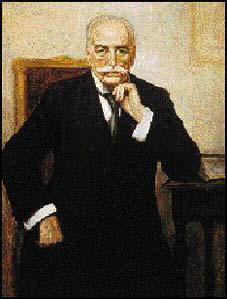
It wasn't until the supposed "masters" like Escoffier and Careme, Brillat-Savarin and other culinary giants came along with their guides and rules for doing it right all the time.  Most of these men served careers in the military first.  Upon leaving the service, they applied this new-found rigidity and culture of order to the craft of cooking, and in doing so, they turned it into a science.  They evaluated things like boiling points of water vs. sugar, they studied the effects of heat and steam on proteins and the differences of various cooking metals (i.e. copper versus aluminum).  They wrote the recipes for the basics, and, in short, they codified cooking to remove the guess work and make it a more exact science. 

"So", you say, "my grandmother couldn't tell you the exact poaching temperature for a terrine, but I'm certain she has one of the most bad-ass pie crusts you'll ever make!"  And, you're right.  Ironically, it's the simplest of elements the housewife mastered in cooking that young line cooks and culinary students today can't grasp.  I think most cooks think not about putting the final product on a table to actually savor, eat and enjoy, but more about how it will look on the plate.  Taste has become secondary.  Tsk, tsk, tsk.

More mothers and grandmothers have landed perfect pot roasts and mashed potatoes on kitchen tables they knew tasted good than can most line cooks today, I can tell you.  One factor is the incessant distractions for line cooks.  They fight boredom, extreme temperatures, long-hours, sleep deprivation, substance abuse, hangovers, ADHD and the insidious Top Chef scenarios which play out in their heads.   If only I were competing, I'd show them all!  Well, if competing on a cooking show is anything like taking your cooking practical at culinary school where you are judged on technique, creativity, mastery of basics and timing, let's just say that having a camera shoved in your arse won't make it any easier (certainly not on your ego when you're trashed by the judges in front of millions). 

Upon graduating from CIA, I landed as a sous chef for my first cooking job.  Heading up my first kitchen, I had set a standard for myself:  never, EVER, let a dish go out of the kitchen that I wouldn't be proud to serve my parents or my instructors at school.  It worked for me.  But, line cooks also notoriously have a varying degree of quality acceptance in their heads which could be set very high one day, and very low the next, often depending on the factors mentioned above.  To fight that rogue thinking in cooks, I employed a mantra of thinking "ALWAYS".  "Always" was the sure-fire way to infiltrate the cob-webby minds of cooks to make sure that whenever considering cutting a corner, taking that shortcut or battling laziness, they would prevail by choosing the one correct route: the right way, always

And so, this brings us back to why mothers and grandmothers have always had the upper hand on so many aspiring iron chefs, career line-cooks, hot-shot culinary snots and gadget toting food geeks; they learned by trial and error, not from books, a sous chef or even television. 

Here then, in no particular order, whether you cook at home, as a hobby or on the chain gang somewhere in the masses of mashed potato houses, are my
Top 10 Things You Can Do to Be a Better Cook:

1. Control Your Heat- Oh, how I've watched a poor dish of veal medallions languishing in a saute pan that isn't hot enough, or a cream sauce on nuclear boil. A stove has knobs; USE THEM!

2. Work Clean- ALWAYS clean after yourself as you go. It is the key to organization mastery. A dirty cutting board is a dirty mind.

3. Be Patient- You can make something fast, or you can make it the right way. Cut corners and you cheat flavor.

4. Taste and Season Often- If you aren't tasting what you're cooking, you are not a real cook, but a robot. Enjoy your life of automated servitude. Or, season and taste your food and build a library of flavors, sensations and a vocabulary that will help you get the most enjoyment out of the culinary arts.

5. Listen- Your food is talking to you. Very often it can tell you that you're doing something wrong, like cooking on too high heat or not enough oil in your pan. Food that snaps, slides, pops and sighs is teaching you about cooking. Listen to it.

6. Smell- Your sense of smell can save you from using fish that is past "safe" or knowing the difference from toasted bread and charcoal. A simple pot of tomato sauce has that "finished" smell when the combination of onion, garlic, tomato and herbs have melded into one harmonious, heady aroma.

7. Use Fresh- If you are ever asking which is the better ingredient(s) to use, the answer will 99.9% of the time be "fresh". Think about it. If taste is priority (and I think we've established it should be), then use fresh products. If you want to cut corners and make a quick stew our soup, use your canned beans, dried herbs and bouillon cubes. If you want to see the difference I'm talking about, try it the other way.

8. Order of Ingredients- There is ALWAYS a right order to put ingredients in a recipe for maximum flavor and/or correctness. And you need to learn why. Sometimes it's scientific, other times it's common sense. A fresh pea takes, what- two minutes to cook? Add it at the beginning of a 45 minute soup, stew or saute and you've killed any flavor, nutritional value or color that poor legume ever had of gifting you.

9. Use Proper Tools and Sharp Knives- You've heard this one a lot. So why do you insist on using tongs for every task, you filthy, dirty little cook, you? There is a big difference between gadgets and proper kitchen tools, particularly spatulas. Same goes for bowls, pots and pans. Stop being lazy. Also, sharp knives are better and safer to work with, always. But, if you insist, go ahead and cut your fingers off. You're giving the rest of us a bad name.
UPDATE:  Case in point- this article in the WSJ one day later...
10. Know When to Stop- There is always a time when you should stop; stop beating, stop blending, roasting, adding salt, adding other ingredients or just trying. Read your recipes and listen (ahem) to what they say. This one can't be taught, so you just have to learn it. Or, go ask your mother.

Thursday, August 18, 2011

Saturday, August 13, 2011

Tuesday, August 9, 2011

Chef Quote of the Week: Alain Ducasse


Desserts are like mistresses. They are bad for you. So if you are having one,
you might as well have two.”
- Chef Alain Ducasse

Tuesday, July 26, 2011

F&C Rewind: The Taliban Approves of Your Child's Lunch

UPDATE: Last year, I blogged about how Americans have at their fingertips the tools and resources to eat healthier foods more than ever before, in particular amongst children.  But, ultimately that responsibility lies with the parents.

Today, a very loud signal echoed back from that call in the form of a cave-in (even if small) from McDonalds.  Fresh fruit will be included in Happy Meals and French fries will be halved.  In some cases, you will be able to opt out of fries.

This is still a long way from giving children a sensible meal that comes with the marketing muscle of McDonalds, but it's a start. In fact, I made this challenge:  "If you don't think you can fight the big corporations, or if you think you don't have a choice or a voice, just think how McDonald's would react to losing a market share to people eating healthy.  They wouldn't like it, not one little bit. "
 
There are lots of issues to debate with this news, but in the mean time, I offer this blog post again to remind anyone who this subject is dear to, more and more these days, it's necessary to have your voice heard. 
 ~~
Here's a good one.  CNN reports that 27% of young adults (17-24 years of age) are ineligible to join the armed services...because they don't meet the physical requirement.  The study says that obesity is the number one cause.  Retired generals and military types called the youths "too fat to fight"; but, rather more disturbing is that "75% of young Americans between the ages of 17 to 24 do not qualify for the military because of failure to graduate [from high school], criminal records or physical problems."

Let that sink in for a sec.

I clicked on the article because the teaser was about how school lunches are "a national security risk".  I am very passionate about the subject of school lunches, but more generally, how we feed our kids.  I can see where they were going with that link, but it's kind of a stretch.  I'd say the bigger threat to national security is education.  Clearly we need an overhaul of lunch programs so that kids are fed meals that don't double and triple load on carbs, rely on frying to give flavor and will provide actual nutritional value that isn't cooked completely out, say when broccoli becomes the color of an army jeep.

The "give a man a fish" rule of logic is in effect here.  If children have access to the knowledge they need to feed themselves in a safe and healthy manner, they'll develop good eating habits.  Don't just give 'em tuna salad on wheat and call it a day.  I remember when I was in school, the class called "health" was not about dietary tips.  If it was, maybe no one remembered because the subject competed with the more popular subject of "how to lose your virginity".  

But, the onus is on the school system to make sure kids have access to these options.  Pfft- scrap that- the onus is on the system to provide only healthy options.  If Junior wants to bring the belly-buster special to school five days a week, let him: at least the schools would be doing their part.  But, then comes the next important part: parent accountability.

Twenty years ago, who taught you about using a computer?  I can tell you the answer was NOT your parents.  To assume that parents have the inherent knowledge to provide good tasting, nutritious meals, is just assuming too much.  Again, it's back to education.  The mass producers of "easy" and "quick" meals of all sorts have done their homework, gang.  They know how many meals a week we don't cook.  They know how busy we are, how much money we spend on take-home meals and they provide hundreds upon hundreds of products that are supposed to make our lives easier.  Yeah- a hot dog and chips is easy, too.  

Ahhh, but there's the rub.  I live in absolute guilt that I allow my daughter to eat a "Lunchables" meal because she spotted one at the store and at only three years of age, recognized it is something "fun" that she wanted.  No one told her what it was, no cartoon characters on it; it was at the right height with the right colors on the box in the grocery store.  She swiped it off the shelf and literally ran away with it. Since birth, she has always eaten all the foods we eat.  Roasted and braised meats, fresh fish, cheeses, root veggies, grains of all sorts, and just about every vegetable I'd ever turned my nose up at when I was a kid.  But, all it took was one time to cave in and say, "oh- it's just for fun, it's no big deal" (said the crack user to his pusher).  

So one day, when I decided to lay down the law, I took a ring mold cutter and cut real cheddar cheese and real baked ham into little circles and put in some simple crackers to see if the little Oscar Mayer meth-head would notice.  She did not.  The next month, I discovered Grammy sent home some Lipton noodle soup in a packet with her.  I was rushed, it was convenient, I made it, and she ate the hell out of it and asked for more.  Checked the label, sodium level was at 29% of RDA and contained MSG.  They got me again.  

And don't get me started on ketchup: gateway drug.

See, I'm not getting preachy, but even if we choose to not feed ourselves well, we need to get the kids we bred to a point in their lives where they can make informed, smart decisions about the future of their health.  I'd very much like to see new generations learn how to properly cook vegetables and enjoy them as much as any fried potato.  I'd like to see proteins from meat and fish become an equally shared portion of the plate, not the main event.  And, I'd like to see restaurants and grocers that specialize in this kind of trend flourish, profit and grow to a majority.  

If you don't think you can fight the big corporations, or if you think you don't have a choice or a voice, just think how McDonald's would react to losing a market share to people eating healthy.  They wouldn't like it, not one little bit.  And so, they would be forced to win-back what they lost to that ever-growing segment of the population who want more variety and more nutritious options.  No?  Maybe the Colonels were right then.  Maybe we are too fat to fight.


LinkWithin

Related Posts with Thumbnails